Industrial Mixing Equipment: Guide to Types, Functions, and Practical Insights
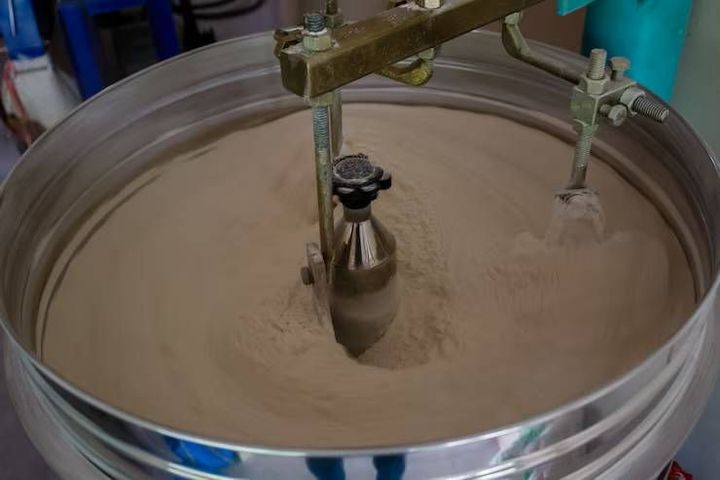
Industrial Mixing Equipment refers to mechanical systems used to combine, blend, disperse, suspend, or circulate materials during industrial processing. These systems can handle liquids, powders, solids, gases, slurries, and combinations of different materials.
Mixing is an important process across chemical manufacturing, food and beverage production, pharmaceuticals, water treatment, mining, cosmetics, paints and coatings, petroleum processing, biotechnology, and many other industries. The equipment may range from compact mixers for small vessels to large systems designed for tanks containing thousands of liters.
The required mixing method depends on the materials being combined and the intended result. Liquid-liquid blending, solid suspension, gas dispersion, powder incorporation, heat transfer, and chemical reactions can require different impeller designs, speeds, vessel arrangements, and control systems.
How Industrial Mixing Works
A typical mixing system contains several interconnected components.
Motor: Supplies rotational energy to the mixing mechanism.
Gearbox or drive: Transfers and controls motor power.
Shaft: Carries rotational movement toward the impeller.
Impeller: Creates fluid movement inside the vessel.
Tank or vessel: Holds the materials being processed.
Baffles: Can reduce unwanted swirling and improve circulation.
Mechanical seal: Helps contain the material around the rotating shaft.
Control system: Can regulate speed, operating conditions, and selected process variables.
When the motor rotates the shaft, the impeller moves material through the vessel. Depending on its geometry, the impeller can create axial, radial, or other flow patterns.
Major Types of Industrial Mixing Equipment
Top-entry mixers are mounted above a vessel and extend downward into the material. They are widely used for blending, suspension, heat transfer, and chemical processing.
Side-entry mixers are installed through the side of a tank. They are commonly used in large storage tanks and process vessels where circulation throughout a large volume is required.
Bottom-entry mixers are installed near the lower part of a vessel. They can be useful when the process requires particular circulation patterns or when vessel access influences equipment layout.
Inline mixers mix materials while they flow through a pipe rather than relying only on a tank. They can be used for continuous blending, rapid dispersion, and selected reaction processes.
Portable mixers are designed to be moved between suitable vessels. Their flexible arrangement can be useful for batch operations and smaller processing areas.
High-shear mixers create strong localized shear forces and can be used for dispersion, emulsification, powder incorporation, and other applications requiring intensive mixing.
Magnetic mixers use magnetic coupling to transfer rotation without a conventional shaft penetration into the vessel. They are used in selected hygienic, pharmaceutical, biotechnology, and other controlled environments.
Importance
Achieving Uniform Blending
One of the primary functions of Industrial Mixing Equipment is to distribute materials evenly throughout a mixture. A properly designed system can reduce concentration differences and help maintain consistent process conditions.
For example, a food-processing tank may need sugar and water to form a uniform solution, while a chemical process may require additives to be distributed throughout a liquid.
Suspending Solid Particles
Some processes involve solid particles that naturally settle toward the bottom of a tank. Mixing creates fluid movement that can keep these particles suspended.
This is relevant in wastewater treatment, mineral processing, chemical production, and other operations involving slurries or particulate materials.
Gas Dispersion
Mixers can introduce or distribute gases within liquids. This can support aeration, fermentation, chemical reactions, and other gas-liquid processes.
The impeller design and operating conditions influence bubble distribution, circulation, and gas-liquid contact.
Supporting Heat Transfer
Mixing can improve circulation within a tank and help distribute temperature more evenly. This is useful when materials are heated or cooled during processing.
Fluid movement can reduce temperature differences within a vessel and support more consistent process conditions.
Supporting Chemical Reactions
Many industrial reactions require reactants to remain adequately mixed. Proper circulation can improve contact between materials and help maintain consistent temperature and concentration throughout the reaction vessel.
The required mixing pattern depends on reaction characteristics, viscosity, gas content, solids concentration, and vessel design.
Main Equipment Comparison
| Equipment Type | Main Function | Typical Application |
|---|---|---|
| Top-entry mixer | Tank blending and circulation | Chemicals, food, water |
| Side-entry mixer | Large-volume circulation | Storage tanks |
| Bottom-entry mixer | Vessel circulation | Hygienic and process applications |
| Inline mixer | Continuous blending | Chemicals and food processing |
| Portable mixer | Flexible batch mixing | Small and medium vessels |
| High-shear mixer | Intensive dispersion | Emulsions and powders |
| Magnetic mixer | Controlled hygienic mixing | Pharmaceutical processing |
| Powder mixer | Powder-liquid incorporation | Food and process industries |
Recent Updates
More Efficient Impeller Designs
Modern Industrial Mixing Equipment increasingly uses application-specific impeller geometries rather than relying on a single design for every process.
Axial-flow impellers are commonly used when large volumes need circulation, while radial-flow designs can generate different flow patterns and are frequently associated with gas dispersion and high-shear applications. Manufacturers now provide numerous impeller configurations for different viscosities, vessel sizes, and process duties.
Inline and Continuous Mixing
Continuous processing is another important development. Inline mixers can combine materials directly within a pipeline, reducing dependence on large conventional mixing tanks for certain processes.
This approach can be useful where materials need rapid blending or where a continuous production arrangement is preferred. Applications include chemical processing, food production, petroleum processing, pulp and paper, and water treatment.
Automated Process Monitoring
Sensors and digital control systems are increasingly integrated into industrial mixing installations. Operating information can include rotational speed, temperature, pressure, vibration, power consumption, and other process variables.
Automated monitoring can help operators maintain defined process conditions and identify changes in equipment behavior.
Computational Fluid Dynamics
Computational Fluid Dynamics, commonly called CFD, can be used to model fluid movement inside tanks and process equipment. Engineers can study circulation patterns, mixing zones, gas distribution, and other characteristics before equipment is constructed or modified.
This approach is particularly useful for large vessels or complex processes where physical testing alone may not provide enough information.
Hygienic Mixing Technology
Food, beverage, pharmaceutical, and biotechnology production increasingly requires equipment designed around hygiene, cleanability, and controlled processing conditions.
Modern hygienic mixing systems can include specialized vessel designs, sanitary connections, magnetic drives, automated cleaning arrangements, and equipment suitable for controlled production environments. Alfa Laval, for example, identifies tank, agitator, powder, and magnetic mixing equipment across food, beverage, dairy, pharmaceutical, and biotechnology applications.
Powder Dispersion Technology
Powder-liquid mixing can be challenging because powders may float, form lumps, or become difficult to disperse. Modern powder mixers can combine powder introduction with high-shear rotor-stator mixing and liquid circulation.
Some systems use vacuum conditions to draw powder into the mixing zone, where it is incorporated into the liquid before further circulation.
Energy-Aware Mixing
Energy consumption has become an important engineering consideration. Mixer selection increasingly considers impeller geometry, rotational speed, vessel dimensions, fluid properties, and process duration.
The objective is not simply to increase motor power. A suitable combination of impeller design, speed, and vessel configuration can provide the required fluid movement while avoiding unnecessary energy use.
Laws or Policies
International Machinery Safety
Industrial mixing systems contain rotating shafts, impellers, motors, electrical equipment, pressure-containing components, and sometimes hazardous chemicals. Consequently, machinery safety requirements can apply to the complete installation.
The exact legal requirements vary by country and application. Organizations operating internationally commonly need to consider local machinery, workplace safety, electrical, pressure equipment, chemical handling, and environmental requirements.
ISO Standards
International standards can provide technical frameworks for machinery safety, risk assessment, electrical equipment, quality management, and process safety.
ISO 12100 is an important international reference for machinery safety and addresses principles for risk assessment and risk reduction. The appropriate standards for a mixing installation depend on its design, location, materials, and intended application.
European Requirements
Industrial equipment placed on the European market may fall under applicable European Union legislation concerning machinery, electrical equipment, pressure equipment, electromagnetic compatibility, chemicals, or other areas.
The exact requirements depend on the equipment configuration and operating conditions. Manufacturers and integrators must determine which legislation applies to a particular installation.
United States Requirements
In the United States, industrial facilities may need to consider requirements from organizations such as OSHA and standards from bodies such as ANSI and NFPA, depending on the equipment and workplace.
Chemical processing can also involve requirements related to hazardous substances, electrical installations, pressure systems, and process safety.
Food and Pharmaceutical Production
Mixing equipment used for food, pharmaceutical, and biotechnology applications can face additional requirements concerning hygiene, materials, contamination control, cleaning, validation, and process traceability.
Organizations may need to consider applicable national regulations and internationally recognized frameworks such as Good Manufacturing Practice requirements.
Tools and Resources
Mixing Calculations
Engineers can use calculations involving tank volume, fluid density, viscosity, impeller diameter, rotational speed, power, and flow characteristics.
These parameters help determine whether a mixer can produce the required circulation and process conditions.
CFD Simulation
CFD software can model fluid movement inside a tank or pipeline. It can help examine areas of poor circulation, turbulence, gas dispersion, and other process characteristics.
Viscosity and Density Measurement
Viscosity and density measurements are important because fluids with different physical properties behave differently during mixing. A mixer designed for a low-viscosity liquid may not perform similarly with a thick material.
Process Monitoring Systems
Temperature sensors, pressure instruments, flow meters, vibration sensors, and motor monitoring systems can provide information about operating conditions.
Data from these systems can be connected to industrial control platforms for monitoring and process management.
Pilot Testing
Pilot-scale testing can help engineers examine mixing behavior before full-scale installation. It may be particularly useful for complex formulations, unusual viscosities, gas-liquid systems, or processes where product characteristics are sensitive to mixing conditions.
Manufacturer Technical Resources
Technical catalogs, impeller-selection charts, equipment manuals, engineering drawings, and application guides can help engineers understand available configurations.
Many manufacturers also provide application and innovation centers where mixing processes can be evaluated under controlled conditions. Alfa Laval, for example, describes pilot and full-scale mixing capabilities for liquid mixing, powder dispersion, and gas dispersion.
FAQs
What is Industrial Mixing Equipment?
Industrial Mixing Equipment consists of mechanical systems used to blend, circulate, disperse, suspend, or combine liquids, powders, gases, and solids during industrial processing.
What are the main types of Industrial Mixing Equipment?
Common types include top-entry mixers, side-entry mixers, bottom-entry mixers, inline mixers, portable mixers, high-shear mixers, magnetic mixers, and powder-mixing systems.
Where is Industrial Mixing Equipment used?
Industrial Mixing Equipment is used in chemical processing, food and beverage production, pharmaceuticals, biotechnology, mining, water treatment, petroleum processing, paints, coatings, cosmetics, and many other industries.
How does an industrial mixer work?
A motor rotates a shaft and impeller, creating controlled movement within a vessel or pipeline. The resulting flow pattern distributes materials, suspends particles, disperses gases, or supports other required process functions.
What factors influence mixer selection?
Important factors include material viscosity, density, solids concentration, vessel size, required mixing time, temperature, pressure, desired flow pattern, process objective, hygiene requirements, and applicable safety conditions.
Conclusion
Industrial Mixing Equipment plays an important role in blending, dispersion, suspension, gas transfer, heat distribution, and chemical processing across industries worldwide. Equipment types range from top-entry and side-entry mixers to inline, high-shear, magnetic, and powder-mixing systems. Recent developments include advanced impeller designs, digital monitoring, CFD modeling, continuous processing, hygienic equipment, and improved powder-dispersion technologies. Understanding the material properties, process objective, vessel design, operating conditions, and applicable regulations is essential when evaluating an industrial mixing system.