Industrial Machinery: Explore Essential Basics and Key Information
The origins of industrial machinery are closely linked with the development of mechanized production. Early industrial equipment used steam power and basic mechanical transmission systems. Over time, electric motors, hydraulic systems, programmable controls, sensors, robotics, and computer-based monitoring expanded what machines could do.
Today, industrial machinery can range from a single machine in a workshop to interconnected equipment operating across a large production facility. Understanding the basic categories, functions, safety principles, and operating factors helps non-technical readers understand how modern industrial environments work.
Main Categories
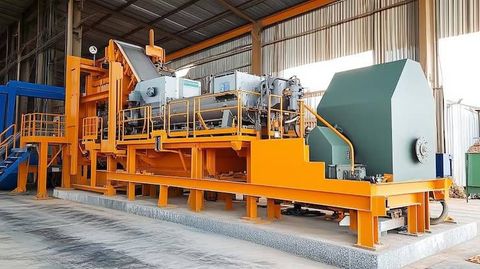
Industrial machinery can be grouped by its main purpose. Production machines shape or assemble materials, material-handling equipment moves goods or raw materials, process equipment changes physical or chemical properties, and utility equipment supports activities such as power generation, air compression, cooling, or water movement.
Common examples include:
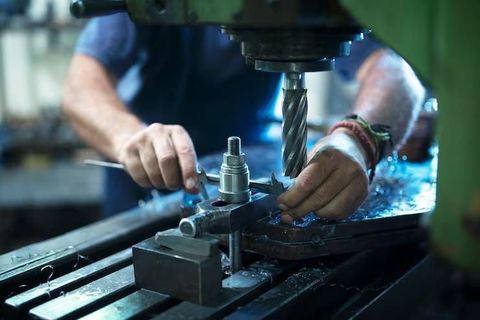
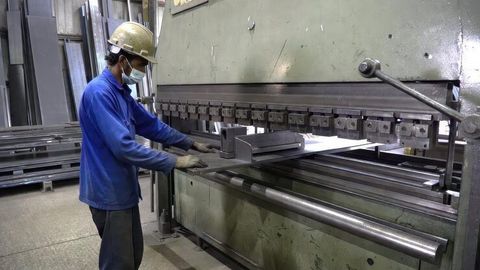
- Machine tools for cutting, drilling, turning, grinding, and forming materials.
- Conveyors, hoists, cranes, and lifting systems for material movement.
- Pumps and compressors for moving liquids and gases.
- Industrial furnaces, boilers, mixers, and reactors for process operations.
- Generators, motors, transformers, and control equipment for electrical functions.
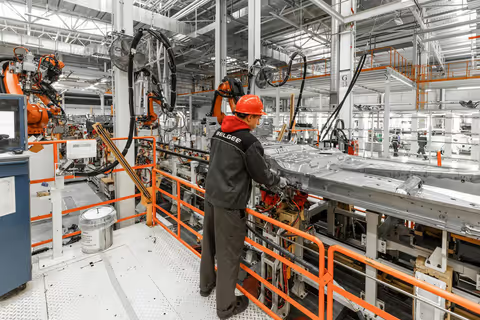
- Robots, sensors, controllers, and automated inspection systems for programmed operations.
Importance
Industrial machinery matters because many everyday products and infrastructure systems depend on mechanized production. Food packaging, construction materials, vehicles, electronics, textiles, medicines, and household products can involve several types of machines before reaching their final form.
Machines also help handle repetitive, heavy, hot, sharp, or otherwise difficult tasks. However, machinery introduces hazards such as moving parts, electrical energy, pressure, heat, noise, vibration, and stored energy. Safe design, guarding, operating procedures, inspection, and appropriate training are therefore important parts of industrial activity.
Factors That Affect Machine Selection
The suitability of a machine depends on the work it must perform rather than on a single specification. Important factors include material type, production volume, required accuracy, operating environment, available power, space, control requirements, maintenance access, and safety features.
A basic comparison can be made using the following table:
| Machinery factorWhat it describesWhy it matters | ||
| Capacity | Amount of material or work handled | Helps match equipment to the intended workload |
| Power | Electrical, mechanical, hydraulic, or other input | Determines operating requirements |
| Accuracy | Ability to achieve a required dimension or result | Affects product consistency |
| Speed | Rate of operation | Influences process timing |
| Safety features | Guards, emergency controls, interlocks, and related measures | Helps reduce exposure to hazards |
| Controls | Manual, automated, or programmable operation | Determines how the machine is operated and monitored |
| Environment | Temperature, dust, moisture, chemicals, and other conditions | Affects machine suitability and durability |
Recent Updates
From 2024 through 2026, industrial machinery has increasingly reflected developments in automation, digital monitoring, energy management, and machine safety. Sensors and connected controls are being used to collect operating information, identify changes in machine condition, and support planned maintenance activities. Digital systems can also connect machines with production and logistics information.
Automation is another important trend. Robots, programmable controllers, machine vision, and automated material handling can coordinate repetitive operations with limited manual intervention. These systems require attention to software, sensors, communication networks, and physical safeguards in addition to conventional mechanical components.
Energy efficiency is also receiving greater attention. Industrial facilities are examining motor efficiency, variable-speed drives, compressed-air losses, heat recovery, and operating schedules as part of broader energy-management efforts. The practical approach varies by machine type and facility.
In India, the machinery safety framework has also continued to develop through Indian Standards and conformity requirements. BIS currently lists machine-safety certification guidance under Scheme-X and provides product-specific information for categories such as metal-cutting machines, rubber and plastics machinery, and weaving machines.
Another development is the increasing use of digital infrastructure across logistics and industrial activity. Government information describes the use of digitalization and automation within initiatives connected with logistics modernization, including platforms for tracking and monitoring movement. These developments can influence how material-handling equipment, warehouses, factories, and transportation systems are planned.
Laws or Policies
Industrial machinery in India is shaped by several layers of rules and standards rather than one single requirement. Depending on the machine, workplace, electrical characteristics, industry, and intended use, different regulations or Indian Standards may apply.
The Bureau of Indian Standards maintains a large collection of machinery-related standards. For example, IS 16504 Part 1 covers electrical equipment of machines and includes general requirements for machinery electrical systems. BIS also lists standards covering machine guarding, emergency-stop functions, interlocking devices, risk assessment, and other safety topics.
A significant recent regulatory development is the Machinery and Electrical Equipment Safety framework under the Ministry of Heavy Industries. BIS information identifies machinery and electrical equipment covered under the relevant technical regulation and lists applicable Indian Standards for different categories. The framework has undergone amendments and changes during the 2024–2026 period, so the applicable requirement should be checked against the current official notification for the specific machine.
Workplace safety requirements can also apply to factories and industrial premises. Depending on the situation, employers and operators may need to consider occupational safety rules, electrical requirements, environmental controls, pressure equipment provisions, fire safety rules, and state-level factory requirements.
For a particular machine, the applicable Indian Standard, conformity requirement, or statutory rule can depend on its classification and intended use. The official BIS standards portal allows users to search by Indian Standard number or keyword and review related documents, amendments, testing information, and other records.
Tools and Resources
Several resources can help readers understand industrial machinery without requiring advanced engineering knowledge.
BIS Standards Portal is useful for checking Indian Standards by number or keyword. Its Know Your Standard feature can provide access to standard documents, amendments, related notifications, testing information, and other records.
Machine manuals and technical datasheets explain operating limits, dimensions, power requirements, controls, inspection points, and safety information for a specific machine. These documents should be read together with applicable workplace procedures and regulations.
Risk-assessment templates can help organize information about hazards, possible consequences, existing safeguards, and additional controls. A simple checklist may include moving parts, electrical hazards, heat, pressure, noise, access points, emergency controls, and stored energy.
Condition-monitoring tools can include vibration meters, temperature sensors, electrical measurement instruments, pressure gauges, and digital monitoring systems. Their usefulness depends on the machine and the measurements being taken.
Engineering calculators can help explain concepts such as power, torque, flow rate, pressure, speed, energy use, and load. Results from such tools should be treated as calculations for understanding rather than a substitute for machine-specific engineering assessment.
FAQs
What is industrial machinery?
Industrial machinery is equipment designed to perform production, processing, movement, assembly, inspection, utility, or other industrial tasks. It can range from individual mechanical machines to automated systems containing sensors and computerized controls.
What are the main types of industrial machinery?
Common groups include machine tools, material-handling equipment, pumps, compressors, process equipment, electrical machines, packaging equipment, and automated systems. The classification depends mainly on the machine's function.
Why is industrial machinery safety important?
Industrial machinery can contain moving, electrical, thermal, hydraulic, pneumatic, or stored-energy hazards. Guards, emergency controls, interlocks, risk assessment, inspection, and suitable operating procedures help manage these hazards.
How do automation and digital systems affect industrial machinery?
Automation allows machines to perform programmed sequences, while sensors and digital controls can collect operating information and coordinate equipment. Modern systems may combine mechanical components with software, networking, and machine-vision technologies.
Which Indian standards apply to industrial machinery?
The applicable standard depends on the machine category and intended use. BIS maintains machinery and electrical safety standards, and certain equipment categories may fall under specific conformity requirements or technical regulations. The current BIS database and relevant government notifications should be checked for the particular machine.
Conclusion
Industrial machinery includes a wide range of equipment used for production, material movement, processing, utilities, and automation. Its development has moved from basic mechanical systems toward connected machines that combine mechanical, electrical, electronic, and digital technologies. In India, safety and conformity requirements are supported by Indian Standards and evolving regulatory frameworks. Understanding machine functions, operating factors, hazards, and applicable standards provides a useful foundation for learning about industrial environments.