Heat Pumps: Overview of Features and Operation
Heat pumps are thermal systems that transfer heat from one location to another rather than generating heat directly through combustion. They use a refrigeration cycle to move thermal energy between an external source and a building, water system, or industrial process. Depending on the system configuration, a heat pump can provide heating, cooling, or hot water.
Heat pump technology is used in residential buildings, commercial facilities, hotels, hospitals, industrial plants, food-processing facilities, and other applications where controlled thermal energy is required. The equipment can use air, water, or the ground as a heat source or heat sink.
The basic principle is based on heat transfer. Even when outdoor conditions are relatively cool, thermal energy remains available in the surrounding environment. A heat pump uses electrical energy to operate a compressor and other components, allowing thermal energy to be transferred to a higher-temperature location.
What Is a Heat Pump?
A heat pump is a mechanical system that transfers thermal energy using a refrigeration cycle. Its major components generally include a compressor, condenser, expansion device, evaporator, refrigerant, and control system.
In heating mode, the evaporator absorbs heat from an external source. The compressor raises the pressure and temperature of the refrigerant. The condenser then releases heat into the target space or water circuit.
The expansion device reduces refrigerant pressure before the refrigerant returns to the evaporator, completing the cycle.
Main Types of Heat Pumps
Heat pumps can be classified according to their heat source and heat delivery method.
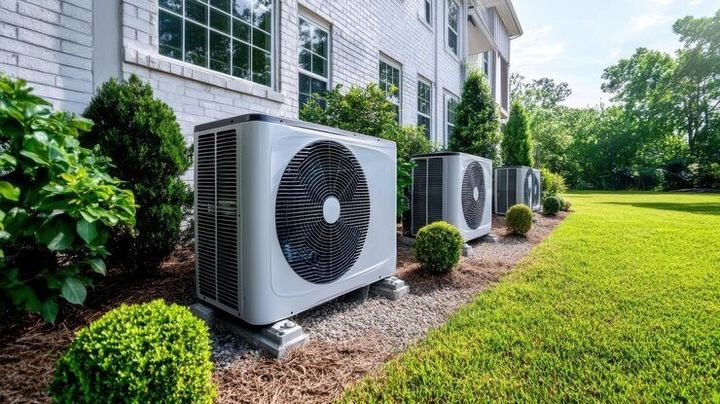
Air-source heat pumps transfer heat between indoor systems and outdoor air. They are commonly used for space conditioning and water heating.
Ground-source heat pumps exchange heat with the ground. Ground temperatures can be relatively stable compared with outdoor air, making ground-source systems suitable for certain building and thermal applications.
Water-source heat pumps use water as the heat source or heat sink. They can be connected to groundwater, surface-water systems, cooling loops, or other suitable thermal sources depending on the installation.
Air-to-water heat pumps transfer heat from outdoor air into a water-based heating system. They can be used for hot-water production and hydronic heating applications.
Importance
Heat pumps are important in energy-efficient thermal systems because they transfer existing thermal energy rather than relying entirely on direct electrical resistance or fuel combustion. The actual performance depends on operating conditions, equipment design, source temperature, load characteristics, and system controls.
Heating and Cooling
Reversible heat pumps can operate in both heating and cooling modes. A reversing valve changes the direction of refrigerant flow, allowing the system to move heat in the opposite direction.
In heating mode, heat is transferred toward the conditioned space. In cooling mode, heat is removed from the indoor space and rejected to the external environment.
This reversible operation allows one system architecture to support different thermal requirements.
Hot Water Production
Heat pump water heaters transfer thermal energy from air, water, or another source into a water storage or distribution system. They can be used in residential buildings, hotels, hospitals, commercial facilities, and industrial applications.
Water temperature requirements influence system selection and operating conditions. Higher-temperature applications may require specialized refrigerants, compressors, heat exchangers, or supplementary heating arrangements.
Industrial Applications
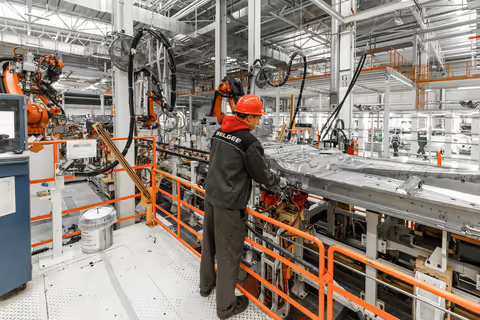
Industrial heat pumps can recover and upgrade low-temperature heat for useful applications. Potential sources include warm process water, exhaust streams, wastewater, condenser heat, and other low-grade thermal sources.
Applications can include:
- Process-water heating
- Drying
- Preheating
- Hot-water production
- District heating
- Food processing
- Chemical processing
- Textile processing
- Commercial hot-water systems
Heat recovery becomes particularly relevant when a facility simultaneously has a low-temperature waste-heat stream and a useful heating requirement.
Understanding Efficiency
Heat pump performance is often described using the coefficient of performance (COP). COP compares useful heating or cooling output with the electrical input under specified operating conditions.
For example, a heating COP of 4 means that the system provides four units of heating output for each unit of electrical input under the stated test conditions.
Actual performance can change with outdoor temperature, water temperature, compressor operation, defrost cycles, system design, and other factors.
| Parameter | Meaning | Why It Matters |
|---|---|---|
| COP | Heating or cooling output relative to input | Indicates operating efficiency |
| EER | Cooling output relative to electrical input | Used for cooling performance |
| Heating Capacity | Thermal output during heating | Determines application suitability |
| Cooling Capacity | Thermal removal capability | Indicates cooling capability |
| Source Temperature | Temperature of heat source or sink | Influences heat transfer |
| Supply Temperature | Temperature delivered to the load | Affects operating conditions |
| Refrigerant | Working fluid in the refrigeration cycle | Influences thermodynamic behavior |
| Compressor Type | Method of refrigerant compression | Affects control and performance |
Recent Updates
Heat pump technology has continued to develop through improvements in compressors, refrigerants, controls, heat exchangers, monitoring systems, and integration with building energy systems.
Improved Compressor Control
Variable-speed compressors can adjust operating capacity according to thermal demand. Instead of operating continuously at one fixed capacity, the compressor can change speed within its operating range.
This approach can improve load matching and reduce unnecessary cycling under suitable conditions. Electronic expansion valves and variable-speed fans can also coordinate with compressor control.
Lower-Impact Refrigerants
Refrigerant selection has become an important technology consideration because refrigerants differ in thermodynamic properties and environmental characteristics.
Newer systems increasingly consider refrigerants with lower global warming potential where appropriate. The selection also depends on safety classification, operating pressure, temperature range, equipment design, and applicable regulations.
Heat Recovery Systems
Heat recovery can connect cooling and heating requirements within the same facility. For example, heat rejected by a refrigeration or cooling process can potentially be recovered and transferred to a hot-water system.
This approach can reduce the amount of separately generated heating energy required when suitable simultaneous loads exist.
Smart Controls and Monitoring
Modern heat pump systems can include temperature sensors, pressure sensors, flow meters, energy meters, communication interfaces, and digital controllers.
Monitoring systems can track operating conditions and identify changes in performance. Building management systems can also coordinate heat pumps with ventilation, cooling, hot-water storage, solar generation, and other building systems.
Building Integration
Heat pumps are increasingly considered as part of broader building energy systems rather than isolated appliances. Building envelope performance, insulation, ventilation, thermal storage, and control strategies can all influence heat pump operation.
India's Bureau of Energy Efficiency maintains resources covering energy-efficient buildings, including the Energy Conservation and Sustainable Building Code and the Eco-Niwas Samhita.
Laws or Policies
Heat pump systems in India can be affected by energy-efficiency requirements, building codes, electrical provisions, refrigerant-related environmental measures, and equipment standards. The applicable requirements depend on the system type, building category, capacity, and installation.
The Bureau of Energy Efficiency's Standards and Labelling programme covers specified energy-consuming appliances and equipment and is intended to communicate energy-performance information to users. The programme also works with organizations including BIS and other stakeholders.
Building Energy Requirements
The Energy Conservation and Sustainable Building Code 2024 contains provisions concerning heating and hot-water systems. For example, its provisions state minimum COP requirements for certain water-source and ground-source heat pumps.
The code also addresses heating equipment efficiency and references relevant Indian Standards for specified water-heating technologies.
Energy Efficiency Programmes
BEE maintains programmes covering building energy efficiency, standards and labelling, industrial energy efficiency, and demand-side management. Its current resource collection includes the Energy Conservation and Sustainable Building Code 2024, Eco-Niwas Samhita 2024, and other energy-efficiency publications.
BEE also lists heat pumps and ground- or water-source heat pumps among energy-efficient technologies in its technology resources.
Refrigerant Considerations
Heat pumps use refrigerants that are subject to technical and environmental considerations. Refrigerant selection, handling, recovery, leakage control, and disposal should follow applicable regulations and technical requirements.
Installations should also account for electrical safety, pressure-related hazards, ventilation requirements, and manufacturer specifications.
Tools and Resources
Understanding heat pump technology requires knowledge of thermodynamics, refrigeration, heat transfer, building loads, electrical systems, and control engineering.
Useful resources include:
- Bureau of Energy Efficiency publications
- Energy Conservation and Sustainable Building Code
- Eco-Niwas Samhita
- Indian Standards applicable to equipment
- Refrigeration-cycle references
- Heat-transfer engineering manuals
- Building energy modelling tools
- Manufacturer technical documentation
- Energy-monitoring systems
- Refrigerant safety references
Important Parameters
Several technical parameters are useful when evaluating heat pump operation.
Heating capacity: Indicates the thermal output available during heating operation.
Cooling capacity: Indicates the amount of heat that can be removed during cooling operation.
COP: Compares useful heating or cooling output with electrical input under specified conditions.
Source temperature: Influences how easily heat can be transferred into or out of the source.
Supply temperature: Determines the temperature delivered to the heating or hot-water system.
Flow rate: Important for water-based heat pump systems and heat exchanger performance.
Compressor speed: Affects system capacity and operating behavior in variable-speed systems.
Refrigerant type: Influences pressure, temperature, heat-transfer characteristics, and environmental considerations.
Defrost operation: Important for air-source systems operating in conditions where frost can form on the outdoor heat exchanger.
These parameters should be considered together because changing one operating condition can influence several others.
FAQs
What is a heat pump?
A heat pump is a mechanical system that transfers thermal energy from one location to another using a refrigeration cycle. It can provide heating, cooling, or hot water depending on its configuration.
How does a heat pump work?
A heat pump uses an evaporator, compressor, condenser, and expansion device to transfer heat. The refrigerant absorbs heat at one point in the cycle and releases it at another point after compression and pressure changes.
What are the main types of heat pumps?
Common types include air-source, ground-source, water-source, and air-to-water heat pumps. The main difference is the thermal source or sink used by the system.
What does COP mean in heat pump systems?
COP means coefficient of performance. It expresses the ratio between useful heating or cooling output and electrical input under defined operating conditions.
Where are industrial heat pumps used?
Industrial heat pumps can be used for process-water heating, drying, preheating, hot-water production, heat recovery, food processing, textile operations, and other applications requiring controlled thermal energy.
Conclusion
Heat pumps transfer thermal enIbn ergy through a refrigeration cycle and can provide heating, cooling, or hot-water production. Their operation depends on components such as compressors, condensers, evaporators, expansion devices, heat exchangers, and control systems. Recent developments include variable-speed compressors, improved refrigerants, heat recovery, digital monitoring, and integration with building energy systems. In India, building-energy codes and energy-efficiency programmes provide an important framework for understanding heat pump performance and application.