Gear Shaping Machines: Overview of Processes, Machine Types, and Gear Cutting Methods
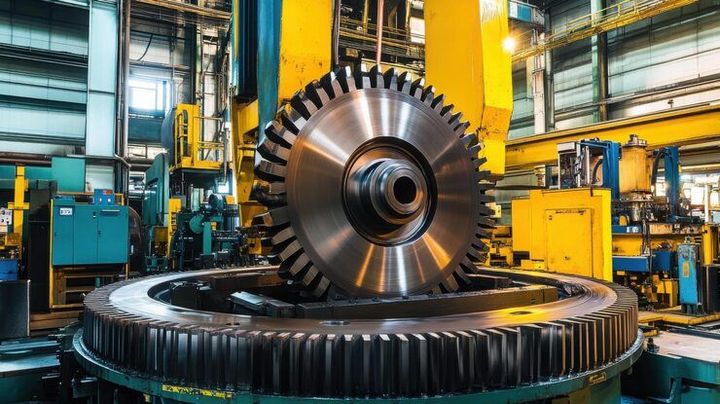
Gear shaping machines are machine tools used to manufacture gears by cutting teeth into a cylindrical or disc-shaped workpiece.
Unlike ordinary shaping machines that produce flat surfaces, gear shaping machines use a reciprocating cutting tool called a pinion-type cutter or rack-type cutter to generate precise gear teeth.
They are used when manufacturers need accurate internal or external gears, especially for components where tooth geometry and alignment are important. Gear shaping is commonly associated with automotive components, industrial transmissions, machine tools, agricultural equipment, aerospace components, and other mechanical systems.
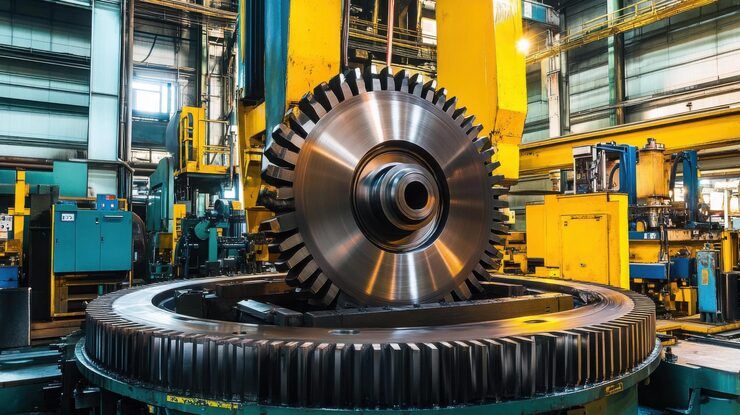
A gear shaping machine generally includes a work spindle, cutter spindle, reciprocating mechanism, worktable, feed mechanism, and control system. Modern CNC gear shaping machines add computer-controlled movement, allowing cutting parameters and tooth geometry to be managed with greater repeatability.
The process works by rotating the cutter and workpiece in a synchronized relationship while the cutter moves up and down. Material is gradually removed until the required gear tooth profile is formed.
Why Gear Shaping Machines Matter
Gears are fundamental components in systems that transmit motion and torque. Their performance depends heavily on tooth accuracy, spacing, surface quality, and alignment. An incorrectly shaped gear can produce vibration, noise, excessive wear, or reduced transmission efficiency.
Gear shaping is particularly useful because it can produce both external and internal gears. This makes it suitable for components such as planetary gear systems, transmission assemblies, pump mechanisms, and precision mechanical drives.
The technology is also relevant to companies researching gear manufacturing equipment, industrial gear shaping machines, and CNC gear cutting machines for automated production environments.
Important applications include:
- Automotive transmission and drivetrain components
- Industrial gearboxes and speed-reduction systems
- Agricultural machinery
- Construction equipment
- Machine tools
- Robotics and automation equipment
- Aerospace mechanical systems
- Pumps and compressors
- General power-transmission components
Gear shaping can also complement other gear manufacturing processes. Depending on the required geometry and production stage, manufacturers may combine shaping with gear hobbing, gear grinding, gear shaving, or gear honing.
Main Types of Gear Shaping Machines
Gear shaping machines can be classified according to their cutter arrangement, workpiece configuration, control system, and intended production requirements.
| Type | General Characteristics | Common Application |
|---|---|---|
| Vertical Gear Shaping Machine | Workpiece and cutter are generally arranged vertically | Industrial and automotive gears |
| CNC Gear Shaping Machine | Uses computer-controlled axes and programmed cutting parameters | Precision and automated production |
| Internal Gear Shaping Machine | Designed to generate internal tooth profiles | Planetary and transmission components |
| External Gear Shaping Machine | Produces teeth on the outside of a workpiece | Shafts, gears and mechanical drives |
| High-Speed Gear Shaping Machine | Designed around faster cutting cycles and automated operation | Higher-volume production |
| Precision Gear Shaping Machine | Focuses on controlled geometry and dimensional accuracy | Precision mechanical components |
The appropriate configuration depends on gear diameter, module, tooth profile, workpiece material, required accuracy, production volume, and integration with other manufacturing processes.
Key Components
A gear shaping machine contains several coordinated mechanical and control systems.
Cutter spindle: Holds and rotates the gear-shaping cutter.
Work spindle: Holds the workpiece and provides controlled rotation.
Reciprocating mechanism: Moves the cutter vertically or along its designated cutting path.
Feed mechanism: Controls the movement of the cutter relative to the workpiece.
Worktable: Supports and positions the component during machining.
CNC control system: On CNC models, controls programmed movements, cutting sequences, synchronization, and other machining parameters.
The interaction between these components determines the final tooth profile and dimensional accuracy.
Factors Affecting Gear Shaping Accuracy
Gear shaping accuracy depends on machine condition, tooling, workpiece characteristics, programming, and process control.
Important factors include:
- Cutter geometry and condition
- Workpiece material
- Machine rigidity
- Spindle synchronization
- Cutting speed
- Feed rate
- Tooth profile requirements
- Workholding accuracy
- Thermal conditions
- Machine alignment
- Measurement and inspection methods
Modern CNC gear shaping equipment can use programmable parameters to maintain consistent machining conditions. However, CNC control does not automatically eliminate mechanical errors. Machine calibration, tooling condition, inspection, and preventive maintenance remain important.
Gear Shaping Compared With Gear Hobbing
Gear shaping and gear hobbing are both established gear manufacturing processes, but their operating principles differ.
| Feature | Gear Shaping | Gear Hobbing |
|---|---|---|
| Cutting Tool | Pinion or rack-type cutter | Hob |
| Cutting Motion | Reciprocating | Continuous rotary cutting |
| Internal Gears | Suitable | Generally not suitable |
| External Gears | Suitable | Suitable |
| Typical Strength | Internal and external gear flexibility | Efficient external gear production |
| Process Control | Increasingly CNC-controlled | Widely CNC-controlled |
The choice depends on gear geometry, production requirements, workpiece design, and downstream finishing operations.
Recent Developments and Industry Trends
Machine-tool technology has continued to place greater emphasis on CNC control, automation, accuracy measurement, digital monitoring, and safer machine design.
In India, the regulatory environment for machinery safety has also developed significantly. The Bureau of Indian Standards lists metal-cutting machines among machinery categories covered under the Machinery and Electrical Equipment Safety framework. The BIS material identifies relevant machine-tool safety standards and conformity requirements.
BIS published machine-category-specific guidance for metal-cutting machines in July 2025. The guidance covers technical-file requirements, machine grouping, labelling and marking, and certification-related procedures.
Another relevant development is the continuing expansion of Indian Standards for machinery safety and electrical equipment. For example, BIS lists IS 16504 (Part 1):2019, based on IEC 60204-1, for electrical equipment of machines, while IS 16819:2018, based on ISO 12100, addresses general principles for machinery design, risk assessment, and risk reduction.
BIS also updated its machine-safety certification information in 2026, with its product-specific information page updated on April 1, 2026 and its certification-process information updated in August 2026.
These developments make safety documentation, risk assessment, machine identification, technical files, and conformity requirements increasingly relevant to organizations involved with industrial machinery.
Laws, Standards and Policies in India
Gear shaping machines used in India can be affected by machinery safety requirements, applicable Indian Standards, workplace safety rules, and conformity-assessment requirements.
The Bureau of Indian Standards (BIS) provides standards and certification information relevant to machine tools. Its Scheme-X framework includes safety certification provisions for machinery, while the applicable requirements depend on the specific machine category and regulatory scope.
The Machinery and Electrical Equipment Safety framework includes metal-cutting machine tools under relevant tariff classifications and references machine-tool safety standards.
For gear shaping machines, organizations should verify the exact classification and applicable requirements rather than assuming that one standard covers every machine configuration.
BIS also provides the Know Your Standard platform, which allows users to search Indian Standards using an IS number or product keyword and review associated documents, amendments, testing information, laboratories, and other standard-related details. The platform was updated in May 2026.
A relevant historical Indian Standard is IS 6679:1972, covering the test chart for general-purpose gear shaping machines with table diameter up to 1000 mm. BIS records show that this standard was reaffirmed in 1998.
Because regulatory applicability can depend on the machine category, specifications, manufacturing location, and intended use, technical teams should verify the latest applicable notifications and standards before relying on older references.
Tools and Resources
Several resources can help engineers, students, procurement teams, and manufacturing professionals understand gear shaping technology.
- BIS Know Your Standard: Useful for searching Indian Standards by machine name or standard number.
- BIS Machine Safety Resources: Provides information on machinery safety certification, applicable categories, and Scheme-X procedures.
- Gear Geometry Calculators: Useful for calculating basic parameters such as module, pitch diameter, tooth count, and pressure angle.
- CNC Programming References: Help operators understand axis movements, machining cycles, feeds, speeds, and program structures.
- Gear Inspection Equipment: Coordinate measuring machines, gear measurement systems, profile testers, and lead testers can help evaluate manufactured gears.
- Machine Tool Technical Manuals: Useful for understanding machine specifications, maintenance intervals, operating limits, and safety procedures.
- CAD/CAM Software: Helps with gear geometry, component modelling, manufacturing planning, and production documentation.
Frequently Asked Questions
What is a gear shaping machine?
A gear shaping machine is a machine tool that cuts gear teeth using a reciprocating cutter synchronized with the rotation of the workpiece. It can produce internal and external gears.
What is the difference between gear shaping and gear hobbing?
Gear shaping uses a reciprocating cutter, while gear hobbing uses a rotating hob and continuous cutting action. Gear shaping is particularly useful for internal gears and certain gear geometries.
What is a CNC gear shaping machine?
A CNC gear shaping machine uses computer numerical control to manage machine movements and machining parameters. It can provide programmable and repeatable machining operations when properly configured and maintained.
Which industries use gear shaping machines?
They are used in automotive manufacturing, industrial machinery, agricultural equipment, machine tools, power transmission, aerospace-related manufacturing, robotics, and other mechanical applications.
Why is machine safety important for gear shaping equipment?
Gear shaping machines contain moving cutters, rotating components, electrical systems, and workholding mechanisms. Appropriate guarding, emergency controls, risk assessment, operator procedures, and maintenance practices help reduce operational hazards.
Conclusion
Gear shaping machines remain an important part of gear manufacturing because they can produce accurate internal and external gear profiles across a wide range of mechanical applications. Traditional machines continue to have a role, while CNC gear shaping machines provide programmable control and integration with increasingly automated manufacturing environments.
The technology is influenced by several factors, including gear geometry, cutter selection, machine rigidity, process parameters, inspection methods, and maintenance. In India, machinery safety standards and BIS conformity requirements are also important considerations. Recent BIS updates in 2025 and 2026 show continued attention to machinery safety, technical documentation, certification procedures, and applicable standards.