Crystallizers: Explore Industrial Crystallization Technology and Process Engineering
Crystallizers are industrial processing systems used to form solid crystals from liquids, solutions, or melts under controlled conditions. They are used in chemical manufacturing, pharmaceuticals, food processing, minerals, and other industries. Modern crystallizers use controlled cooling, evaporation, circulation, seeding, and monitoring systems to influence crystal formation, size, purity, and overall process consistency.
Crystallizers: Explore Industrial Crystallization Technology and Process Engineering
Crystallizers are industrial process systems designed to produce solid crystals from a liquid solution, melt, or other suitable feed material. Crystallization is an important separation and purification technique because it can allow a dissolved substance to be recovered as a solid with a defined crystal structure.
The process is used in chemical manufacturing, pharmaceutical production, food processing, mineral processing, fertilizers, and many other industrial applications. Depending on the material, crystallization may be achieved through cooling, evaporation, chemical reaction, or a combination of these approaches.
A crystallizer provides a controlled environment where conditions such as temperature, concentration, supersaturation, residence time, and circulation can be managed. These conditions influence how crystals form and grow.
Different crystallizer designs are suited to different process requirements. Some systems rely on natural circulation, while others use pumps or mechanical agitation. Continuous and batch configurations are also available depending on production requirements and material characteristics.
Context
Crystallization occurs when a solution becomes supersaturated and a dissolved substance begins to form solid crystals. Supersaturation can be created by reducing temperature, removing solvent through evaporation, changing the composition of the solution, or using a chemical reaction.
Once the solution reaches an appropriate state, small solid particles called nuclei can form. These nuclei can then grow as additional material deposits onto their surfaces.
Industrial crystallizers provide equipment and process conditions that encourage controlled nucleation and crystal growth.
Main Components
The components of a crystallizer vary according to its design and application.
| Component | Main Function |
|---|---|
| Crystallizer vessel | Provides the main processing environment |
| Heat exchanger | Controls heating or cooling |
| Circulation system | Moves the process liquid |
| Agitator | Promotes controlled mixing where required |
| Feed system | Introduces the process solution |
| Crystal collection area | Supports crystal separation |
| Vapor system | Handles vapor in evaporative designs |
| Sensors | Monitor process conditions |
| Control system | Regulates operating parameters |
Some crystallizers also include pumps, condensers, filters, centrifuges, wash systems, and downstream drying equipment.
How Crystallizers Work
The process begins with a solution or melt containing the material intended for crystallization.
The system then changes one or more process conditions to create supersaturation. In a cooling crystallizer, the solution is cooled. In an evaporative crystallizer, solvent is removed to increase the concentration of the dissolved material.
Once suitable supersaturation is reached, nucleation and crystal growth occur. The crystals remain in suspension or settle within the equipment until they are collected.
The resulting crystal slurry can then move to downstream separation and drying stages.
Importance
Crystallizers are important in processes where controlled solid formation, purification, concentration, or material recovery is required.
Chemical Manufacturing
Chemical plants use crystallization to recover products, separate compounds, and purify selected materials.
The crystallizer must provide appropriate conditions for the specific chemical system because different compounds have different solubility and nucleation characteristics.
Pharmaceutical Processing
Crystallization is used in pharmaceutical manufacturing for selected purification and solid-form processes. Crystal characteristics can influence properties such as particle size, purity, handling behavior, and downstream processing.
Temperature, solvent composition, mixing, seeding, and supersaturation control can therefore be important considerations.
Food Processing
Food and ingredient industries use crystallization in selected processes involving sugars, salts, fats, and other materials.
Controlled crystal formation can influence the texture, stability, and physical characteristics of certain products and ingredients.
Mineral Processing
Crystallization can support the recovery of mineral salts and other inorganic compounds from concentrated process streams.
Evaporative systems can be used when removing solvent increases the concentration sufficiently to form crystals.
Fertilizer Production
Certain fertilizer materials are produced or recovered through crystallization or related precipitation processes.
The equipment needs to accommodate the chemical properties and crystal-forming behavior of the material being processed.
Purification and Recovery
Crystallization can provide a way to separate a desired solid from impurities that remain dissolved in the liquid phase.
The effectiveness of this approach depends on differences in solubility and careful control of operating conditions.
Recent Updates
Recent developments in crystallizer technology have focused on process monitoring, automated control, improved heat transfer, energy management, and better control of crystal characteristics.
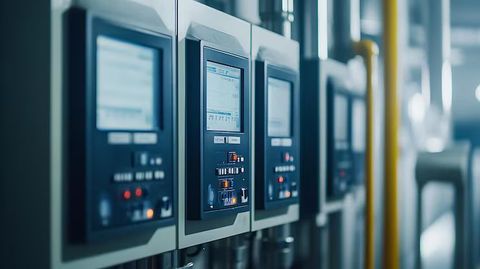
Digital instrumentation can provide continuous information about temperature, pressure, concentration, liquid level, and other process variables.
Automated Crystallization Control
Modern control systems can coordinate temperature, feed flow, circulation, agitation, evaporation, and other process variables.
Automation can help maintain a more consistent supersaturation profile, which is important for controlled nucleation and crystal growth.
Advanced Monitoring
Sensors can monitor important process conditions in real time.
Common measurements include:
Temperature
Pressure
Liquid level
Flow rate
Concentration
Density
Conductivity
Agitation conditions
Some systems can also use specialized particle or crystal-size monitoring technologies where process requirements justify their use.
Improved Crystal-Size Control
Crystal size distribution is an important process characteristic. Modern crystallization systems can use controlled cooling rates, seeding strategies, circulation, and agitation to influence crystal growth.
The objective is not necessarily to produce the largest crystals, but to achieve a crystal population appropriate for the downstream process.
Seeding Technology
Seeding introduces selected crystal particles into a supersaturated solution to encourage controlled crystal growth.
The timing, quantity, and characteristics of the seed material can influence nucleation and final crystal properties.
Energy Management
Evaporative crystallization can require significant thermal input. Process designers may therefore examine vapor reuse, heat integration, multiple-effect arrangements, and other approaches for improving thermal utilization.
The practical arrangement depends on the feed material, operating conditions, and overall plant design.
Digital Process Modeling
Process models can be used to evaluate crystallization behavior, heat transfer, fluid movement, and operating conditions.
Modeling can support equipment design and process development, particularly when crystal formation is sensitive to changes in temperature, concentration, or residence time.
Laws or Policies
Crystallizer installations may be subject to workplace safety, pressure-equipment, electrical, environmental, chemical-handling, and industry-specific requirements.
The exact requirements depend on the country, facility, process materials, equipment design, operating temperature, and operating pressure.
Workplace Safety
Crystallizers can involve hot liquids, rotating equipment, vacuum conditions, pressurized systems, chemicals, and moving components.
Common safety practices include:
Inspecting equipment before operation
Monitoring temperature and pressure
Maintaining suitable guarding around moving components
Following isolation procedures during maintenance
Using appropriate protective equipment
Controlling chemical exposure
Training operators in normal and emergency procedures
Process and Environmental Controls
Crystallization can generate concentrated mother liquor, wash streams, condensate, vapors, and solid residues.
These streams should be handled according to applicable environmental and process requirements. The treatment or reuse arrangement depends on their composition and the overall production system.
Material Compatibility
Some crystallization processes involve corrosive chemicals or high-temperature solutions. Construction materials should therefore be selected for compatibility with the process environment.
Material selection can include appropriate metals, engineered plastics, coatings, or specialized linings depending on the application.
Tools and Resources
Crystallizers depend on several supporting systems to maintain controlled process conditions.
Heat-Transfer Equipment
Heat exchangers are used in many crystallization systems to remove or supply thermal energy. Their design depends on the process liquid, temperature range, heat-transfer requirements, and fouling characteristics.
Controlled heat transfer is particularly important in cooling crystallization.
Pumps and Circulation
Pumps can circulate process liquid through the crystallizer or associated heat exchangers.
Circulation affects temperature distribution, supersaturation, suspension conditions, and crystal-growth behavior. Pump selection should account for solids content, viscosity, temperature, and material compatibility.
Agitation Systems
Mechanical agitators can maintain mixing and help keep crystals suspended where required.
The agitation level needs to be appropriate for the crystal characteristics and process objectives. Excessive mechanical action may influence crystal breakage or secondary nucleation in some applications.
Separation Equipment
After crystallization, the solid crystals generally need to be separated from the remaining liquid.
Common downstream equipment includes:
Centrifuges
Vacuum filters
Pressure filters
Settling equipment
Crystal washing systems
Drying equipment
The selection depends on crystal size, slurry concentration, liquid properties, and desired final condition.
Measurement and Control
Temperature sensors, pressure instruments, flow meters, level sensors, concentration measurements, and control systems provide information for process management.
Accurate measurements help operators understand changes in supersaturation and maintain the intended crystallization conditions.
Technical Documentation
Equipment manuals, process diagrams, operating procedures, maintenance schedules, material specifications, and process-development records are useful resources for managing crystallization systems.
These documents help connect equipment operation with process requirements and safety procedures.
FAQs
What are crystallizers used for?
Crystallizers are used to form, recover, concentrate, or purify solid crystals from solutions, melts, or other process streams. They are used in chemical, pharmaceutical, food, mineral, and fertilizer applications.
How do industrial crystallizers work?
Industrial crystallizers create controlled supersaturation through cooling, evaporation, chemical changes, or combinations of these methods. The resulting supersaturated solution forms nuclei, and crystals grow as additional material deposits on them.
What are the main types of crystallizers?
Common types include cooling crystallizers, evaporative crystallizers, vacuum crystallizers, draft-tube-baffle crystallizers, forced-circulation crystallizers, and scraped-surface designs. Batch and continuous configurations are also used.
Why is crystal size important?
Crystal size can affect separation, filtration, drying, handling, purity, and downstream processing. Controlled temperature, mixing, supersaturation, residence time, and seeding can influence crystal-size distribution.
What equipment is used after crystallization?
Crystals may be separated using centrifuges, filters, or settling equipment. Depending on the process, washing and drying stages may follow the separation step.
Conclusion
Crystallizers provide controlled environments for forming and recovering solid crystals from solutions and other process streams. They are used across chemical manufacturing, pharmaceuticals, food processing, mineral processing, fertilizers, and related industries.
Cooling, evaporation, seeding, circulation, and agitation can be combined in different ways to influence nucleation and crystal growth. Modern systems increasingly use sensors, automated controls, process modeling, and improved thermal management to maintain controlled operating conditions.
Appropriate crystallizer selection depends on material properties, solubility behavior, crystal characteristics, throughput, temperature, pressure, and downstream separation requirements. Safe operation also requires suitable equipment design, maintenance, monitoring, and compliance with applicable regulations.