Complete Guide to Fixing Car Dents: Best Car Dent Repair, Paintless Dent Removal, and Dentless Repair Options
Car dents are common, particularly in busy cities, crowded parking areas, and high-traffic roads across the UAE. A small impact can leave a visible dent, crease, or door ding that affects the appearance of a vehicle and may become more difficult to correct if the damaged area is ignored.
Modern car dent repair methods provide several ways to restore damaged panels, ranging from paintless dent repair to traditional denting and painting.
Understanding the available car dent removal methods can help vehicle owners identify the appropriate approach for different types of damage. The choice usually depends on the size and depth of the dent, the condition of the paint, the location of the damage, and whether the underlying panel has suffered structural deformation.
Understanding Car Dent Repair Methods and Solutions
What Is Car Dent Repair?
Car dent repair refers to the process of restoring a vehicle panel after an impact has caused it to lose its original shape. Dents can occur on doors, fenders, bumpers, hoods, roofs, quarter panels, and other exterior parts.
The repair method depends on several factors, including:
Dent size and depth
Location of the dent
Type and thickness of the vehicle panel
Condition of the original paint
Presence of sharp creases
Accessibility behind the damaged panel
Possible structural damage
For minor damage, paintless dent repair can often reshape the panel without repainting. More severe damage may require conventional body repair involving filling, sanding, priming, painting, and polishing.
Traditional Denting and Painting
Traditional repair, sometimes described through search terms such as best denting painting, is generally used when the metal has been significantly deformed or the paint has been damaged.
The process can include removing or reshaping damaged material, applying body filler where necessary, sanding the surface, applying primer, matching the paint, repainting the affected panel, and polishing the finished surface.
This approach can be appropriate for deep dents, cracked paint, exposed metal, or damage where the original panel shape cannot be restored through paintless methods.
Paintless Dent Repair
Paintless dent repair, commonly known as PDR, reshapes a damaged metal panel without removing the original factory paint when the paint remains intact.
Technicians use specialized rods, hooks, reflection lighting, and other tools to gradually push or manipulate the metal back into its original position. The process requires careful control because excessive pressure can create additional deformation.
PDR is commonly considered for:
Small dents
Door dings
Minor parking impacts
Shallow creases
Certain types of hail damage
Dents where the paint remains intact
Dentless Repair
Dentless repair is often used as another search term for paintless dent correction. The basic idea is to restore the shape of the panel without fillers and repainting.
The approach can preserve the original factory finish when the paint has not been cracked or chipped. However, not every dent can be corrected using this method. Sharp creases, stretched metal, damaged paint, and inaccessible areas can require another repair approach.
Why Car Dent Repair Matters for Vehicle Condition
Protecting the Exterior Finish
Car dent repair can restore the shape of damaged panels and reduce visible imperfections. When paint has been damaged, repairing the affected area can also help protect exposed metal from environmental deterioration.
A dent that has not damaged the paint may not require immediate repainting, but its treatment depends on the severity and location of the damage.
Supporting Vehicle Appearance and Resale Considerations
Exterior condition can influence how a vehicle is perceived during resale or inspection. Large dents, mismatched paint, visible filler, or uneven body panels can make a vehicle appear poorly maintained.
Proper car dent removal can help restore the original appearance while reducing visible evidence of previous minor impacts.
Common Challenges
Car dent repair can become more complicated when the damage involves:
Cracked or chipped paint
Deep creases
Stretched metal
Multiple damaged panels
Aluminum or specialized body panels
Areas with limited tool access
Damage near structural components
In such situations, an assessment is generally needed before selecting paintless dent repair or traditional bodywork.
Paintless Dent Repair: Fast and Precise Dent Correction
Paintless dent repair is widely used for minor exterior damage because it can reshape panels without requiring conventional painting when the original finish remains intact.
How Paintless Dent Repair Works
The technician first examines the damaged panel and identifies the depth, edges, and direction of the dent. Specialized lighting may be positioned over the panel to make subtle changes in the metal easier to see.
The technician then accesses the rear of the panel where possible and applies controlled pressure with specialized tools. The metal is gradually returned toward its original shape rather than being pushed back aggressively in one movement.
The final result depends on the panel material, dent location, depth, paint condition, and technician technique.
Advantages of Paintless Dent Repair
Paintless dent repair can provide several functional advantages for suitable damage:
Original paint can remain intact.
Body filler may not be required.
The repair process can be relatively quick for minor dents.
There is no need to match newly applied paint when repainting is avoided.
The original factory finish can remain on the repaired panel.
However, PDR is not suitable for every type of damage. A professional assessment is useful when the dent is deep, sharply creased, or accompanied by paint damage.
Dentless Repair vs Traditional Car Dent Repair
The difference between dentless repair and conventional car dent repair mainly concerns how the damaged panel is restored.
| Repair Method | Suitable Damage | Paint Required | Typical Process | Main Consideration |
|---|---|---|---|---|
| Paintless dent repair | Small and shallow dents | Usually no | Controlled reshaping | Paint must generally remain intact |
| Dentless repair | Minor panel deformation | Usually no | Panel manipulation | Accessibility is important |
| Traditional dent repair | Deep or complex dents | Often yes | Filling, sanding and painting | Color matching may be required |
| Denting and painting | Significant panel damage | Yes | Reshaping and refinishing | Longer repair process |
| Panel replacement | Severe panel damage | May be required | Damaged panel replaced | Depends on vehicle and damage |
When Traditional Repair Is Necessary
Traditional repair may be appropriate when the paint is cracked, the metal is severely stretched, or the dent has sharp edges that cannot be restored through PDR.
In some cases, the panel may also need replacement rather than repair. This decision depends on the extent of deformation and the type of vehicle component involved.
Advanced Tools Used for Car Dent Removal
Modern car dent repair uses specialized equipment to improve visibility and precision.
PDR Rods and Hooks
Metal rods and hooks allow technicians to reach behind panels and apply controlled pressure. Different shapes and lengths are used depending on the location of the dent.
Glue Pullers
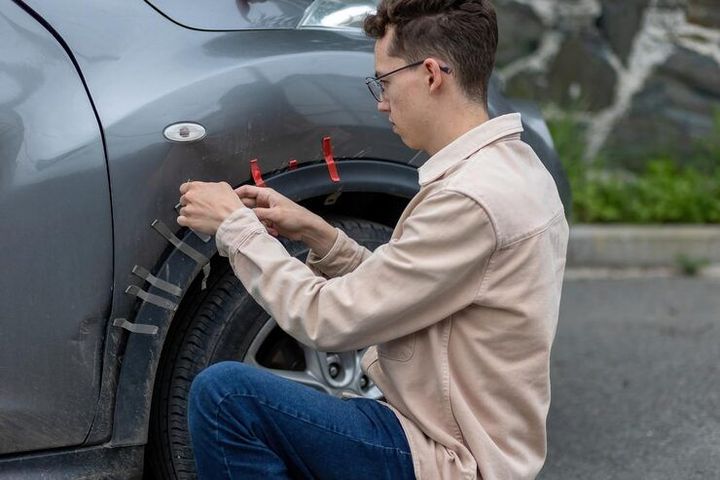
Glue pulling involves attaching a specialized tab to the outside of a panel and applying controlled pulling force. This technique can be useful when direct access behind the panel is difficult.
LED Reflection Boards
Reflection lighting makes changes in the panel surface easier to identify. Technicians can observe distorted lines reflected across the damaged area and use them to guide the correction process.
Paint-Matching Equipment
Traditional repairs may require computerized paint-matching systems, color cameras, mixing equipment, and refinishing tools. These technologies can help identify and reproduce the appropriate paint shade when repainting is necessary.
Car Dent Repair Services and Mobile Options in the UAE
The UAE automotive market includes conventional workshops, specialized body repair centers, and mobile repair providers. Some platforms also allow vehicle owners to request car dent repair or car dent removal through online booking systems.
Examples of platforms that have operated in the UAE automotive market include:
CAFU: Known primarily as a mobile automotive platform, with certain vehicle-related services available through its platform.
ServiceMyCar: An automotive platform providing access to vehicle maintenance and repair categories, including body-related work depending on location.
YesWeDo: A UAE-based platform that connects users with various home and vehicle-related providers.
Availability, coverage, repair methods, and pricing can change by location and provider. Vehicle owners should verify the specific repair option available for their vehicle before scheduling work.
Car Dent Repair Cost in the UAE
The price of car dent repair varies according to the size and depth of the dent, repair method, vehicle model, panel material, paint requirements, and number of damaged panels.
Indicative figures sometimes found in the UAE market include:
| Repair Type | Indicative UAE Range |
|---|---|
| Small paintless dent repair | AED 150–400 |
| Medium dentless repair | AED 400–800 |
| Larger dent with painting | AED 800–2,500 |
| Panel repair and repainting | AED 1,500–4,000 |
| Multiple dents | Depends on total damage |
These figures should not be treated as fixed market rates. A physical inspection or detailed photographs may be required to determine the actual amount for a particular vehicle.
Luxury vehicles can require additional attention because of specialized paint systems, aluminum panels, complex body designs, or manufacturer-specific refinishing requirements.
Time Required for Fixing Car Dents
Repair time depends on the size and complexity of the damage.
Paintless Dent Repair
Small PDR jobs may sometimes be completed within a relatively short period, particularly when the technician has easy access to the damaged panel. More complicated dents can require considerably more time.
Traditional Denting and Painting
Traditional repair generally takes longer because it can involve reshaping, filler application, sanding, primer, paint application, drying, and finishing.
Multi-panel damage can extend the repair period further, particularly when additional parts need to be removed or refinished.
When to Choose Paintless Dent Repair or Full Car Dent Repair
The condition of the paint is one of the most important factors.
Paintless Dent Repair May Suit:
Shallow dents
Minor door dings
Small parking impacts
Intact factory paint
Panels where the rear surface is accessible
Certain types of hail damage
Traditional Car Dent Repair May Suit:
Cracked paint
Chipped paint
Deep dents
Sharp creases
Severely stretched metal
Damage involving structural components
Panels that cannot be adequately reshaped
The distinction helps vehicle owners avoid choosing a repair method that is unsuitable for the actual damage.
How to Select a Car Dent Repair Provider
When comparing car dent repair providers, several practical factors can be considered.
Experience with the vehicle's body materials and panel construction.
Previous examples of similar car dent removal work.
Availability of appropriate PDR equipment.
Explanation of whether painting will be required.
Clear description of the repair process.
Information about expected turnaround time.
Written details of any warranty or workmanship coverage.
Reviews from customers with comparable repair requirements.
A qualified technician should be able to explain why paintless dent repair, dentless repair, traditional denting and painting, or another method is appropriate for the specific damage.
Preventing Frequent Car Dent Removal
Although dents cannot always be prevented, everyday driving and parking habits can reduce the likelihood of minor impacts.
Useful precautions include:
Parking with additional space around the vehicle when practical.
Avoiding extremely narrow parking spaces.
Maintaining adequate distance from surrounding vehicles.
Using designated parking areas where possible.
Checking surroundings before opening doors.
Taking additional care in crowded parking areas.
These measures cannot eliminate the possibility of damage, but they may reduce exposure to common causes of minor dents and door dings.
FAQs
What is the difference between paintless dent repair and traditional car dent repair?
Paintless dent repair reshapes a damaged panel while generally preserving intact original paint. Traditional car dent repair can involve filler, sanding, primer, repainting, and polishing when the damage is deeper or the paint has been damaged.
Is paintless dent repair suitable for every car dent?
No. Paintless dent repair is generally intended for suitable dents where the paint remains intact and the metal can be reshaped. Deep creases, severe deformation, damaged paint, or difficult panel access may require another method.
How much does car dent repair cost in the UAE?
The amount varies according to dent size, vehicle type, panel material, repair method, and whether repainting is required. Small PDR repairs may be less expensive than larger repairs involving bodywork and refinishing.
How long does car dent removal take?
Minor paintless dent repair can sometimes be completed within a short appointment, while larger or more complicated repairs can take longer. Traditional denting and painting generally requires additional time because of preparation and refinishing stages.
Is dentless repair the same as paintless dent repair?
Dentless repair is often used as a general term for repairing a dent without conventional filling and repainting. In many contexts, it refers to paintless dent repair, although terminology can vary between providers.
Conclusion
Car dent repair includes several methods designed for different levels and types of vehicle damage. Paintless dent repair and dentless repair can be appropriate for certain minor dents when the original paint remains intact, while traditional denting and painting may be necessary for deeper damage or damaged finishes. Modern tools such as PDR rods, glue-pulling equipment, reflection lighting, and digital paint-matching systems have improved the precision of many repair processes. Understanding the damage and the available car dent removal methods can help vehicle owners select an appropriate repair approach for their vehicle.