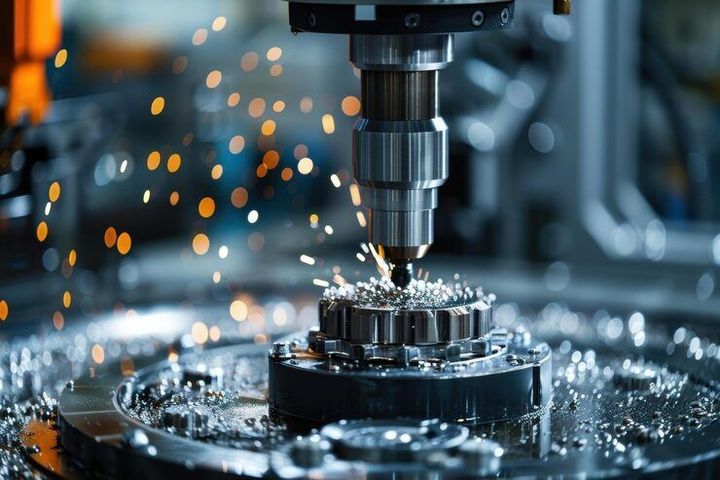
CNC Machines & Precision Manufacturing: Overview of Technology and Useful Details
What Are CNC Machines? CNC Machines & Precision Manufacturing are closely connected technologies used to produce components with controlled dimensions, repeatable movements, and consistent machining processes. CNC stands for Computer Numerical Control, meaning that machine movements are directed by programmed instructions rather than being controlled entirely by an operator.
CNC equipment can perform operations such as cutting, drilling, milling, turning, boring, grinding, and other machining processes. Depending on the machine configuration, several operations can be performed on one workpiece with limited manual intervention.
Precision manufacturing focuses on producing components within specified dimensional and geometric limits. It is important in industries where small variations can affect assembly, performance, reliability, or safety.
How CNC Machines Work
A CNC machining process generally begins with a digital design. Engineers can create a component using computer-aided design software and then prepare manufacturing instructions using computer-aided manufacturing systems.
The basic workflow includes:
- Digital design: A component is modeled using CAD software.
- Process planning: The machining sequence, tools, speeds, feeds, and workholding method are determined.
- Toolpath generation: CAM software converts manufacturing requirements into machine instructions.
- Program preparation: Numerical-control instructions are generated for the selected machine.
- Workpiece setup: Material is positioned and secured on the machine.
- Machining: Cutting tools remove material according to programmed movements.
- Inspection: Dimensions and surface characteristics are checked using appropriate measurement equipment.
- Correction: If required, offsets or process parameters are adjusted for subsequent production.
The exact process varies according to the material, machine type, component geometry, and required dimensional accuracy.
Main Types of CNC Machines
CNC milling machines use rotating cutting tools to remove material from a stationary or repositioned workpiece. They are commonly used for slots, pockets, holes, contours, and complex surfaces.
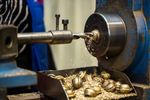
CNC lathes and turning centers rotate the workpiece while cutting tools remove material. They are particularly suitable for cylindrical, tapered, threaded, and rotational components.
CNC machining centers combine multiple machining operations in one automated setup. Vertical and horizontal configurations are commonly used in industrial production.
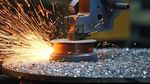
CNC grinding machines use abrasive wheels to achieve precise dimensions and surface finishes, particularly during final machining stages.
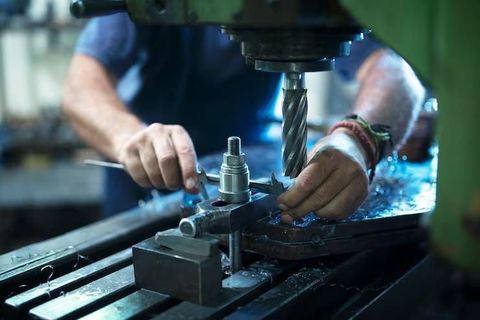
CNC drilling machines create holes with controlled positions and dimensions. More advanced systems can combine drilling with additional machining operations.
Importance
Precision and Repeatability
One of the main advantages of CNC technology is repeatability. Once a machining program and process have been properly established, the machine can follow the same programmed movements across multiple workpieces.
Precision depends on many factors, including machine construction, thermal conditions, tooling, workholding, programming, material behavior, and measurement methods. CNC control alone does not automatically ensure a particular level of accuracy.
Industrial Applications
CNC Machines & Precision Manufacturing support a wide range of industries.
In automotive manufacturing, CNC equipment can produce engine components, transmission parts, shafts, housings, and tooling.
In aerospace manufacturing, machining is used for structural components, brackets, housings, and other parts where dimensional control and traceability are important.
In medical-device manufacturing, precision machining can be used for selected instruments, equipment components, and specialized parts.
In electronics manufacturing, CNC systems can produce enclosures, fixtures, heat-management components, and precision mechanical parts.
Other applications include energy equipment, industrial machinery, robotics, defence production, scientific instruments, and tooling.
Automation and Productivity
CNC machines can automate repeated movements and reduce dependence on manual control during machining. Automation can also be extended through tool changers, pallet systems, robotic loading, probing, machine monitoring, and production-management software.
The appropriate level of automation depends on production volume, component complexity, material, machine configuration, and process requirements.
Quality Control
Precision manufacturing requires measurement as well as machining. Common inspection equipment includes coordinate measuring machines, micrometers, vernier instruments, gauges, optical measurement systems, surface measurement equipment, and machine-integrated probes.
A manufacturing process can use inspection data to identify dimensional variation and determine whether adjustments are needed.
| CNC Technology | Typical Operation | Common Application |
|---|---|---|
| CNC Milling | Cutting and contouring | Housings and complex parts |
| CNC Turning | Rotational machining | Shafts and cylindrical parts |
| Machining Center | Multiple operations | Precision components |
| CNC Grinding | Abrasive finishing | Tight-tolerance surfaces |
| CNC Drilling | Hole production | Mechanical assemblies |
| CNC Wire EDM | Electrical erosion | Complex profiles and tooling |
Recent Updates
Advanced Manufacturing Systems
India has been increasing attention on advanced manufacturing systems, including CNC machine tools, controllers, robotics, testing, metrology, and additive manufacturing.
In February 2026, the Office of the Principal Scientific Adviser and Ministry of Heavy Industries held a stakeholder consultation at the Central Manufacturing Technology Institute in Bengaluru. Discussions included CNC machine-tool control systems, advanced machines, testing and metrology, robotics, and advanced additive manufacturing.
The consultation also highlighted the importance of domestic capabilities in high-precision machines, controllers, sensors, testing infrastructure, and related components.
Precision Testing Infrastructure
Testing and measurement are becoming increasingly important as manufacturers work with tighter dimensional requirements. In 2026, CMTI inaugurated a Ball Screw Lead Error Testing and Certification System described by the government as the first such facility in India.
Ball screws are important components in many machine tools because they convert rotary motion into precise linear movement. Testing their lead accuracy can therefore contribute to machine-tool quality assessment.
Digital Manufacturing
Modern precision manufacturing increasingly connects CNC equipment with CAD/CAM systems, production monitoring, simulation, digital twins, robotics, and data analysis.
NITI Aayog's 2025 advanced-manufacturing roadmap identified artificial intelligence, machine learning, advanced materials, digital twins, and robotics as important technologies for manufacturing development across multiple sectors.
Industry 4.0 Integration
CNC machines can now operate as part of connected manufacturing environments. Sensors and software can collect information about machine conditions, tool usage, temperature, spindle behavior, production activity, and maintenance requirements.
This information can support process analysis and equipment planning. However, data quality, machine connectivity, cybersecurity, and compatibility between different systems remain important considerations.
Development of Domestic Capabilities
India's recent advanced-manufacturing discussions have emphasized stronger domestic development of CNC control systems, machine-tool components, robotics, metrology, and other critical technologies.
Government discussions have also identified testing, validation, specialized skills, and industry-academia collaboration as areas requiring continued attention.
Laws or Policies
National Manufacturing Mission
The National Manufacturing Mission was announced in India's Union Budget 2025–26. Its framework focuses on areas including technology access, workforce readiness, MSME development, quality manufacturing, and regulatory improvement.
These priorities are relevant to CNC Machines & Precision Manufacturing because modern machine tools depend on technology development, skilled personnel, quality systems, and industrial infrastructure.
Advanced Manufacturing Strategy
Government consultations during 2025 and 2026 have focused on developing a coordinated approach to advanced manufacturing systems. CNC machine tools, controllers, robotics, testing, metrology, and additive manufacturing have been identified as important technology areas.
Such initiatives can influence research, technology development, skills, testing infrastructure, and domestic manufacturing capabilities.
Machine-Tool Standards
The Bureau of Indian Standards maintains standards and technical information relating to machine tools. Its published compendium on CNC and NC machine tools includes Indian Standards concerning geometric accuracy and positioning accuracy testing.
Standards help manufacturers, testing organizations, and engineers establish consistent methods for evaluating machine performance.
Industrial Safety
CNC machining involves moving components, cutting tools, electrical systems, chips, coolant, and rotating workpieces. Industrial facilities therefore need appropriate machine guarding, operator training, emergency controls, maintenance procedures, and workplace safety measures.
The exact requirements depend on the machine, workplace, industry, and applicable Indian regulations.
Environmental Considerations
Manufacturing facilities may need to address electricity consumption, metal waste, cutting fluids, coolant handling, emissions, noise, and waste management.
Modern production planning can incorporate material efficiency, appropriate fluid management, recycling systems, energy monitoring, and equipment maintenance to reduce unnecessary resource use.
Tools and Resources
CAD Software
Computer-aided design systems are used to create accurate digital models and technical drawings. The resulting geometry can provide the foundation for CNC programming.
CAM Software
Computer-aided manufacturing software converts digital component geometry into toolpaths and machine instructions. It can simulate cutting movements and identify certain machining problems before production.
CNC Simulation
Simulation tools can display tool movement, material removal, collisions, machining sequences, and estimated process behavior. They are useful for reviewing programs before running them on physical equipment.
Measurement Equipment
Precision manufacturing relies on measurement instruments such as coordinate measuring machines, digital micrometers, gauges, optical systems, and probing equipment.
Measurement results can be compared with engineering drawings or digital specifications to evaluate dimensional conformity.
Digital Monitoring
Machine-monitoring platforms can collect information from connected CNC equipment. Data may include spindle activity, machine status, cycle information, alarms, tool usage, and operating conditions.
Standards and Technical References
The Bureau of Indian Standards provides technical references for machine tools and related testing practices. International standards organizations also publish documents covering CNC machine-tool performance, manufacturing processes, measurement, and quality management.
These resources can help engineers understand terminology, testing methods, dimensional requirements, and manufacturing practices.
FAQs
What are CNC Machines & Precision Manufacturing?
CNC Machines & Precision Manufacturing combine computer-controlled machining with controlled production and measurement methods to create components with specified dimensions and repeatable processes.
How do CNC machines improve precision manufacturing?
CNC machines follow programmed movements with controlled parameters. When combined with suitable tooling, stable machine conditions, process control, and measurement systems, they can produce repeatable components.
What industries use CNC Machines & Precision Manufacturing?
CNC technology is used in automotive, aerospace, medical-device production, electronics, energy, robotics, industrial equipment, defence, tooling, and scientific manufacturing.
What is the role of CAD and CAM in CNC machining?
CAD is used to create digital component geometry, while CAM helps convert that geometry into machining toolpaths and machine instructions. Together, they connect product design with CNC production.
Why is metrology important in precision manufacturing?
Metrology provides systematic measurement of dimensions, geometry, surface characteristics, and other properties. It helps determine whether manufactured components meet their specified requirements.
Conclusion
CNC Machines & Precision Manufacturing form an important part of modern industrial production by combining computer-controlled equipment, digital engineering, automation, measurement, and process management. Recent developments in India are placing greater attention on advanced machine tools, CNC controllers, metrology, robotics, and domestic technology capabilities. CAD, CAM, simulation, connected monitoring, and measurement systems are also expanding the role of digital technologies in precision production. Understanding these technologies provides useful context for how modern factories create consistent and technically demanding components.