Clean Room Air Units: Explore Air Control Technology for Semiconductor Manufacturing
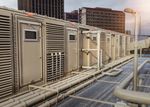
Clean room air units are specialized air-handling systems designed to control airborne particles, temperature, humidity, and airflow within controlled manufacturing environments. They are important in semiconductor production, where sensitive processes require carefully managed air conditions. These systems can include filtration, fans, cooling, heating, monitoring instruments, and automated controls for consistent cleanroom operation.
Clean Room Air Units: Explore Air Control Technology for Semiconductor Manufacturing
Clean room air units are specialized air-handling systems used to maintain controlled environmental conditions in cleanrooms and other highly regulated manufacturing spaces. They help manage airborne particles, temperature, humidity, pressure, and airflow patterns.
Semiconductor manufacturing is one of the industries where controlled air conditions are particularly important. Modern semiconductor processes involve extremely small structures and sensitive materials, making uncontrolled airborne contamination a significant process consideration.
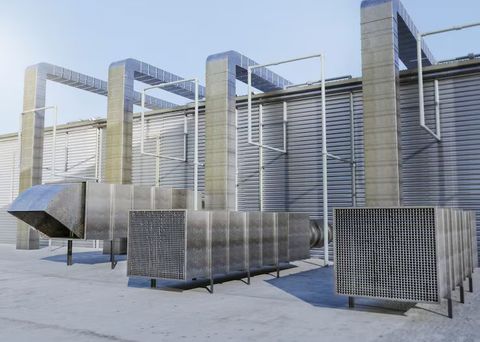
A clean room air unit can form part of a larger heating, ventilation, and air-conditioning system designed specifically for controlled environments. Depending on the facility, the system may include air filtration, fans, cooling coils, heating elements, humidification or dehumidification equipment, sensors, and digital controls.
The overall cleanroom system is normally designed around the required cleanliness classification, process conditions, room layout, airflow pattern, heat load, and environmental requirements.
Context
Clean room air units are designed to condition and circulate air within environments where contamination and environmental conditions need to be controlled.
Unlike conventional comfort-oriented air-conditioning systems, cleanroom air systems must address the movement and filtration of very small airborne particles. They also need to maintain stable environmental conditions appropriate for the processes taking place inside the room.
In semiconductor facilities, air may pass through several filtration and conditioning stages before entering the manufacturing space. Air is then circulated, filtered, and returned through the facility's air-handling arrangement.
Main Components
A clean room air unit can contain several components working together.
| Component | Main Function |
|---|---|
| Air-handling cabinet | Houses major air-treatment components |
| Fan or blower | Moves air through the system |
| Pre-filter | Captures larger airborne particles |
| Fine filter | Provides additional particle filtration |
| HEPA or ULPA filter | Removes very small airborne particles |
| Cooling coil | Controls air temperature |
| Heating element | Provides heating when required |
| Humidification system | Adds controlled moisture |
| Dehumidification system | Reduces moisture content |
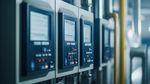
| Sensors | Monitor environmental conditions |
| Control system | Regulates operating parameters |
The exact configuration depends on the cleanroom design and the environmental conditions required for the manufacturing process.
How Clean Room Air Units Work
Air is drawn into the air-handling system and passed through filtration and conditioning stages. The fan moves the treated air toward the cleanroom distribution system.
Depending on the design, filtered air can enter the room through ceiling-mounted terminal filters or other distribution arrangements. Air movement is designed to reduce particle accumulation and maintain the intended pressure and airflow pattern.
Air is then returned to the air-handling system or another part of the facility for recirculation and further treatment.
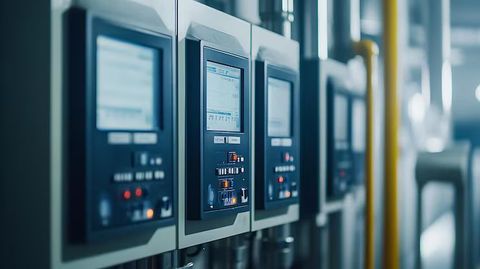
Temperature and humidity sensors continuously provide information to the control system. The system can adjust cooling, heating, airflow, or humidity-control equipment as operating conditions change.
Importance
Controlled air systems are an important part of semiconductor manufacturing because airborne contamination can interfere with sensitive production processes.
Particle Control
Semiconductor manufacturing requires environments with carefully controlled airborne particle levels. Particles can potentially interfere with process steps involving wafers, coatings, etching, deposition, and other precision operations.
High-efficiency filtration and controlled airflow help reduce the movement and accumulation of airborne particles.
Temperature Control
Manufacturing equipment and processes can generate heat. Stable temperature conditions help maintain an appropriate environment for equipment and sensitive process operations.
Air-handling units can use cooling coils, heating systems, sensors, and control loops to maintain specified temperature ranges.
Humidity Control
Humidity influences air properties, material behavior, electrostatic conditions, and selected manufacturing processes.
Cleanroom air systems can incorporate humidification and dehumidification equipment to maintain the required moisture conditions.
Pressure Control
Cleanrooms may be maintained at a pressure relationship with surrounding spaces to help control the movement of air and contaminants.
Air-handling systems, exhaust systems, and room airflow arrangements work together to maintain the intended pressure conditions.
Airflow Management
Airflow direction and distribution are important in cleanroom design. The objective is to move particles away from sensitive areas while maintaining appropriate room conditions.
Different cleanrooms can use different airflow arrangements depending on the process and cleanliness requirements.
Semiconductor Applications
Clean room air units can support several areas of semiconductor manufacturing, including:
Wafer processing
Photolithography
Etching
Deposition
Inspection
Packaging
Assembly
Testing
Equipment support areas
Each area may have different environmental requirements, so the air-handling design needs to correspond with the specific process.
Recent Updates
Recent developments in cleanroom air-control technology have focused on energy management, improved filtration, digital monitoring, automation, airflow control, and equipment integration.
Semiconductor facilities increasingly use sensors and control platforms to monitor environmental conditions continuously.
Advanced Filtration
High-efficiency particulate air filters and ultra-low penetration air filters are used in cleanroom applications where very low airborne particle concentrations are required.
Filter selection depends on the cleanroom classification, airflow arrangement, pressure drop, contamination-control requirements, and system design.
Digital Environmental Monitoring
Modern cleanroom systems can continuously monitor variables such as:
Temperature
Relative humidity
Differential pressure
Airflow
Filter pressure drop
Particle concentration
Fan operation
Monitoring information can be displayed through building-management or facility-control systems.
Variable-Speed Fans
Variable-speed drives can adjust fan operation according to changing airflow requirements.
Instead of operating at one fixed speed under all conditions, the control system can adjust airflow according to demand and system conditions.
Energy Management
Cleanrooms can require substantial energy because air is continuously filtered, conditioned, and circulated.
Modern systems may use variable-speed drives, optimized airflow, heat recovery, improved fan efficiency, and coordinated control strategies to manage energy consumption.
Smart Controls
Digital control systems can coordinate air-handling units with room sensors, filtration equipment, cooling systems, humidity controls, and facility-management platforms.
Automated alarms can also notify operators when selected environmental parameters move outside their designated operating ranges.
Filter Monitoring
Pressure sensors can monitor the pressure difference across filters. An increasing pressure difference may indicate loading or changes in airflow resistance.
This information can support inspection and maintenance planning.
Laws or Policies
Cleanroom air systems can be subject to building, workplace-safety, electrical, environmental, contamination-control, and industry-specific requirements.
The exact requirements depend on the facility location, cleanroom classification, manufacturing process, equipment design, and applicable standards.
Cleanroom Standards
Cleanroom environments are commonly classified according to airborne particle concentrations. International standards provide frameworks for cleanroom classification and environmental control.
Facilities may also establish additional internal requirements based on semiconductor processes and product specifications.
Workplace Safety
Air-handling systems contain fans, electrical equipment, filters, heating and cooling components, and potentially pressurized systems.
Safety practices can include:
Inspecting fans and motors
Maintaining electrical safeguards
Applying equipment isolation procedures
Using appropriate protective equipment during filter handling
Following maintenance procedures
Controlling access to mechanical areas
Monitoring abnormal equipment conditions
Chemical and Process Considerations
Semiconductor facilities may use chemicals and process gases that require specialized exhaust and containment systems.
Clean room air units should not be treated as substitutes for dedicated process exhaust systems. General room air management and process exhaust are separate but coordinated parts of facility design.
Environmental Requirements
Facilities may have requirements concerning energy use, refrigerants, exhaust emissions, wastewater, and other environmental factors.
Compliance depends on the complete facility design and the regulations applicable to the specific location and process.
Tools and Resources
Clean room air units depend on supporting equipment, measurement systems, and maintenance resources.
Air Filters
Filters are among the most important components in a cleanroom air system. Pre-filters can protect downstream high-efficiency filters by removing larger particles.
HEPA and ULPA filters can provide progressively higher levels of particle control depending on the application.
Airflow Measurement
Airflow meters, anemometers, differential-pressure instruments, and other measurement devices can be used to evaluate air movement.
These measurements help confirm whether the system is maintaining its intended airflow conditions.
Particle Monitoring
Particle counters can measure airborne particle concentrations at selected locations.
Continuous or periodic particle monitoring may be used depending on the cleanroom design and manufacturing requirements.
Temperature and Humidity Sensors
Environmental sensors provide real-time information about room conditions.
Accurate measurement is important because temperature and humidity can influence both facility conditions and sensitive production processes.
Control Systems
Building-management systems and dedicated cleanroom control platforms can collect sensor information and coordinate air-handling equipment.
Controls can regulate fans, cooling systems, heating equipment, dampers, humidifiers, and dehumidification systems.
Maintenance Resources
Maintenance activities can include filter inspection, filter replacement, fan and motor inspection, coil cleaning, sensor verification, damper inspection, and control-system checks.
Technical documentation, airflow diagrams, equipment manuals, calibration records, and maintenance schedules provide important resources for managing cleanroom air systems.
FAQs
What are clean room air units used for?
Clean room air units are used to control airborne particles, temperature, humidity, pressure, and airflow in controlled environments. They are widely relevant to semiconductor manufacturing and other precision industries.
Why are clean room air units important in semiconductor manufacturing?
Semiconductor processes can be sensitive to airborne contamination and environmental changes. Controlled air systems help maintain appropriate particle levels, temperature, humidity, pressure, and airflow conditions.
What filters are used in cleanroom air systems?
Cleanroom systems can use multiple filtration stages, including pre-filters, fine filters, HEPA filters, and ULPA filters. The appropriate combination depends on the required cleanliness and system design.
How is humidity controlled in semiconductor cleanrooms?
Humidity can be managed using humidification and dehumidification equipment integrated into the air-handling system. Sensors monitor moisture conditions and provide information to the control system.
How do modern clean room air units improve monitoring?
Modern systems use sensors, digital controls, pressure monitoring, particle measurements, airflow monitoring, and facility-management platforms to provide continuous information about environmental conditions and equipment status.
Conclusion
Clean room air units are an important part of environmental control systems used in semiconductor manufacturing and other precision industries. They combine filtration, airflow management, temperature control, humidity control, pressure management, sensors, and automated controls.
Modern developments in high-efficiency filtration, variable-speed fans, digital monitoring, smart controls, and energy management provide more detailed control over cleanroom conditions. The air-handling system must be designed around the specific process, room classification, equipment layout, and environmental requirements.
Reliable cleanroom operation also depends on appropriate filtration, accurate measurement, regular inspection, controlled maintenance, and compliance with applicable standards and safety requirements.