Chocolate Coating Lines: Overview of Automated Confectionery Production
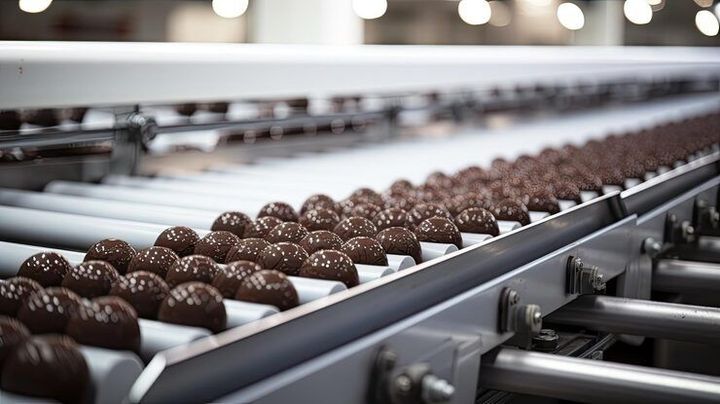
Chocolate Coating Lines are automated production systems used to cover food products with a controlled layer of chocolate. They are widely used in confectionery manufacturing for products such as biscuits, wafers, cookies, nuts, fruit pieces, bars, cakes, and other centers.
Instead of manually dipping each product into chocolate, a coating line moves products through a sequence of controlled stages. Chocolate is prepared and maintained at the required condition, products travel on a conveyor, and a coating system applies chocolate over their surfaces.
The coated products then pass through a cooling section where the chocolate becomes firm. Additional equipment can be integrated for feeding, decorating, cooling, inspection, and packaging.
How Chocolate Coating Works
A typical chocolate coating process starts with a prepared chocolate mixture. The chocolate is maintained within a controlled temperature range so that it has suitable flow characteristics for coating.
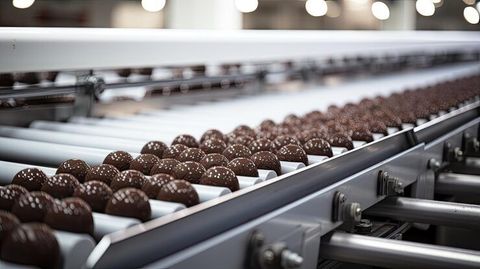
Products are placed onto a conveyor and transported toward the coating area. Depending on the machine configuration, chocolate can be applied from above, while the product can also pass through a chocolate curtain or receive chocolate from underneath.
Excess chocolate is removed or returned to the circulation system. The coated product then enters a cooling tunnel where controlled conditions help the chocolate set.
A simplified production sequence is:
Product feeding: Centers are placed onto the conveyor.
Chocolate preparation: Chocolate is melted and conditioned.
Pre-coating: Selected products may receive a preliminary chocolate layer.
Main coating: Chocolate covers the required product surfaces.
Excess removal: Vibrating or air-based systems can remove extra chocolate.
Decoration: Nuts, patterns, cocoa, or other permitted ingredients may be applied.
Cooling: The coated products travel through a controlled cooling tunnel.
Inspection: Products can be checked for appearance, size, or coating consistency.
Collection: Finished pieces move toward subsequent handling or packaging equipment.
What Is Tempering?
Tempering is a controlled heating and cooling process used with chocolate to encourage the formation of desirable cocoa-butter crystal structures.
Proper tempering can influence the finished chocolate's appearance, texture, stability, and resistance to surface defects such as fat bloom.
Chocolate coating lines may therefore include a tempering unit before the chocolate reaches the coating section. The exact temperature profile depends on the chocolate formulation and equipment design.
Importance
Consistent Chocolate Coverage
Manual dipping can produce differences in chocolate thickness between individual products. Automated coating equipment can regulate the flow and movement of chocolate to create more consistent coverage.
The actual coating thickness depends on factors such as chocolate viscosity, conveyor speed, product geometry, curtain flow, bottoming arrangement, and excess-chocolate removal.
Higher Production Capacity
A continuous coating line can move many products through the coating and cooling stages in a controlled sequence. This makes the technology suitable for industrial confectionery production.
Production capacity depends on the line configuration, product dimensions, conveyor width, cooling tunnel design, chocolate characteristics, and operating speed.
Controlled Chocolate Temperature
Chocolate behavior changes significantly with temperature. If it becomes too cold, its flow can become difficult to control. If it becomes too warm, the desired chocolate structure may not develop correctly.
Coating lines therefore use heating, cooling, pumps, tanks, sensors, and control systems to maintain process conditions.
Reduced Manual Handling
Automation can reduce the amount of direct handling required during coating. Products can move continuously from feeding to cooling, with operators monitoring equipment and managing process conditions.
This can also support cleaner production layouts by reducing unnecessary contact with food products.
Flexible Product Applications
The same general coating principle can be adapted for different centers.
| Product | Typical Coating Application |
|---|---|
| Biscuit | Full or partial chocolate coating |
| Wafer | Chocolate covering or bottom coating |
| Nut | Complete chocolate covering |
| Fruit piece | Chocolate shell |
| Cake piece | Surface or partial coating |
| Protein or cereal bar | Full chocolate coating |
| Cookie | Top, bottom, or complete coating |
| Confectionery center | Full chocolate shell |
Recent Updates
Greater Automation
Modern Chocolate Coating Lines increasingly combine mechanical equipment with electronic control systems. Sensors can monitor temperatures, conveyor movement, tank conditions, and other operating parameters.
Automated controls can coordinate chocolate pumps, cooling systems, conveyors, and other equipment. This allows operators to monitor several process variables from a central interface.
Servo-Based Motion Control
Servo motors can provide precise control of conveyor and mechanical movements. In coating applications, controlled movement can help synchronize product feeding, chocolate application, decoration, and other stages.
The use of programmable motion control also makes it easier to adjust production parameters for different product formats.
Improved Cooling Systems
Cooling tunnels are a major part of chocolate coating production. Modern systems can use controlled airflow, temperature zones, and conveyor speed adjustments.
Multiple cooling zones can provide a gradual change in conditions rather than exposing the product to one constant environment. The appropriate arrangement depends on the chocolate formulation, product size, coating thickness, and production environment.
Digital Monitoring
Industrial control systems can collect information from temperature sensors, motors, pumps, conveyors, and other components.
Historical process information can help production teams identify changes in operating conditions. Digital monitoring can also support equipment diagnostics and maintenance planning.
Vision-Based Inspection
Machine-vision systems can examine products as they move along a conveyor. Cameras can identify selected appearance characteristics such as missing coating, unusual shapes, surface defects, or positioning problems.
Vision inspection can be connected with automated sorting systems where appropriate.
Flexible Production
Confectionery manufacturers may need to process products with different sizes, shapes, fillings, and coating requirements. Modern lines can therefore include adjustable conveyors, interchangeable components, variable-speed drives, and programmable controls.
Changeover procedures remain important because chocolate residue and different ingredients can require appropriate cleaning and process preparation.
Laws or Policies
FSSAI Chocolate Standards
In India, chocolate and related confectionery products fall under the food standards administered by the Food Safety and Standards Authority of India (FSSAI).
FSSAI identifies chocolate and cocoa products within the confectionery category and maintains standards covering chocolate, cocoa products, and related food categories.
FSSAI's chocolate requirements address aspects such as permitted ingredients, product categories, composition, and food safety. The regulations distinguish products including milk chocolate, plain chocolate, white chocolate, filled chocolate, composite chocolate, and covering chocolate.
Food Safety Requirements
Chocolate manufacturing must be carried out under appropriate food-safety controls. Equipment that comes into contact with chocolate should be suitable for food production and designed so that the production environment can be appropriately cleaned and maintained.
FSSAI states that chocolate products should be free from harmful contamination, adulteration, and other specified forms of contamination.
Hygiene and Sanitation
Chocolate coating equipment contains areas where chocolate can accumulate, including conveyors, pumps, tanks, curtains, scrapers, and transfer points.
Production facilities therefore need appropriate cleaning and sanitation procedures. Equipment design should allow relevant surfaces to be accessed and maintained according to the manufacturer's instructions and applicable food-safety procedures.
Food Business Requirements
Food businesses operating in India are subject to FSSAI licensing and registration requirements according to the applicable category and scale of operation.
FSSAI's current regulatory notification records include amendments concerning food-business licensing and registration, demonstrating that food regulations continue to be updated.
Packaging and Labelling
After coating, confectionery products may move into wrapping, carton packing, or other packaging stages. Applicable Indian requirements cover food packaging and labeling, including declarations relevant to the finished product.
Manufacturers should use the current FSSAI regulations applicable to their particular chocolate product and packaging format.
Tools and Resources
Chocolate Tempering Units
Tempering equipment controls the chocolate's heating and cooling cycle before coating. It commonly contains heated tanks, temperature sensors, pumps, and control systems.
The objective is to maintain chocolate in a condition suitable for consistent coating and subsequent setting.
Enrobing Machines
An enrober is the main coating section of many chocolate lines. It allows products to pass through a controlled chocolate curtain or coating area.
The chocolate can cover the top and sides, while a separate bottoming arrangement can provide coverage underneath.
Cooling Tunnels
Cooling tunnels contain controlled airflow and temperature zones. Products remain on the conveyor while the chocolate coating changes from a liquid or semi-liquid condition to a stable solid layer.
Tunnel length and cooling configuration depend on product requirements and production capacity.
Chocolate Pumps
Pumps transfer chocolate between tanks and coating sections. They must be selected according to chocolate viscosity, temperature, flow requirements, and equipment configuration.
Pump speed can influence the amount of chocolate reaching the coating section.
Chocolate Tanks
Heated or temperature-controlled tanks hold chocolate before and during coating. Agitation and temperature monitoring can help maintain consistent conditions.
Conveyor Systems
Conveyors transport products between different stages. Belt material, belt width, speed control, cleaning requirements, and product spacing are important considerations.
Control Panels
A programmable control panel can coordinate conveyors, pumps, heating systems, cooling equipment, sensors, and alarms.
Operators can use the control interface to monitor process conditions and adjust permitted operating parameters.
Cleaning and Inspection Tools
Production teams may use temperature instruments, inspection equipment, sanitation tools, weighing systems, and quality-control procedures to monitor the coating process.
The appropriate tools depend on the product, equipment configuration, food-safety plan, and applicable regulations.
FAQs
What are Chocolate Coating Lines?
Chocolate Coating Lines are automated production systems that cover biscuits, wafers, nuts, bars, fruit pieces, cakes, and other confectionery products with a controlled chocolate layer.
How do Chocolate Coating Lines work?
Chocolate is prepared and maintained at an appropriate temperature before products enter the coating area. Chocolate is applied to moving products, excess material is controlled, and the coated products pass through a cooling tunnel to set the coating.
What is an enrober in chocolate production?
An enrober is a machine section designed to cover products with chocolate. It commonly uses a chocolate curtain or similar flow arrangement to coat the top and sides of products.
Why is tempering important in chocolate coating?
Tempering controls the formation of cocoa-butter crystals. Properly controlled tempering can influence the chocolate's appearance, texture, stability, and resistance to certain surface defects.
Where are Chocolate Coating Lines used?
Chocolate coating lines are used in confectionery production for products such as biscuits, wafers, cookies, nuts, fruit pieces, bars, cakes, and other chocolate-covered foods.
Conclusion
Chocolate Coating Lines combine chocolate preparation, tempering, product feeding, coating, cooling, and process control into an integrated confectionery production system. Their major components can include enrobers, pumps, tanks, conveyors, cooling tunnels, sensors, and control panels. Modern systems increasingly incorporate digital monitoring, automated controls, servo motion, and vision inspection. In India, chocolate production is subject to FSSAI food standards, hygiene requirements, licensing provisions, and applicable packaging and labeling rules.