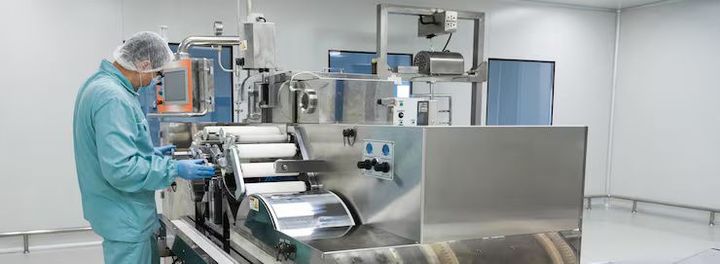
Calendering Machines: Explore Types, Components, and Industrial Applications
Calendering Machines are industrial machines that use two or more large rotating rolls to press, smooth, coat, laminate, or form materials into controlled sheets or films. The material passes through the gap between the rolls, where pressure, temperature, and roll speed influence the final result.
Calendering is used with materials such as rubber, plastics, textiles, paper, films, and selected composite materials. The machine configuration changes according to the material and the required product characteristics.
A simple example is a rubber sheet. A rubber compound can enter the machine as a thick mass and pass between heated or temperature-controlled rolls. The rolls spread and compress the material into a sheet with a selected thickness.
How Calendering Works
A typical calendering process follows several stages:
Material preparation: The raw material is prepared, mixed, or heated according to the process.
Feeding: The material enters the space between rotating rolls.
Compression: Roll pressure presses and spreads the material.
Thickness control: The roll gap and operating conditions influence sheet thickness.
Cooling or stabilization: The processed sheet may be cooled or conditioned.
Winding or cutting: The finished material can be wound into rolls or cut into selected dimensions.
The distance between two rolls is commonly called the nip. Controlling the nip is important because it affects how much material passes through and the resulting thickness.
Main Types of Calendering Machines
Two-roll calenders contain two primary rolls and are used for relatively straightforward processing operations.
Three-roll calenders use three rolls arranged vertically or in another selected configuration. They provide additional processing stages and are widely associated with rubber and polymer applications.
Four-roll calenders provide additional control over material thickness and coating operations. They can be configured for more complex sheet or film production.
Textile calenders process fabrics to modify surface appearance, smoothness, thickness, stiffness, or other characteristics.
Rubber calenders are used to produce rubber sheets and to apply rubber to textile or reinforcement materials. Rubber manufacturing references from BIS identify calender machines as part of processes used in products such as industrial belts.
Plastic film calenders process selected thermoplastic materials into continuous sheets or films.
Importance
Controlling Material Thickness
One major purpose of calendering is to produce material with controlled thickness. The gap between the rolls, roll temperature, material properties, pressure, and line speed all influence the result.
Consistent thickness can be important for products such as rubber sheets, coated fabrics, plastic films, flooring materials, and other sheet products.
Creating Smooth Surfaces
The rolls can apply pressure to the material surface and influence its texture and appearance.
In textile processing, calendering can create a smoother or more compact surface. In paper and polymer applications, similar roll-based processes can influence surface characteristics.
Coating Materials
Calendering can also be used to apply a material layer to another substrate.
For example, rubber can be pressed onto textile reinforcement to create a composite structure. This type of process is relevant to products such as reinforced belts, coated fabrics, and selected industrial materials.
Producing Continuous Sheets
A calender can convert prepared material into a continuous sheet that can subsequently be cooled, wound, cut, laminated, or processed further.
Continuous production makes calendering useful in industries where large quantities of uniform sheet material are required.
Important Machine Characteristics
| Component or Feature | Main Function | Process Effect |
|---|---|---|
| Calender rolls | Press and shape material | Sheet formation |
| Nip | Space between rolls | Thickness control |
| Roll heating | Controls roll temperature | Material processing |
| Roll cooling | Removes heat | Dimensional control |
| Drive system | Rotates rolls | Speed control |
| Gap adjustment | Changes roll spacing | Thickness adjustment |
| Feeding system | Introduces material | Stable material flow |
| Winding unit | Collects processed material | Continuous handling |
| Control panel | Monitors machine parameters | Process management |
Recent Updates
More Precise Process Control
Modern Calendering Machines increasingly use electronic control systems to monitor roll speed, temperature, pressure, material thickness, and other operating conditions.
Digital controls allow operators to observe several parameters from a central interface. Automated adjustments can also help maintain process conditions within defined operating ranges.
Improved Thickness Monitoring
Thickness measurement systems can use sensors positioned along the production line to identify changes in sheet thickness.
The information can be connected with control systems so that operators can investigate variations in roll gaps, temperature, material feeding, or other process conditions.
Automation and Data Collection
Industrial calendering lines can incorporate programmable controllers, sensors, variable-speed drives, and production monitoring systems.
Recorded process information can help identify changes in operating conditions and support quality analysis. Data collection can also help compare production runs and identify recurring process variations.
Energy Management
Heating and cooling are important parts of many calendering processes. Modern equipment can therefore incorporate temperature-control systems designed to manage thermal conditions more precisely.
Improved insulation, controlled heating zones, variable-speed drives, and process monitoring can help reduce unnecessary energy use while maintaining required operating conditions.
Developments in Rubber and Plastics Machinery
India's machinery regulatory framework has recently received additional attention through the Machinery and Electrical Equipment Safety (Omnibus Technical Regulations) Order, 2024. BIS issued category-specific guidelines in 2025 for machinery used for working rubber and plastics under its Scheme-X conformity framework. The guidelines address technical-file information, grouping, marking, and certification scope.
This is relevant to manufacturers and users of machinery involved in rubber and plastics processing, including equipment falling within applicable categories.
Greater Use of Automated Monitoring
Industrial manufacturers are increasingly combining mechanical equipment with sensors, electronic drives, programmable controls, and monitoring systems.
For calendering, these technologies can help track operating variables such as roll temperature, rotational speed, material movement, and selected quality characteristics.
Laws or Policies
Machinery Safety Requirements in India
Calendering Machines can contain rotating rolls and narrow gaps where material is drawn into the machine. These areas can create serious mechanical hazards if they are not appropriately protected.
Indian factory safety requirements include provisions addressing machinery with in-running rolls. Government factory-rule material specifies guarding requirements for calenders, including protection across the nip to prevent workers' fingers from being drawn between the rolls.
BIS Machinery Framework
The Bureau of Indian Standards develops Indian Standards covering machinery, materials, testing methods, and industrial equipment.
BIS's 2025 category-specific guidelines for machinery working rubber and plastics were issued under the Machinery and Electrical Equipment Safety (Omnibus Technical Regulations) Order, 2024 and Scheme-X conformity assessment framework. Applicability depends on the specific machine category and applicable notification.
Product Certification
BIS explains that its certification framework is generally voluntary, although the Central Government can make compliance with specified Indian Standards mandatory for particular products through regulatory notifications and Quality Control Orders.
Therefore, a manufacturer or user should identify the exact machine category and current regulatory requirements rather than assuming that every calendering machine follows an identical certification route.
Machine Guarding
Physical guarding is particularly important around the nip between rotating rolls. Guards should be designed so that workers cannot accidentally reach dangerous moving areas during normal operation.
Emergency stopping systems, appropriate controls, inspection procedures, warning information, and operator training can form additional parts of a machine-safety system.
Workplace Safety
Calendering operations may also involve heat, noise, moving material, electrical equipment, hydraulic or pneumatic systems, and process chemicals depending on the application.
Workplace controls therefore need to address the complete production environment rather than focusing only on the machine rolls.
Tools and Resources
Thickness Measurement Systems
Thickness gauges and continuous measurement systems can monitor the sheet as it leaves the calender.
They can help operators identify thickness variation and investigate changes in the roll gap or other process conditions.
Temperature Sensors
Temperature sensors monitor roll and material temperatures. Thermal conditions can significantly influence the behavior of rubber, plastics, and other materials during processing.
Roll-Gap Measurement
Electronic or mechanical systems can monitor the distance between rolls. Accurate gap control is important when producing material with a specified thickness.
Programmable Control Systems
Programmable controllers coordinate selected machine functions such as roll speed, heating, cooling, feeding, and emergency conditions.
Modern control panels can display operating information and alarms for the machine operator.
Process Simulation and Data Analysis
Engineering software can be used to study material flow, thermal behavior, roll pressure, and other process characteristics.
Production data can also be analyzed to identify relationships between operating parameters and product quality.
BIS Standards Resources
The BIS Know Your Standard portal allows users to search Indian Standards using an IS number or keyword. It can provide access to standard documents, amendments, notifications, testing information, and related details.
For machinery manufacturers and industrial users, this resource can help identify standards that may apply to a particular material, machine category, or manufacturing process.
FAQs
What are Calendering Machines?
Calendering Machines are industrial machines that use rotating rolls to press, smooth, coat, laminate, or form materials into controlled sheets, films, or coated structures.
How do Calendering Machines work?
Material is introduced between rotating rolls. Pressure, roll spacing, temperature, and speed control how the material spreads and determine characteristics such as thickness and surface finish.
What materials can be processed using Calendering Machines?
Depending on the machine design, calendering can process rubber, plastics, textiles, paper, films, and other materials suitable for roll-based processing.
What are the main components of a calendering machine?
Important components include calender rolls, roll-gap adjustment systems, heating and cooling systems, drive units, feeding equipment, control panels, sensors, and winding or cutting equipment.
Where are Calendering Machines used?
Calendering Machines are used in rubber manufacturing, textile processing, plastic-sheet production, coated fabrics, industrial belts, flooring materials, films, and other manufacturing applications.
Conclusion
Calendering Machines use controlled pressure between rotating rolls to transform materials into sheets, films, coatings, and composite structures. Their main components include rolls, drive systems, temperature controls, gap-adjustment mechanisms, feeding systems, sensors, and control equipment. Modern machines increasingly incorporate automated monitoring, digital controls, improved thickness measurement, and energy-management technologies. In India, machinery safety requirements and applicable BIS frameworks are important considerations, particularly for equipment used in rubber and plastics processing.