Business VPN Solutions: Guide to Secure Remote Access and Network Protection
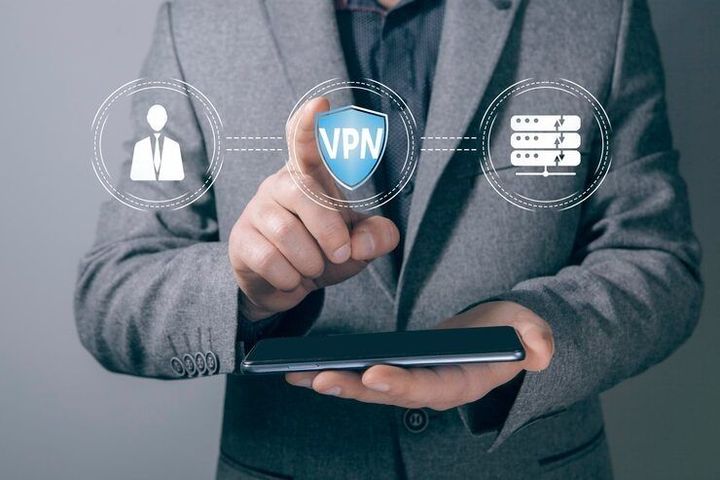
Business VPN Solutions are technologies that create encrypted connections between authorized users, devices, offices, and organizational networks. A VPN, or Virtual Private Network, can help protect data while it travels between a remote device and a business network.
A business VPN is different from a typical consumer VPN because organizational environments often require centralized administration, user authentication, access controls, device management, monitoring, and connections to internal applications.
A remote employee, for example, may use a company-managed VPN connection to reach an internal application while working from home. The VPN creates an encrypted tunnel between the approved device and the organization's network infrastructure.
How a Business VPN Works
A simplified VPN connection involves several stages:
User authentication: The organization verifies the identity of the person attempting to connect.
Device verification: Security controls may check whether the device meets organizational requirements.
Encrypted connection: Data traveling through the VPN tunnel is protected against unauthorized interception.
Access control: The organization determines which internal resources the user can reach.
Network communication: Approved traffic moves between the remote device and authorized organizational resources.
Session monitoring: Security systems can record relevant connection information and detect unusual activity.
Common VPN technologies include IPsec VPN, SSL/TLS-based VPN, and newer approaches that integrate VPN capabilities with broader zero-trust or cloud-network architectures.
Why Businesses Use VPNs
Organizations may use Business VPN Solutions for several purposes:
Connecting remote employees to internal applications.
Linking geographically separated offices.
Protecting communication across untrusted networks.
Providing controlled access to internal systems.
Connecting mobile or field-based workers.
Supporting selected third-party or partner connections.
Connecting private networks across different locations.
A VPN is not a complete cybersecurity system. Authentication, endpoint protection, patching, access management, network segmentation, monitoring, and incident response remain important parts of an overall security architecture.
Importance
Protecting Remote Connections
Remote workers frequently connect through home networks, public Wi-Fi, mobile networks, and other environments outside an organization's direct control.
A properly configured VPN can encrypt traffic between the device and the organization's VPN gateway. This can reduce exposure to certain network interception risks during transmission.
However, encryption does not protect against every threat. A compromised laptop, stolen password, malicious application, or unauthorized account can still create security problems.
Supporting Distributed Workplaces
Modern organizations may operate across offices, homes, cloud environments, branch locations, and temporary workspaces.
Business VPN Solutions can provide a controlled connection method for selected users and devices. This can be particularly relevant when an application remains inside a private corporate network rather than being directly exposed to the public internet.
Controlling Network Access
A VPN can be combined with identity-based access controls to determine who can connect and what resources can be reached.
For example, an employee in the finance department might receive access to selected financial applications while another employee receives access to different internal systems.
This approach can reduce unnecessary access to sensitive network areas.
Supporting Data Protection
Encryption helps protect information while it moves between locations. Businesses handling confidential corporate information, customer records, intellectual property, financial information, or regulated data may therefore include encrypted remote access within their security architecture.
Data protection requirements vary according to the country, industry, type of information, and applicable regulation.
Key Business VPN Components
| Component | Main Function | Example |
|---|---|---|
| VPN gateway | Manages encrypted connections | Corporate network gateway |
| VPN client | Connects an approved device | Desktop or mobile application |
| Authentication | Verifies identity | Password plus MFA |
| Encryption | Protects data in transit | IPsec or TLS |
| Access control | Limits resource access | User or group policies |
| Logging | Records connection activity | Authentication records |
| Firewall | Filters network traffic | Network security gateway |
| Device management | Checks endpoint conditions | Managed laptop controls |
Recent Updates
Growing Interest in Zero Trust
One of the major changes in enterprise network protection is the movement from traditional perimeter-based security toward zero-trust architectures.
NIST's Zero Trust Architecture guidance states that organizations should not automatically trust a user or device simply because it is located inside a particular network. Authentication and authorization are treated as separate controls before access to enterprise resources is established.
NIST published a practical zero-trust implementation guide in 2025 containing 19 example architectures covering hybrid environments and remote access.
Evolution Beyond Traditional VPNs
Traditional VPNs can provide broad network-level access after successful authentication. Modern approaches increasingly focus on giving users access only to specific applications or resources they are authorized to use.
CISA and partner cybersecurity agencies have highlighted risks associated with vulnerabilities in VPN products and have described modern network-access approaches, including zero trust and cloud-based security architectures, as alternatives or complements to traditional remote-access models.
This does not mean that every VPN should immediately be replaced. The appropriate architecture depends on the organization's applications, infrastructure, risk profile, users, and security requirements.
Multi-Factor Authentication
Multi-factor authentication is increasingly important for remote access. Instead of relying only on a password, MFA can require an additional factor such as a hardware security key, authenticator application, certificate, or biometric mechanism.
ENISA guidance recommends MFA for remotely accessible organizational systems, including VPN access, and highlights phishing-resistant methods such as FIDO2 security keys where practical.
Cloud and Hybrid Networks
Organizations increasingly combine on-premises infrastructure with cloud platforms and geographically distributed applications.
This changes the role of a VPN because not every application is located inside one corporate data center. NIST's network guidance discusses VPN limitations alongside approaches such as zero-trust network access, microsegmentation, and secure access architectures designed for distributed environments.
Device and Endpoint Verification
Remote access increasingly involves checking the condition of the device before allowing access. Security systems may evaluate operating-system updates, endpoint protection, device identity, encryption status, and other characteristics.
This approach recognizes that a valid username and password alone may not provide enough information to establish trust.
Laws or Policies
Privacy and Data Protection
Business VPN use can involve personal information such as usernames, device identifiers, IP addresses, authentication records, and connection logs.
Organizations operating internationally may need to consider privacy laws applicable to their users and locations. Examples include the EU General Data Protection Regulation (GDPR), the California Consumer Privacy Act and related California privacy legislation, Brazil's Lei Geral de Proteção de Dados (LGPD), and other national or regional privacy frameworks.
The exact obligations depend on jurisdiction, organization type, data categories, and processing activities.
Cybersecurity Frameworks
The NIST Cybersecurity Framework and related NIST publications provide internationally useful references for identifying, protecting, detecting, responding to, and recovering from cybersecurity risks.
NIST's zero-trust guidance specifically addresses environments involving remote users, personally owned devices, cloud resources, and distributed enterprise infrastructure.
European Cybersecurity Requirements
Organizations operating within sectors covered by European cybersecurity legislation may also need to consider the EU's NIS2 framework.
ENISA published technical implementation guidance in 2025 covering security measures for certain digital infrastructure and ICT-related sectors under the NIS2 framework.
VPN configuration can therefore form part of a wider cybersecurity program rather than being treated as an isolated technology.
Security Policies
A business should establish written policies covering:
Who may use remote access.
Which devices may connect.
Which internal resources can be reached.
Authentication requirements.
MFA requirements.
Password and credential management.
VPN software updates.
Connection logging.
Incident reporting.
Account removal when access is no longer required.
ENISA guidance emphasizes secure remote access, encryption, access management, endpoint protection, and appropriate authentication as elements of organizational cybersecurity.
Network Segmentation
Organizations should also consider separating sensitive systems from general network areas.
ENISA cybersecurity guidance recommends network segmentation, traffic filtering, and protected remote access using VPN technology together with strong authentication and current encryption mechanisms.
Segmentation can limit how far an attacker can move if one account or device is compromised.
Tools and Resources
VPN Client Applications
A VPN client runs on a computer, smartphone, or other approved device and establishes the encrypted connection to the organization's VPN infrastructure.
Organizations should manage client versions carefully and remove outdated software when it is no longer supported.
VPN Gateways
VPN gateways receive and authenticate remote connections. They may operate as dedicated appliances, virtual machines, cloud-based components, or integrated network-security platforms.
Capacity planning is important because large numbers of simultaneous connections can place significant demands on gateways and network infrastructure.
Identity and Access Management
Identity platforms can manage users, groups, authentication methods, and access permissions.
Integrating VPN access with centralized identity management can make it easier to apply consistent authentication and account policies.
Multi-Factor Authentication Tools
Authenticator applications, hardware security keys, digital certificates, and other authentication mechanisms can provide additional verification beyond passwords.
Phishing-resistant authentication methods can provide stronger protection against certain credential-based attacks.
Network Monitoring
Network monitoring tools can track connection attempts, authentication events, traffic patterns, device activity, and unusual behavior.
Security teams can use these records to investigate incidents and identify unexpected access patterns.
Vulnerability Management
VPN gateways and remote-access applications should be included in an organization's vulnerability-management process.
CISA and international partners have specifically highlighted vulnerabilities affecting VPN products and the possibility of attackers using compromised remote-access infrastructure to reach internal networks.
Zero-Trust and Network Access Platforms
Organizations with extensive cloud infrastructure or distributed applications may evaluate zero-trust network access and related architectures alongside traditional VPN technology.
NIST provides practical reference material showing how zero-trust architectures can support users and partners accessing distributed enterprise resources.
FAQs
What are Business VPN Solutions?
Business VPN Solutions are technologies that create controlled and encrypted connections between authorized users, devices, offices, and organizational network resources.
How does a business VPN protect remote access?
A business VPN can encrypt data traveling between an approved device and the organization's VPN infrastructure. It can also work with authentication and access controls to restrict which users and devices can reach internal resources.
Are Business VPN Solutions enough for network protection?
No. A VPN is one part of a broader cybersecurity architecture. MFA, endpoint protection, patch management, network segmentation, monitoring, access controls, and incident response can also be important.
Are VPNs still relevant with zero-trust security?
Yes. VPNs remain useful in many environments, but organizations are also adopting zero-trust approaches that focus on verifying users and devices and granting access to specific resources rather than automatically trusting an entire network connection.
What should businesses consider when configuring a VPN?
Important considerations include authentication, MFA, encryption, device security, access permissions, network segmentation, software updates, logging, capacity, vulnerability management, and applicable privacy or cybersecurity requirements.
Conclusion
Business VPN Solutions can provide encrypted remote connections between authorized users, devices, offices, and organizational resources. Modern enterprise security increasingly combines VPN technology with MFA, endpoint controls, segmentation, monitoring, and zero-trust principles. Recent cybersecurity guidance from organizations such as NIST, CISA, and ENISA also highlights the need to manage vulnerabilities and avoid relying on network location as the sole basis for trust. For worldwide organizations, privacy laws, cybersecurity regulations, industry requirements, and internal security policies should all be considered when designing remote-access architecture.