Surgical Robotics: Guide to Systems, Components, and Clinical Applications
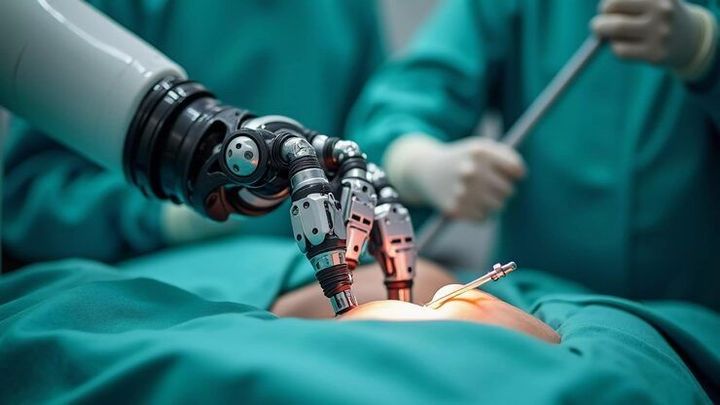
Surgical Robotics refers to computer-assisted medical systems that help trained surgeons perform selected surgical procedures. These systems combine robotic mechanical arms, surgical instruments, cameras, software, and a surgeon-controlled interface.
The term “robotic surgery” can sometimes create the impression that a machine performs an operation independently. In commonly used robotically assisted surgical systems, the surgeon remains in control of the instruments. The U.S. Food and Drug Administration describes these systems as computer-assisted technologies in which the surgeon controls the surgical instruments.
Surgical robotics is particularly associated with minimally invasive procedures, where instruments and cameras are introduced through small openings rather than a large surgical incision.
How Surgical Robotic Systems Work
A typical system has a surgeon console, a bedside robotic cart, surgical instruments, a camera system, and supporting hardware.
The surgeon views the operating area through an enhanced image system and controls the instrument movements through hand controls or other interfaces. The robotic arms translate those commands into carefully controlled instrument movements.
The system does not independently decide where to cut or manipulate tissue. The exact capabilities vary according to the device, procedure, software, instruments, and regulatory authorization.
Main Types of Surgical Robotics
Robotically assisted laparoscopic systems are used for selected minimally invasive procedures involving the abdomen or pelvis.
Orthopedic robotic systems can assist with selected bone-related procedures by helping surgeons plan and execute specific cuts or implant positioning.
Image-guided robotic systems combine medical imaging with computer-assisted positioning or navigation.
Endoscopic robotic systems are designed for selected procedures involving narrow anatomical spaces and specialized instruments.
Microsurgical robotic systems focus on very small movements and specialized procedures where controlled instrument positioning can be important.
Each system has specific intended uses. A surgical robot designed for one type of procedure cannot automatically be assumed to have the same capabilities or authorization for another procedure.
Importance
Supporting Minimally Invasive Procedures
One major application of surgical robotics is minimally invasive surgery. Small access points can allow specialized instruments and cameras to reach the operative area.
The FDA notes that robotically assisted surgical devices may facilitate minimally invasive surgery and assist with complex tasks in confined areas of the body.
Improving Instrument Control
Robotic systems can translate the surgeon's hand movements into controlled movements of surgical instruments. Depending on the system, this can provide features such as movement scaling, instrument articulation, and filtering of selected hand movements.
These capabilities can be useful in procedures that involve precise manipulation within a confined anatomical space.
Enhanced Visualization
Many surgical robotic systems use high-resolution cameras and three-dimensional visualization. The surgeon can view magnified images of the operating field through the system's visualization interface.
Visualization technology varies between systems and procedures. It can include different camera arrangements, imaging modes, and display technologies.
Supporting Complex Surgical Tasks
Robotic instruments can provide multiple degrees of movement within the body. This can allow instruments to approach tissue from angles that may be difficult to achieve with conventional straight instruments.
The usefulness of these capabilities depends on the procedure and the surgeon's training.
Main Components
| Component | Main Function | Typical Role |
|---|---|---|
| Surgeon console | Provides control interface | Instrument manipulation |
| Robotic cart | Holds robotic arms | Positions instruments |
| Surgical arms | Move instruments | Controlled movement |
| Endoscope | Captures internal images | Visualization |
| Surgical instruments | Interact with tissue | Cutting, grasping, suturing |
| Controller | Processes commands | Motion control |
| Software | Coordinates system functions | System operation |
| Accessories | Support the procedure | Irrigation or energy functions |
Recent Updates
More Advanced Robotic Systems
Recent surgical robotics development has focused on improving instrument articulation, visualization, motion control, system integration, and operating-room workflow.
The technology is also becoming more diverse. Instead of one general robotic architecture, healthcare systems can encounter different robotic platforms designed for particular specialties or procedures.
Artificial Intelligence and Surgical Robotics
Artificial intelligence is being researched for applications such as image analysis, surgical planning, anatomy recognition, workflow analysis, and decision-support systems.
AI-assisted technology should be distinguished from autonomous surgery. A system may use algorithms to analyze images or provide information while the surgeon continues to control the procedure.
The regulatory status of AI-enabled functions depends on the specific medical device and its intended use.
Image-Guided Surgery
Integration between robotics and medical imaging is another area of development. Imaging data can assist with preoperative planning, navigation, anatomical localization, and instrument positioning.
The technology may use information from modalities such as CT, MRI, ultrasound, or specialized optical imaging, depending on the application.
Updated Safety Standards
IEC 80601-2-77 is an important standard covering basic safety and essential performance of robotically assisted surgical equipment and systems. The FDA recognized the consolidated Edition 1.1 version of this standard in 2025.
Recognition of a standard does not mean that every surgical robotic system automatically complies with every requirement. Device manufacturers and healthcare organizations must consider the standards and regulatory requirements applicable to the particular system.
Training and Human Factors
As surgical robotic systems become more sophisticated, training remains an important part of safe use. Surgeons and operating-room personnel need familiarity with the particular system, instruments, software controls, setup procedures, and potential system limitations.
The FDA states that manufacturers of robotically assisted surgical devices must implement appropriate training programs for users.
Laws or Policies
Medical Device Regulation in India
In India, medical devices are regulated under the Medical Devices Rules, 2017, administered through the Central Drugs Standard Control Organization and related regulatory authorities.
CDSCO maintains the Medical Devices Rules and subsequent amendments and notifications on its official regulatory portal.
A surgical robotic platform can fall within the medical-device regulatory framework because it is equipment intended for medical use. The applicable classification and regulatory pathway depend on the specific device and intended purpose.
Licensing Requirements
CDSCO stated in a November 2025 circular that medical devices in India are regulated under the Medical Devices Rules, 2017 and that licensing requirements apply to the relevant regulated activities involving medical devices.
Hospitals and procurement organizations therefore need to consider applicable Indian regulatory documentation when evaluating medical devices.
Safety and Performance
Medical-device regulation generally considers factors such as safety, performance, quality systems, manufacturing controls, technical documentation, and post-market monitoring.
For surgical robotics, these considerations can extend to mechanical components, electrical systems, software, surgical instruments, imaging systems, and human-device interaction.
International Standards
IEC 80601-2-77 provides specific requirements for robotically assisted surgical equipment. The standard addresses basic safety and essential performance of robotic surgical equipment and systems.
Other medical-device standards can also become relevant depending on electrical safety, software, usability, electromagnetic compatibility, sterilization, instruments, and other characteristics of the system.
Tools and Resources
Surgical Planning Software
Planning platforms can help clinicians review imaging data, examine anatomy, and prepare procedural plans. The exact capabilities depend on the surgical specialty and device.
Medical Imaging Systems
CT, MRI, ultrasound, endoscopy, and other imaging technologies can provide information used for diagnosis, planning, navigation, or intraoperative visualization.
Simulation Platforms
Surgical simulators can reproduce selected robotic procedures in a controlled environment. They may allow clinicians to practice instrument manipulation, camera control, suturing, or other tasks before working with patients.
Robotic Instruments
Different instruments are designed for specific functions. Examples include:
Graspers: Hold or manipulate tissue.
Scissors: Cut selected tissue structures.
Needle drivers: Hold needles during suturing.
Dissectors: Assist with tissue separation.
Retractors: Hold tissue away from an operating area.
Energy instruments: Apply controlled energy for selected surgical functions.
Training Resources
Training can include classroom education, simulator practice, system-specific instruction, supervised procedures, and competency assessment.
The appropriate training pathway depends on the robotic platform, surgical specialty, healthcare institution, and applicable professional requirements.
Regulatory Databases
Regulatory databases can help healthcare organizations verify device information, authorization status, safety communications, recalls, and applicable standards.
The FDA maintains information on computer-assisted surgical systems and post-market device monitoring. In India, CDSCO provides medical-device rules and regulatory documents.
FAQs
What is Surgical Robotics?
Surgical Robotics refers to computer-assisted systems that allow trained surgeons to control specialized robotic instruments during selected medical procedures.
How does Surgical Robotics work?
Surgical Robotics combines a surgeon control interface, robotic arms, surgical instruments, cameras, software, and supporting equipment. The surgeon controls the system while the robotic components translate those commands into instrument movements.
Is robotic surgery performed entirely by a robot?
Generally, robotically assisted surgical systems are controlled by the surgeon rather than independently performing the procedure. The FDA specifically describes the surgeon as controlling the surgical instruments in these systems.
What are the main components of Surgical Robotics?
Common components include a surgeon console, robotic arms, a bedside cart, surgical instruments, an endoscopic camera, system controllers, software, and supporting equipment.
Where is Surgical Robotics used?
Robotically assisted systems have been authorized for selected procedures in areas including general surgery, cardiac surgery, colorectal surgery, gynecology, head and neck surgery, thoracic surgery, and urology. The exact indications depend on the individual device and regulatory authorization.
Conclusion
Surgical Robotics combines robotic mechanisms, imaging, software, specialized instruments, and surgeon control to support selected medical procedures. Its applications include minimally invasive surgery, orthopedic procedures, image-guided interventions, and other specialized clinical fields. Recent developments include improved visualization, advanced instruments, AI-assisted functions, image integration, and updated safety standards. In India, surgical robotic systems operate within the broader medical-device regulatory framework administered through CDSCO and the Medical Devices Rules, 2017.