Fundamentals of Artificial Intelligence: Guide, Uses & Key Insights
Artificial Intelligence (AI) refers to computer systems designed to perform tasks that normally require aspects of human intelligence.
These tasks can include recognizing patterns, understanding language, analyzing information, making predictions, generating content, and supporting decisions.
The basic idea behind AI is not new. Researchers have explored machine intelligence for decades, but advances in computing power, data availability, algorithms, and neural networks have significantly expanded what modern AI systems can do.
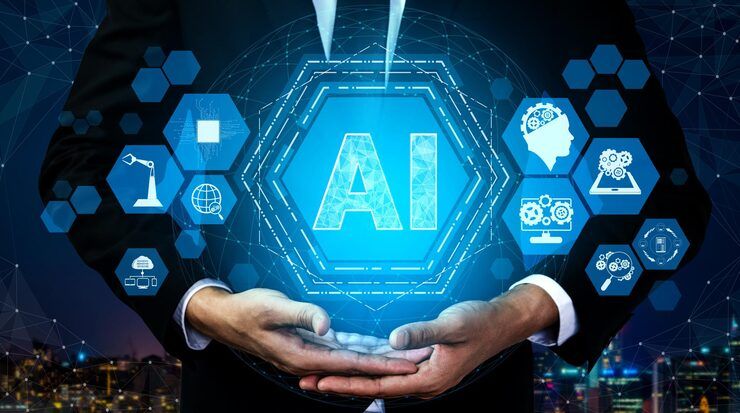
Today, artificial intelligence includes several related areas:
- Machine learning: Systems learn patterns from data rather than relying only on explicitly written rules.
- Deep learning: A type of machine learning that uses multi-layered neural networks.
- Natural language processing: Technology that helps computers process and generate human language.
- Computer vision: AI that interprets images, video, and other visual information.
- Generative AI: Systems that can create text, images, audio, software code, and other content.
- Robotics: AI techniques combined with machines that interact with the physical world.
AI systems generally follow a process involving data, algorithms, computing resources, model training, evaluation, and deployment. The quality of the output depends on factors such as the data used, system design, context, and human oversight.
Why Artificial Intelligence Matters Today
AI matters because it can process large amounts of information and identify patterns at a scale that can be difficult for individuals or conventional software to handle.
Businesses, governments, researchers, educators, healthcare organizations, manufacturers, financial institutions, and consumers increasingly interact with AI-enabled technologies.
Some common applications include:
| Area | Example AI Application | Main Purpose |
|---|---|---|
| Healthcare | Medical image analysis | Support clinical analysis |
| Finance | Fraud detection | Identify unusual transactions |
| Education | Adaptive learning | Personalize learning activities |
| Manufacturing | Predictive maintenance | Identify possible equipment problems |
| Retail | Recommendation systems | Analyze user preferences |
| Transportation | Route prediction | Improve planning and navigation |
| Agriculture | Crop monitoring | Analyze environmental and crop data |
| Media | Content generation | Assist with text, images, and audio |
AI can help address problems involving repetitive analysis, large datasets, pattern recognition, forecasting, and language processing.
However, AI does not automatically produce correct results. Systems can generate inaccurate information, reflect limitations in their training data, or behave differently in unfamiliar situations. Human review remains important, particularly for decisions involving safety, finances, personal data, education, employment, healthcare, or legal matters.
Recent Artificial Intelligence Developments
The period from late 2025 through 2026 has included significant developments in AI governance, infrastructure, education, and public-sector adoption.
In India, the India AI Impact Summit 2026 was held in New Delhi in February 2026. The associated programme focused on responsible, inclusive, and impact-oriented artificial intelligence. The India AI Impact Expo ran from February 16–20, 2026, at Bharat Mandapam, New Delhi.
India has also continued developing its national AI ecosystem through the IndiaAI Mission, which focuses on areas such as computing infrastructure, datasets, indigenous AI models, skills development, and responsible AI adoption.
Another important development was the launch of the YUVA AI for ALL national learning initiative in November 2025. The programme was introduced to help people develop a basic understanding of artificial intelligence.
In November 2025, India's Ministry of Electronics and Information Technology (MeitY) also unveiled India AI Governance Guidelines under the IndiaAI Mission. The guidelines are part of the country's broader approach to safe, inclusive, and responsible AI development.
At the international level, AI regulation is also developing. The European Union's AI Act is being implemented gradually, with different requirements applying at different dates. AI literacy requirements and prohibitions concerning certain AI practices began applying in February 2025, while additional provisions follow the Act's implementation timetable.
These developments show that AI is moving beyond research laboratories toward wider adoption, while governments are simultaneously working on safety, accountability, data protection, and responsible use.
Artificial Intelligence Laws and Policies in India
India does not currently rely on one single comprehensive law covering every aspect of artificial intelligence. Instead, AI is affected by several existing laws, regulations, government programmes, and policy frameworks.
One important framework is the Digital Personal Data Protection Act, 2023. The Act received presidential assent on August 11, 2023, and establishes principles concerning the processing and protection of digital personal data.
The Digital Personal Data Protection Rules, 2025 were notified by MeitY on November 14, 2025. The rules provide additional implementation details for the data protection framework and are particularly relevant to AI systems that process personal information.
For organizations developing or deploying AI systems, important considerations can include:
- Protecting personal information.
- Understanding how data is collected and processed.
- Maintaining appropriate security safeguards.
- Considering transparency and accountability.
- Reviewing AI-generated information before important decisions.
- Addressing potential bias and discrimination.
- Protecting confidential business or personal information.
- Following sector-specific requirements where applicable.
Government programmes such as the IndiaAI Mission also support the development of computing infrastructure, datasets, AI models, research capabilities, and responsible AI practices.
Because AI regulation continues to evolve, organizations should verify the latest requirements applicable to their particular sector and use case.
Useful AI Tools and Learning Resources
People learning about artificial intelligence can use a combination of educational resources, development platforms, documentation, and practical tools.
Learning and research resources
- IndiaAI: Government platform covering India's AI initiatives, programmes, research, and policy developments.
- IndiaAI Mission resources: Information about national AI infrastructure, datasets, models, skills, and responsible AI.
- Government policy portals: Useful for tracking official regulations and technology policies.
- University courses and documentation: Helpful for learning machine learning, neural networks, statistics, and programming.
Practical AI development resources
- Python for programming and data analysis.
- Jupyter Notebook for experimenting with machine learning workflows.
- Scikit-learn for traditional machine learning.
- TensorFlow and PyTorch for neural-network development.
- Hugging Face resources for language and machine-learning models.
- Cloud computing platforms for experimenting with AI infrastructure.
The IndiaAI Cloud Computing Portal also provides information about AI computing infrastructure and related platforms, including AI compute instances, storage, MLOps, LLMOps, translation, OCR, and audio-processing capabilities.
A useful learning approach is to start with basic concepts such as data, algorithms, models, training, inference, accuracy, bias, and evaluation before moving into advanced generative AI or deep learning.
Frequently Asked Questions
What is artificial intelligence in simple terms?
Artificial intelligence is technology that enables computers to perform tasks associated with human intelligence, such as recognizing patterns, understanding language, analyzing information, making predictions, and generating content.
What is the difference between AI and machine learning?
AI is the broader field concerned with intelligent computer systems. Machine learning is one approach within AI in which systems learn patterns from data to make predictions or decisions.
What is generative AI?
Generative AI refers to AI systems that can produce new content, such as text, images, audio, video, or computer code, based on patterns learned from data.
Can AI always provide accurate information?
No. AI systems can produce incorrect, incomplete, outdated, or misleading results. Important information should therefore be checked against reliable sources, especially when it affects health, finance, law, safety, or personal data.
How is AI regulated in India?
India currently uses a combination of data-protection law, technology policies, sector-specific requirements, government AI programmes, and governance frameworks rather than one single AI law covering every application. The Digital Personal Data Protection Act, 2023 and its 2025 rules are particularly relevant when AI systems process digital personal data.
Conclusion
The fundamentals of artificial intelligence involve understanding how computers use data, algorithms, models, and computing resources to perform tasks associated with human intelligence. Machine learning, deep learning, natural language processing, computer vision, generative AI, and robotics are important parts of this broader field.
AI is increasingly being applied across healthcare, finance, manufacturing, education, transportation, agriculture, government, and everyday digital products. At the same time, concerns involving accuracy, privacy, bias, security, transparency, and accountability have made responsible AI an important part of modern technology discussions.