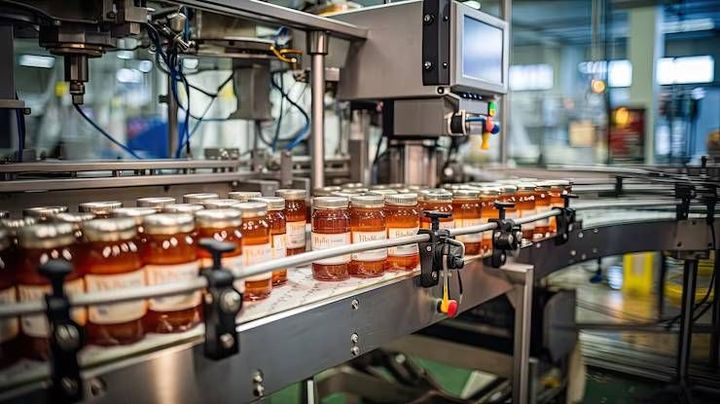
Bottle Labeling Machines: Guide to Labeling Technology and Industrial Applications
Bottle Labeling Machines are automated or semi-automated machines used to apply labels onto bottles and other cylindrical containers. They are widely used in industries such as beverages, food, cosmetics, pharmaceuticals, household products, chemicals, and personal care.
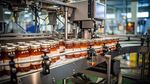
A labeling system typically takes bottles from a conveyor, positions them correctly, applies the label, and checks whether the label has been placed in the intended position. Depending on the machine design, it can apply one label, multiple labels, wrap-around labels, front-and-back labels, or full-body sleeves.
The machine may work with glass, plastic, metal, or other compatible containers. Its configuration depends on bottle dimensions, label material, adhesive type, production requirements, and the type of product being packaged.
How Bottle Labeling Machines Work
A typical bottle labeling process follows several stages:
Bottle feeding: Bottles enter the machine through a conveyor or feeding mechanism.
Positioning: Guides, belts, screws, or sensors align each bottle.
Label detection: Sensors identify the label position or backing material.
Label dispensing: A label is separated from its backing and moved toward the bottle.
Application: Rollers, belts, pads, or other mechanisms press the label onto the container.
Wrapping: For cylindrical bottles, the container may rotate while the label is wrapped around its surface.
Inspection: Cameras or sensors can check label position, presence, orientation, or print information.
Discharge: Completed bottles continue toward the next packaging stage.
The exact sequence varies according to the labeling technology and bottle design.
Main Labeling Technologies
Pressure-sensitive labeling uses adhesive labels that are supplied on a backing material. The label is peeled away and pressed onto the bottle surface.
Wrap-around labeling places a label around the circumference of a cylindrical container. This approach is common for bottles used in beverage and other packaged-product applications.
Front-and-back labeling applies separate labels to selected areas of a bottle. It can be used where different information needs to appear on the front and rear surfaces.
Roll-fed labeling uses a continuous roll of label material that is cut or formed around the bottle.
Shrink-sleeve labeling places a sleeve around the container and uses controlled heat to make the sleeve conform to the bottle shape.
Hot-melt labeling uses a heated adhesive to attach selected label materials to containers.
Importance
Consistent Label Placement
Bottle labeling machines help maintain consistent positioning across a production run. Accurate placement can be important when labels contain product information, barcodes, batch details, warnings, or other required information.
Consistency also matters when bottles are packed together and their labels need to face similar directions.
High-Speed Packaging
Industrial packaging lines can process large numbers of containers. Automated labeling equipment allows the labeling stage to operate as part of a continuous production line rather than requiring every bottle to be labeled individually.
Actual throughput depends on the machine configuration, bottle size, label format, conveyor arrangement, and inspection requirements.
Product Identification
Labels provide information that helps identify a packaged product. Depending on the market and product category, this can include product name, quantity, ingredients, manufacturer information, instructions, batch identification, dates, warnings, recycling information, and other regulatory details.
Integration With Packaging Lines
Bottle labeling machines can be connected with filling, capping, inspection, coding, case packing, and palletizing equipment.
A connected line may use sensors and control systems to coordinate bottle movement between machines. This reduces interruptions caused by mismatched speeds or incorrect container positioning.
Key Machine Characteristics
| Feature | Function | Typical Application |
|---|---|---|
| Conveyor | Moves bottles through the machine | Continuous production |
| Bottle sensor | Detects container presence | Label triggering |
| Label sensor | Detects label position | Accurate dispensing |
| Applicator | Transfers label to bottle | Label placement |
| Wrap belt | Rotates or stabilizes bottles | Cylindrical containers |
| Vision camera | Checks label position or presence | Quality inspection |
| Control panel | Adjusts machine parameters | Machine operation |
| Reject mechanism | Removes selected containers | Inspection systems |
Recent Updates
Vision-Based Inspection
Machine vision is becoming increasingly important in automated labeling systems. Cameras can inspect label presence, position, orientation, print quality, barcodes, and selected product characteristics.
Vision inspection can be connected to automated rejection mechanisms so that bottles with detected labeling problems are separated from the main production flow.
Digital Machine Controls
Modern labeling equipment commonly uses touchscreen control panels and programmable control systems. Operators can configure parameters such as bottle spacing, label position, conveyor speed, and product changeover settings.
Digital interfaces can also store recipes for different bottle and label formats, making it easier to switch between predefined production configurations.
Servo-Driven Labeling
Servo motors provide precise control over movement and timing. They can be used for label dispensing, bottle handling, conveyor movement, and other coordinated machine functions.
Servo technology can improve synchronization between bottle speed and label application, particularly when machines operate at higher throughput.
Flexible Container Handling
Manufacturers increasingly use bottles with different shapes, sizes, materials, and surface characteristics. Labeling systems therefore need adjustable guides, sensors, applicators, and control parameters.
Flexible equipment can be configured for multiple container formats, although each format may require testing and adjustment.
Track-and-Trace Integration
Packaging lines can combine labeling with variable data printing, barcode systems, QR codes, serialization, and product identification technologies.
These systems can support product tracking through different stages of distribution. The exact requirements depend on the industry and destination market.
Packaging Sustainability
Packaging design is increasingly considering material use, recyclability, and compatibility between bottles and labels.
The European Union's Packaging and Packaging Waste Regulation entered into force in 2025 and applies from August 2026. It establishes broader requirements concerning packaging design, labeling, waste management, and material information, with several requirements introduced over different implementation periods.
These developments can influence label materials, packaging formats, and labeling-machine configurations for products intended for international markets.
Laws or Policies
Global Labeling Requirements
There is no single worldwide labeling law covering every bottle and product category. Requirements differ according to the country, product type, packaging material, and intended market.
Food, pharmaceuticals, cosmetics, chemicals, beverages, and household products can each have different labeling requirements.
Companies distributing products internationally therefore need to identify the rules applicable in every destination market.
European Union
For prepacked food sold in the European Union, Regulation (EU) No. 1169/2011 establishes requirements for food information provided to consumers. Mandatory information can include the food name, ingredients, allergens, quantity, durability information, storage conditions, operator information, origin information where applicable, instructions, and nutrition information.
The regulation also requires mandatory information to be clearly visible and legible. For prepacked foods, required information can appear directly on the package or on an attached label.
United States
In the United States, food labeling is regulated through federal requirements administered by agencies including the U.S. Food and Drug Administration. FDA guidance covers areas such as food identity, ingredients, nutrition information, allergens, and other labeling matters. Current requirements should be checked against the latest FDA regulations and guidance because individual product categories can have additional rules.
India
India has specific requirements for packaged food labeling under the Food Safety and Standards Authority of India. The Food Safety and Standards (Labelling and Display) Regulations, 2020 have received multiple amendments, including an amendment listed by FSSAI in March 2026.
FSSAI's regulations require specified information on pre-packaged food and address matters such as label presentation, legibility, mandatory declarations, and packaging-related information.
Machinery Safety
Labeling equipment itself is industrial machinery and therefore also needs appropriate safety consideration. ISO 12100 provides general principles for machinery safety, including hazard identification, risk assessment, and risk reduction. The standard was reviewed and confirmed in 2022 and remains current while a revision is under development.
ISO's packaging-machinery committee covers standardization related to packaging-machine design, construction, use information, hazards, energy consumption, efficiency, and other machine characteristics.
Tools and Resources
Label Design Software
Label design programs allow packaging teams to create layouts containing text, graphics, barcodes, QR codes, regulatory information, and variable data.
The design should match the physical dimensions of the bottle and the label material selected for the application.
Barcode and QR Code Verification
Barcode scanners and vision systems can check whether identification codes are readable and correctly positioned.
Verification becomes particularly important when labels contain information used for inventory management, traceability, or product identification.
Vision Inspection Systems
Industrial cameras can inspect label position, orientation, missing labels, wrinkles, print quality, and selected surface characteristics.
The inspection criteria should be configured according to the actual product and labeling requirements.
Conveyor Systems
Conveyors transport bottles between filling, capping, labeling, inspection, and packing stages. Belt speed, bottle spacing, guides, and container stability can influence labeling performance.
Label Roll Management
Label rolls need appropriate dimensions, winding direction, material characteristics, and adhesive properties for the machine configuration.
Incorrect roll specifications can create problems such as label misalignment, poor dispensing, adhesive buildup, or interruptions during operation.
Production Monitoring
Machine-monitoring systems can collect information such as operating speed, production counts, stoppages, rejected containers, and machine conditions.
This information can help production teams identify recurring interruptions and understand how the labeling stage interacts with the rest of the packaging line.
FAQs
What are Bottle Labeling Machines?
Bottle Labeling Machines are automated or semi-automated machines that apply labels to bottles and similar containers. They can use technologies such as pressure-sensitive, wrap-around, roll-fed, and sleeve labeling.
How do Bottle Labeling Machines work?
Bottle Labeling Machines move and position containers, detect their location, dispense labels, apply them to the bottle surface, and may use cameras or sensors to inspect the finished result.
What types of bottles can labeling machines handle?
Depending on the machine design, labeling equipment can handle plastic, glass, metal, and other containers with cylindrical, oval, square, rectangular, or specialized shapes. The bottle dimensions and surface characteristics must match the equipment configuration.
Which industries use Bottle Labeling Machines?
Bottle Labeling Machines are used in beverage, food, pharmaceutical, cosmetic, personal care, household chemical, industrial chemical, and other packaging applications.
What factors affect bottle labeling accuracy?
Bottle shape, label material, adhesive characteristics, conveyor speed, bottle spacing, label position, machine adjustment, sensor accuracy, and container surface conditions can all influence labeling accuracy.
Conclusion
Bottle Labeling Machines are important components of modern packaging lines, applying labels to bottles through technologies such as pressure-sensitive, wrap-around, roll-fed, and shrink-sleeve systems. Modern equipment increasingly combines servo controls, machine vision, digital interfaces, barcode systems, and production monitoring. Labeling requirements vary internationally, with food and other regulated products subject to specific rules in different markets. Machinery safety, accurate label placement, compatible materials, and appropriate inspection systems are important considerations when integrating bottle labeling technology into industrial packaging operations.