Battery Cell Testing Equipment: Guide to Testing Methods and Industrial Systems
Battery Cell Testing Equipment refers to electrical, thermal, mechanical, and measurement systems used to evaluate the performance, reliability, capacity, and safety of individual battery cells. These systems are used during battery research, cell development, manufacturing, quality control, and validation.
A battery cell is the basic electrochemical unit inside a battery. Several cells can be connected to form modules and battery packs. Testing the cell before it becomes part of a larger battery system helps engineers understand how it behaves under charging, discharging, temperature changes, repeated cycling, and other operating conditions.
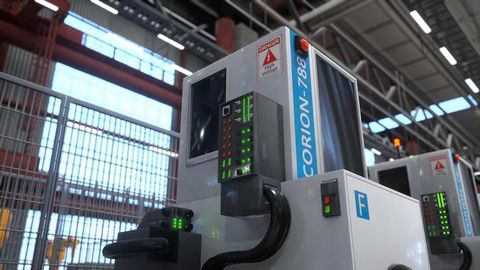
Battery Cell Testing Equipment can range from small laboratory instruments for research cells to large multi-channel systems designed for industrial production environments.
How Cell Testing Works
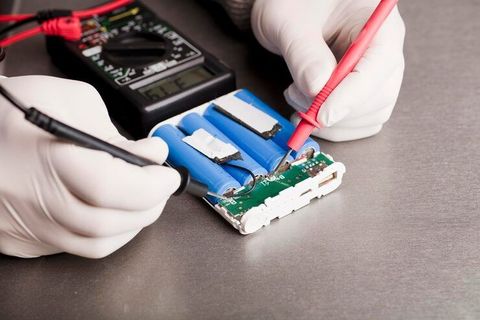
A typical testing system connects a battery cell to controlled electrical equipment. The tester can apply a specified charging or discharging current while measuring voltage, current, temperature, and time.
The collected measurements are recorded by software for later analysis. A test may continue for minutes, hours, or many repeated charge-discharge cycles depending on its purpose.
For example, a capacity test can charge a cell according to a defined procedure and then discharge it while measuring how much electrical energy the cell delivers.
Main Types of Battery Cell Testing Equipment
Battery cyclers repeatedly charge and discharge cells according to programmed conditions. They are widely used for capacity, cycle-life, and performance testing.
Electronic loads draw controlled electrical current from a cell during discharge testing.
Battery power supplies provide controlled charging current and voltage.
Impedance analyzers measure electrical characteristics related to internal resistance and impedance.
Environmental chambers expose cells to controlled temperatures or temperature cycles during testing.
Data-acquisition systems collect voltage, current, temperature, and other measurements from multiple channels.
Safety test equipment is designed for controlled testing under selected abnormal or misuse conditions.
Importance
Measuring Cell Capacity
Capacity indicates how much electrical charge a cell can deliver under specified test conditions. It is commonly expressed in ampere-hours or milliampere-hours.
Capacity testing helps compare cells against their intended specifications and identify variations between samples.
Evaluating Power Performance
A battery cell may need to deliver a high current for applications such as electric vehicles, power tools, or industrial equipment. Testing can examine how voltage changes when the cell is charged or discharged at different current levels.
IEC 62660-1 specifies performance and life-testing procedures for lithium-ion cells used in electric-road-vehicle propulsion, including characteristics such as capacity, power, energy density, storage life, and cycle life.
Studying Cycle Life
Rechargeable cells are expected to undergo repeated charging and discharging. Cycle-life testing subjects cells to repeated electrical cycles and records changes in performance.
The results can show how capacity and other electrical characteristics change as the number of cycles increases.
Evaluating Temperature Behavior
Temperature can influence battery performance, charging behavior, internal resistance, and safety.
Environmental chambers can maintain selected temperatures during testing. Combining a chamber with a battery cycler allows engineers to observe how a cell behaves under controlled thermal conditions.
Supporting Cell Quality Control
Manufacturing processes can produce variations between individual cells. Testing equipment can measure electrical characteristics and help identify cells that do not meet defined specifications.
Industrial systems can test many cells through multiple independent channels, allowing manufacturers to collect consistent measurement data across production batches.
Common Testing Parameters
| Parameter | What It Indicates | Typical Equipment |
|---|---|---|
| Voltage | Electrical potential | Battery cycler |
| Current | Charge or discharge flow | Cycler and power supply |
| Capacity | Charge delivered by cell | Battery cycler |
| Internal resistance | Electrical resistance inside cell | Impedance analyzer |
| Temperature | Thermal behavior | Sensors and chamber |
| Cycle life | Performance over repeated cycles | Battery cycler |
| Energy | Electrical energy delivered | Cycler and software |
| Power | Ability to deliver electrical output | High-current tester |
Recent Updates
Advanced Chemistry Cell Testing
India's Bureau of Indian Standards lists IS 17882:2025, Advanced Chemistry Cells — Method of Tests, as a 2025 first revision. This reflects the increasing importance of standardized testing methods for advanced battery chemistries.
Advanced chemistry cells can include technologies developed beyond traditional battery chemistries. Testing frameworks help establish consistent methods for measuring their characteristics.
Updated EV Cell Safety Work
BIS technical committee material from 2025 describes work aligning an Indian cell-safety standard with IEC 62660-3:2022. The document addresses basic safety performance of cells used in EV battery packs and systems under intended use and reasonably foreseeable misuse or incident conditions.
This illustrates how cell-level testing is increasingly connected with the safety requirements of complete electric-vehicle battery systems.
More Automated Testing
Modern industrial battery laboratories increasingly use automated test sequences. Software can control charge and discharge profiles, record measurements, stop a test when defined limits are reached, and organize results.
Automation also allows multiple test channels to operate according to different programs at the same time.
Higher Channel Density
Battery manufacturers and research laboratories can use multi-channel cyclers to test many cells simultaneously. Each channel can monitor an individual cell while sharing centralized data-management software.
This approach can help generate larger datasets for cell comparison, production analysis, and long-duration testing.
Thermal and Safety Testing
Battery testing increasingly combines electrical measurements with thermal monitoring and controlled safety experiments. UL Solutions describes EV battery testing at cell, module, and pack levels, including thermal propagation, fire exposure, and related analysis. UL 2580 is among the standards used for EV battery evaluation.
Safety testing requires specialized facilities, controlled procedures, protective equipment, and appropriate containment because abnormal battery behavior can involve heat, gas generation, fire, or other hazards.
Digital Test Data
Testing systems increasingly store measurement data electronically. Software can generate curves showing voltage, current, capacity, temperature, and other characteristics throughout a test.
Historical datasets can also help engineers compare cells from different batches or examine changes after repeated cycling.
Laws or Policies
Indian Standards
India uses BIS standards for several categories of cells and batteries. Relevant standards depend on the battery chemistry, application, cell format, and intended use.
For example, BIS lists IS 16893 Part 3:2018 for safety requirements of secondary lithium-ion cells used for propulsion of electric road vehicles. BIS also lists IS 16047 Part 3:2018 for certain secondary lithium cells and batteries used in portable applications.
The applicable standard should therefore be identified from the specific battery application rather than assuming that one testing procedure covers every cell.
Portable Lithium Battery Testing
IS 16046 Part 2 covers safety requirements for portable sealed secondary cells and batteries using lithium systems. BIS laboratory information shows testing areas including insulation and wiring, venting, temperature, voltage and current management, terminal contacts, and assembly of cells into batteries.
These tests illustrate why cell evaluation involves more than measuring voltage and capacity.
Solar Battery Testing
For solar photovoltaic applications, BIS lists IS 16270:2023, covering secondary cells and batteries for photovoltaic applications and methods of test. The scope includes lead-acid, nickel, and lithium batteries within specified capacity ranges.
Testing areas include capacity, storage, operating temperature, charge efficiency, deep-discharge protection, safety, and mechanical endurance.
EV Battery Testing
EV-related battery testing can involve performance, reliability, abuse, and safety evaluation. IEC 62660-2 provides procedures for reliability and abuse testing of lithium-ion cells and cell blocks used in electric-road-vehicle propulsion.
The exact testing program depends on the vehicle application, cell design, battery architecture, and applicable regulatory requirements.
BIS Standards Resources
The BIS “Know Your Standard” platform allows users to search standards using an Indian Standard number or a keyword. It also provides access to information such as amendments, related notifications, testing laboratories, and other standard-related material.
This can help laboratories and manufacturers identify the standards relevant to a particular battery application.
Tools and Resources
Battery Cyclers
Battery cyclers are central pieces of Battery Cell Testing Equipment. They can control charging and discharging while recording voltage, current, capacity, energy, and cycle information.
Different cyclers are designed for different voltage and current ranges, so the equipment must match the cell specifications.
Environmental Chambers
Environmental chambers control temperature around the test cell. They can be used for low-temperature, room-temperature, high-temperature, and temperature-cycling experiments.
Temperature sensors should be positioned appropriately so that measurements represent the conditions being evaluated.
Electronic Loads
Electronic loads provide controlled electrical demand during discharge testing. They can operate according to programmed current, voltage, power, or resistance profiles depending on the instrument.
Precision Measurement Systems
High-accuracy voltage and current measurement is important when comparing cells with small differences in performance. Measurement equipment may include precision meters, current sensors, thermocouples, resistance-measurement systems, and data-acquisition hardware.
Test Software
Battery test software can define charge and discharge sequences, establish limits, monitor channels, record measurements, and generate reports.
Typical software functions include:
Test-profile creation
Real-time monitoring
Automatic stopping conditions
Cycle counting
Capacity calculations
Temperature recording
Data export
Graph generation
Test-result comparison
Safety Systems
Battery laboratories may use temperature monitoring, smoke detection, gas detection, ventilation, emergency shutdown systems, fire-control equipment, and physical containment according to the type of testing being performed.
Safety arrangements should be designed around the battery chemistry, test energy, cell format, laboratory layout, and applicable requirements.
FAQs
What is Battery Cell Testing Equipment?
Battery Cell Testing Equipment includes cyclers, electronic loads, power supplies, environmental chambers, measurement instruments, sensors, and software used to evaluate battery-cell performance and safety.
What tests are performed on battery cells?
Common tests include capacity testing, charge-discharge testing, cycle-life testing, internal-resistance measurement, power testing, temperature testing, storage testing, and selected safety or abuse tests.
Why is battery cell testing important?
Cell testing helps determine electrical performance, identify variations between cells, study long-term behavior, and evaluate whether cells meet defined technical and safety requirements.
What equipment is used for battery cycle testing?
Battery cyclers are commonly used for cycle testing. They control charging and discharging while recording measurements such as voltage, current, capacity, energy, and temperature.
Which standards apply to battery cell testing in India?
The applicable standard depends on the battery chemistry and application. Relevant references include BIS standards such as IS 17882:2025, IS 16893 Part 3, IS 16047 Part 3, and IS 16270, along with applicable IEC standards.
Conclusion
Battery Cell Testing Equipment provides controlled methods for measuring cell capacity, power, cycle life, temperature behavior, electrical characteristics, and selected safety properties. Industrial testing systems combine cyclers, measurement instruments, environmental chambers, sensors, software, and safety controls to create repeatable test environments. Recent developments in advanced chemistry cells, EV batteries, automated testing, and digital data collection are expanding the role of cell testing in battery development and manufacturing. In India, BIS standards and international IEC methods provide important references for selecting and conducting appropriate battery tests.