Agricultural Harvesters: Guide to Modern Crop Harvesting Technology
Agricultural Harvesters are machines designed to collect mature crops from fields and prepare them for the next stage of handling, storage, or processing. Depending on the crop, a harvester may cut plants, separate useful material from unwanted parts, clean the harvested crop, and transfer it into a container or transport vehicle.
Harvesting is one of the most time-sensitive stages of crop production. Crops often need to be collected within a suitable maturity and weather window. Agricultural harvesters help perform multiple field operations with mechanical systems instead of relying entirely on manual collection.
Different crops require different harvesting methods. Grain crops such as wheat and rice can use combine harvesters, while potatoes require specialized root-crop machines. Sugarcane, cotton, grapes, coffee, forage crops, and many other crops each have specialized harvesting equipment.
How Agricultural Harvesters Work
Although designs vary considerably, many harvesters follow a sequence of basic operations:
Crop intake: A header, cutting mechanism, digging system, or picking unit gathers the crop.
Cutting or lifting: The machine separates plants or underground crops from the field.
Separation: Grain, fruit, fiber, or another useful portion is separated from stems, leaves, soil, or other material.
Cleaning: Airflow, screens, sieves, or other mechanisms remove unwanted material.
Collection: The harvested material moves into a tank, hopper, container, or discharge system.
Transfer: The crop is unloaded into a trailer, truck, storage container, or another handling system.
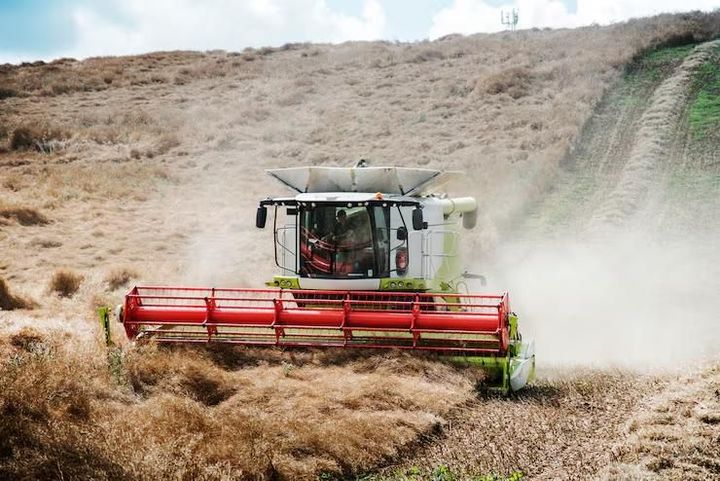
For example, a combine harvester can cut cereal plants, separate grain from the plant material, clean the grain, and collect it in an onboard tank.
Major Types of Harvesters
Combine harvesters are widely associated with crops such as wheat, barley, oats, corn, and other grains. They combine several harvesting operations into one machine.
Forage harvesters cut and process forage crops such as grass and corn into smaller pieces that can be collected for livestock feed or storage.
Cotton harvesters collect cotton from mature plants using specialized picking or stripping mechanisms.
Sugarcane harvesters cut cane, remove selected plant material, chop the stalks, and transfer the harvested cane.
Root-crop harvesters are designed for crops such as potatoes and other underground crops. Their systems can lift crops from the soil, separate soil and plant material, and transfer the crop.
Fruit harvesters include specialized machines for crops such as grapes, olives, and certain orchard fruits.
Coffee harvesters use systems designed around coffee plants and the way ripe coffee cherries are collected.
Importance
Supporting Timely Harvesting
Crop maturity does not remain constant indefinitely. Delays caused by weather, labor availability, field conditions, or limited equipment can affect harvesting operations.
Agricultural harvesters allow larger areas to be covered during suitable harvesting windows. This is particularly relevant for farms where crops mature over large fields at approximately the same time.
Reducing Manual Work
Traditional harvesting can involve substantial physical work, particularly for crops requiring cutting, picking, digging, or gathering. Mechanized harvesters can perform many of these repetitive activities through powered systems.
The amount of automation varies widely. Some machines require continuous operator control, while newer equipment can automate selected functions such as steering, crop monitoring, or machine adjustments.
Handling Different Crops
Harvesting equipment must match the physical characteristics of the crop. Grain, cotton, sugarcane, potatoes, grapes, and forage crops behave differently during harvesting.
A machine designed for wheat, for example, cannot simply be used for underground potatoes because the harvesting mechanisms and crop-handling requirements are fundamentally different.
Reducing Crop Losses
Machine settings can influence how crops are cut, separated, cleaned, and transferred. Incorrect settings or unsuitable operating conditions can increase damage or leave material behind in the field.
Modern harvesters can use sensors and electronic controls to monitor selected operating conditions and help operators adjust machine settings.
Main Harvester Categories
| Harvester Type | Main Crop Examples | Primary Function |
|---|---|---|
| Combine harvester | Wheat, barley, rice, corn | Cutting, threshing, separating |
| Forage harvester | Grass, corn forage | Cutting and chopping |
| Cotton harvester | Cotton | Picking or stripping |
| Sugarcane harvester | Sugarcane | Cutting and collecting |
| Root-crop harvester | Potato, beet | Digging and lifting |
| Grape harvester | Grapes | Collecting fruit |
| Coffee harvester | Coffee cherries | Fruit collection |
| Vegetable harvester | Selected vegetables | Cutting, lifting, or picking |
Recent Updates
Automation and Machine Guidance
Modern Agricultural Harvesters increasingly incorporate automated steering, positioning systems, sensors, and electronic controls. Auto-guidance can help maintain a planned path through a field and reduce the amount of continuous steering adjustment required from an operator.
ISO 10975:2023 specifies safety requirements for auto-guidance systems used on agricultural tractors and self-propelled agricultural machines. The standard applies to both factory-integrated and retrofit auto-guidance systems.
Data-Driven Harvesting
Harvesters can collect information about operating conditions, crop flow, harvested area, machine performance, and other field parameters. When combined with farm-management software, this information can contribute to digital records of field operations.
Yield-monitoring systems can also create maps showing differences in harvested output across a field. Such information can later be compared with soil, weather, planting, or crop-management data.
Artificial Intelligence and Machine Vision
Cameras and machine-vision systems can help agricultural equipment identify crop conditions, objects, rows, or other visual characteristics.
Artificial intelligence can then be used to analyze selected data and support machine decisions. Potential applications include crop recognition, automatic machine adjustment, detection of unwanted material, and autonomous navigation.
The technology varies substantially between machines and crops, so not every harvester has the same level of automated decision-making.
Highly Automated Agricultural Machinery
Highly automated agricultural machinery is another area of development. ISO published a four-part ISO 18497 series in 2024 covering principles and safety considerations for highly automated agricultural machines. The framework addresses tractors, implements, and self-propelled agricultural machinery performing automated field operations.
Automation can range from a single assisted function to systems capable of performing several field operations with limited direct control. Human supervision, risk assessment, and appropriate operating procedures remain important.
New Safety Standards for Harvesters
International harvesting-equipment standards continue to develop. ISO 4254-7 covers combine, forage, cotton, and sugarcane harvesters, and its 2025 amendment updated the standard.
ISO 4254-20:2025 was also published for grape, olive, and coffee harvesters. It specifies safety requirements and verification methods for relevant trailed and self-propelled machines.
These developments demonstrate that modern harvesting technology is being considered alongside increasingly specific safety requirements.
Electrification and Alternative Power
Agricultural machinery manufacturers and researchers are also exploring electric and hybrid power systems. Smaller agricultural machines and selected specialized equipment can be suitable areas for electrification.
Large harvesters have substantial power requirements, making battery capacity, operating duration, charging infrastructure, machine weight, and field conditions important technical considerations.
Laws or Policies
International Machinery Safety
Agricultural machinery is subject to different laws and technical requirements depending on the country or region where it is manufactured and operated.
International standards from organizations such as ISO provide technical references for agricultural machinery safety. They can address machine design, protective measures, control systems, automated functions, and information for safe operation.
ISO 4254 is a major family of standards covering different categories of agricultural machinery. Its harvesting-related parts address equipment such as combines, forage harvesters, cotton harvesters, sugarcane harvesters, root-crop harvesters, and specialized fruit harvesters.
European Union Requirements
Agricultural machinery placed on the European market must comply with applicable European requirements. Machinery legislation addresses areas including health and safety, machinery design, conformity procedures, and technical documentation.
The European framework is particularly relevant to manufacturers exporting agricultural machinery into EU countries.
United States Requirements
In the United States, agricultural machinery can be subject to workplace safety requirements and technical standards depending on the equipment and working environment. Occupational safety rules can address machine guarding, operator protection, training, and other workplace hazards.
Agricultural machinery manufacturers and operators may also refer to technical standards developed by organizations such as ASABE and other industry bodies.
Country-Specific Requirements
Requirements can differ according to:
Machine category
Engine and emissions regulations
Road transport rules
Operator safety requirements
Noise regulations
Electrical and electronic systems
Product conformity requirements
Environmental rules
Farm operators and equipment manufacturers therefore need to consult the regulations applicable to their specific country and machine.
Tools and Resources
GPS and Navigation Systems
Satellite positioning systems help machines determine their location in a field. They can support auto-guidance, field mapping, route planning, and machine tracking.
Yield Monitoring
Yield monitors collect information during harvesting and can estimate crop output across different field areas. The resulting data can be represented as maps for later analysis.
Machine Vision
Cameras and image-processing systems can identify selected crop characteristics, machine conditions, or field objects. These systems are becoming increasingly relevant to automated agricultural machinery.
Farm Management Platforms
Digital farm-management platforms can combine field boundaries, crop records, machinery information, weather data, and harvesting records. Integration capabilities vary among platforms and equipment manufacturers.
Agricultural Machinery Testing
Testing organizations and agricultural engineering institutions evaluate machinery for performance, safety, and operational characteristics. Such testing can help farmers and equipment operators understand machine capabilities before field use.
In India, for example, the Government's Digital Platform for Farm Mechanization and Technology provides access to machinery testing information, farm-mechanization programs, and related resources.
Maintenance and Monitoring Tools
Modern harvesters may include onboard diagnostic systems that monitor selected engine, hydraulic, electrical, and mechanical conditions. Operators can use these systems alongside manufacturer instructions and inspection procedures.
Regular inspection remains important because electronic monitoring cannot identify every mechanical or environmental problem.
FAQs
What are Agricultural Harvesters?
Agricultural Harvesters are machines designed to collect mature crops from fields. Depending on the crop, they may cut, pick, dig, separate, clean, collect, and transfer harvested material.
How do Agricultural Harvesters work?
Agricultural Harvesters use crop-specific mechanisms to gather plants or produce, separate useful material, remove unwanted material, and transfer the harvested crop into a tank, container, or transport vehicle.
What is a combine harvester?
A combine harvester is a machine that performs several operations on grain crops in one field pass. These can include cutting, threshing, separating, cleaning, and collecting grain.
What technologies are used in modern Agricultural Harvesters?
Modern machines can use GPS, auto-guidance, sensors, cameras, machine vision, yield monitoring, electronic controls, data systems, and selected automated functions.
Are Agricultural Harvesters used worldwide?
Yes. Harvesting machinery is used across major agricultural regions, although machine types vary according to climate, crop varieties, farm size, terrain, labor conditions, and local agricultural practices.
Conclusion
Agricultural Harvesters have developed from mechanical crop-collection machines into increasingly connected systems that can combine harvesting, monitoring, guidance, and data collection. Different crops require specialized equipment, ranging from combine and forage harvesters to machines designed for sugarcane, cotton, root crops, grapes, and coffee. Recent developments include automated guidance, machine vision, data-driven harvesting, highly automated equipment, and updated international safety standards. Understanding these technologies helps explain how modern crop harvesting is becoming more mechanized, data-driven, and adaptable across agricultural regions.