Wood Turning Lathes: Guide to Types, Components, and Practical Insights
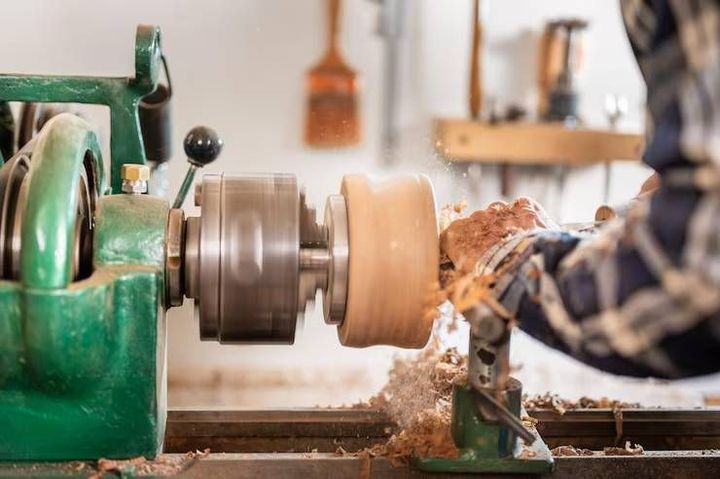
Wood Turning Lathes are machines used to shape pieces of wood while the material rotates around a central axis. A cutting tool is brought into contact with the rotating workpiece to create cylindrical, rounded, tapered, or decorative forms.
Woodturning is one of the oldest forms of mechanical woodworking. Early lathes were operated manually using simple mechanisms, while modern machines can include electric motors, variable-speed controls, digital displays, improved bearings, and specialized accessories.
A wood lathe is different from a general woodworking saw because the workpiece rotates during the cutting process. This rotating movement allows a woodworker to create symmetrical shapes around a central axis.
How Wood Turning Lathes Work
A typical wood lathe holds a piece of wood between two main points or secures it using a chuck or another holding device. The motor rotates the workpiece, while the operator guides a cutting tool against the material.
The basic process includes several stages:
Workpiece preparation: The wood is selected and cut to an appropriate starting size.
Mounting: The workpiece is secured between the headstock and tailstock or attached to a chuck.
Speed selection: The rotation speed is adjusted according to the workpiece size, shape, wood characteristics, and operation.
Tool positioning: A tool rest supports the cutting tool near the rotating wood.
Shaping: The operator gradually removes material to create the required profile.
Sanding and finishing: The shaped piece can be refined and prepared for a selected finish.
The machine itself performs the rotation, while the operator controls the cutting process.
Common Applications
Wood Turning Lathes are used for many woodworking projects.
Bowls and plates can be created by mounting wood so that the cutting tool can shape an interior and exterior surface.
Table legs and chair components can be turned into symmetrical profiles with curves, grooves, and tapered sections.
Wooden handles for tools and household objects can be produced using relatively small workpieces.
Spindles and decorative parts can be shaped for furniture, architectural details, toys, and craft projects.
Pens and small objects are commonly produced on compact bench-top lathes.
The appropriate machine size depends on the dimensions and weight of the intended workpieces.
Importance
Creating Symmetrical Shapes
One of the main advantages of a wood lathe is its ability to produce shapes centered around a rotating axis. This makes the machine particularly useful for cylindrical and rounded components.
Instead of cutting the same curve repeatedly by hand, the rotating workpiece allows the cutting tool to gradually establish the required profile.
Supporting Different Woodworking Projects
Wood lathes are available in several sizes and configurations. Small bench-top machines can handle compact objects, while larger floor-standing machines can accommodate longer or heavier pieces.
This range allows woodturning equipment to be used in workshops, educational environments, craft studios, furniture production, and other woodworking settings.
Improving Control Over Shaping
A properly positioned tool rest gives the operator a stable surface from which to control the cutting tool. Speed adjustment also allows the machine to operate at different rotational rates according to the workpiece and task.
Control is particularly important because an irregular or unbalanced piece of wood can behave differently from a prepared cylindrical blank.
Supporting Craft and Manufacturing
Woodturning can be used for both individual craft projects and repeated production of components. Furniture makers may use lathes for legs and spindles, while craft workers may create bowls, vessels, ornaments, handles, and other objects.
The same basic turning principle can therefore support different levels of woodworking activity.
Main Components
| Component | Main Function | Typical Role |
|---|---|---|
| Headstock | Drives the workpiece | Contains motor and spindle |
| Tailstock | Supports the workpiece | Supports longer pieces |
| Tool rest | Supports cutting tools | Provides controlled tool movement |
| Spindle | Transfers rotation | Connects drive components |
| Motor | Produces rotational power | Drives the spindle |
| Chuck | Holds selected workpieces | Useful for bowls and irregular shapes |
| Drive center | Connects wood to spindle rotation | Common for spindle turning |
| Tailstock center | Supports the opposite end | Helps stabilize long pieces |
| Bed | Supports major components | Provides machine alignment |
| Speed control | Adjusts rotation | Matches speed to the task |
Recent Updates
Variable-Speed Technology
Modern wood lathes increasingly include electronic speed controls. Instead of relying only on fixed pulley arrangements, users can adjust spindle speed through a control system.
Variable-speed operation is useful because different workpieces require different rotational conditions. Large or unbalanced pieces generally require careful speed selection, while smaller balanced objects can often be operated at higher speeds within the machine's specifications.
Digital Controls
Some modern machines incorporate digital displays that show spindle speed and other operating information. These controls can make it easier to reproduce settings between similar projects.
Digital controls vary considerably between machine models, so operators should follow the manufacturer's operating instructions.
Larger Spindle Capacities
Wood Turning Lathes are available with different swing capacities and distances between centers. Larger machines can accommodate wider or longer workpieces, while compact models are designed around smaller projects.
Manufacturers have also developed machines with different bed configurations, motor capacities, spindle arrangements, and accessory systems.
Improved Chuck Systems
Modern woodturning increasingly uses specialized chucks that can grip workpieces through different jaw configurations. A chuck can provide access to the end of a workpiece without requiring a traditional center point.
Different jaws are designed for different shapes and mounting conditions. Correct attachment and secure workholding remain essential.
Dust Management
Woodturning creates airborne wood dust during cutting and sanding. Modern workshops increasingly incorporate dust extraction systems, local collection equipment, and improved airflow management.
Dust control is relevant not only to cleanliness but also to workplace exposure. The appropriate approach depends on the wood species, process, workspace, and applicable occupational requirements.
Digital Learning and Demonstration Tools
Online training materials, machine manuals, digital diagrams, and instructional videos have expanded access to woodturning education.
These resources can help users understand tool positions, mounting methods, speed selection, and maintenance procedures. Practical instruction remains important because machine operation involves physical hazards that are difficult to understand from written information alone.
Laws or Policies
International Machine Safety Principles
Wood Turning Lathes are machinery, so their design and use can fall under different workplace safety and machinery regulations depending on the country.
In Europe, machinery placed on the market has historically been regulated under the Machinery Directive, with the EU Machinery Regulation 2023/1230 establishing a newer framework that will apply from January 2027. The regulation covers machinery safety requirements and addresses areas such as risk assessment, protective measures, instructions, and conformity requirements.
In the United States, workplace use can fall under Occupational Safety and Health Administration requirements concerning machine guarding, woodworking machinery, and workplace hazards.
Other countries have their own machinery safety frameworks and national standards.
Machine Guarding
Machine guarding is an important principle for woodworking equipment. Guards can help reduce access to moving parts such as belts, pulleys, rotating mechanisms, and other hazardous areas.
The exact guarding requirements depend on the machine design and applicable jurisdiction. Operators should use the guards supplied with the machine and follow applicable workplace requirements.
Personal Protective Equipment
Woodworking environments may require protective equipment appropriate to the task. Eye protection, hearing protection, suitable footwear, and respiratory protection may be relevant depending on the work process and exposure conditions.
Loose clothing, jewelry, and unsecured long hair can create entanglement risks around rotating machinery and should be managed appropriately.
Wood Dust Control
Wood dust can be generated during turning, sanding, cutting, and finishing. Workplace regulations in different countries may establish exposure limits or control requirements for wood dust.
Ventilation, local extraction, housekeeping, and appropriate respiratory protection can form part of a broader exposure-control approach.
Training and Operating Procedures
Safe operation requires users to understand workpiece mounting, speed selection, tool handling, machine controls, emergency procedures, and inspection routines.
Training requirements vary by workplace and jurisdiction. Manufacturers' manuals should also be treated as an important source of machine-specific operating information.
Tools and Resources
Woodturning Chisels
Different cutting tools are designed for different stages of turning. Common examples include bowl gouges, spindle gouges, parting tools, scrapers, and skew chisels.
Each tool has a different cutting geometry and typical application. Learning the correct presentation and sharpening method is important for controlled cutting.
Sharpening Equipment
Sharp tools can provide more predictable cutting action when used correctly. Sharpening systems may include bench grinders, sharpening jigs, wheels, and other specialized equipment.
The appropriate sharpening method depends on the tool type and its edge geometry.
Woodturning Chucks
Chucks allow workpieces to be secured using jaws that expand or contract around selected sections of wood. They are particularly useful for bowl turning and other projects where access to the workpiece's end is required.
Calipers and Measuring Tools
Woodturning calipers help compare dimensions while a piece rotates. They are useful when creating repeated components such as table legs, spindles, and handles.
Rulers, templates, dividers, and profile gauges can also help maintain consistent dimensions.
Faceplates and Centers
Faceplates can secure certain workpieces directly to the lathe spindle. Drive centers and live centers are commonly used when turning between centers.
The selection depends on the workpiece shape, grain direction, size, and turning method.
Dust Extraction
Dust extraction equipment can collect chips and fine particles generated during turning and sanding. Collection arrangements should be compatible with the workshop layout and machine operation.
Good housekeeping also helps prevent accumulated dust from becoming a separate workplace hazard.
Maintenance Resources
A lathe's manual normally provides information about lubrication, belt inspection, spindle components, electrical systems, alignment, and replacement parts.
Regular inspection can help identify loose components, unusual vibration, worn belts, damaged electrical connections, or other conditions requiring attention.
FAQs
What are Wood Turning Lathes used for?
Wood Turning Lathes are used to shape rotating pieces of wood into bowls, plates, spindles, table legs, handles, decorative components, pens, and other rounded objects.
How do Wood Turning Lathes work?
Wood Turning Lathes rotate a secured piece of wood around a central axis. The operator positions a cutting tool against the rotating workpiece to gradually remove material and create the desired shape.
What are the main components of a wood lathe?
Important components include the headstock, motor, spindle, tailstock, tool rest, bed, speed-control system, drive center, and workholding accessories such as chucks.
What type of wood can be used on a wood lathe?
Many hardwoods and softwoods can be turned when they are appropriately prepared and securely mounted. The wood should be suitable for the intended project and free from conditions that could create excessive instability during rotation.
What safety precautions are important when using a wood lathe?
Important precautions include securing the workpiece correctly, selecting an appropriate speed, using suitable eye protection, managing loose clothing and hair, keeping tools controlled, maintaining machine guards, and controlling wood dust.
Conclusion
Wood Turning Lathes are specialized woodworking machines that rotate wood while a cutting tool shapes the material. Their components, dimensions, speed controls, and workholding systems can vary considerably according to the intended application. Modern developments include electronic speed control, improved chuck systems, digital displays, and greater attention to dust management and machine safety. Understanding the machine's components, operating principles, workholding methods, and applicable safety requirements provides a useful foundation for woodturning across hobby, educational, craft, and professional environments.