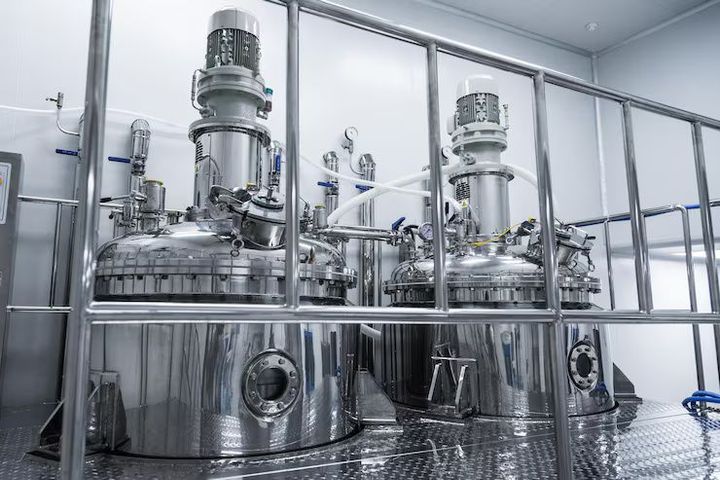
Vacuum Furnaces: Explore Types, Components, and Industrial Applications
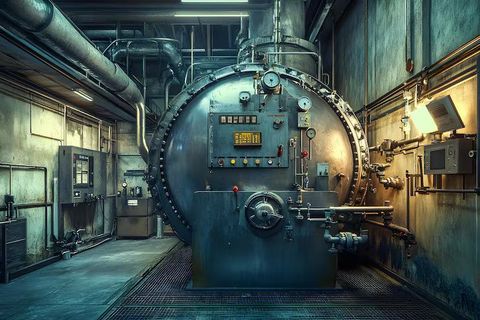
Vacuum Furnaces are industrial heating systems designed to heat materials inside a controlled chamber where much of the air has been removed. The reduced-pressure environment limits unwanted reactions between heated materials and atmospheric gases such as oxygen and nitrogen.
This makes vacuum furnaces useful for processes where surface cleanliness, controlled heating, reduced oxidation, or precise material properties are important. They are commonly associated with metals and advanced materials used in aerospace, automotive, tooling, electronics, energy, research, and specialized manufacturing.
A simple example is a steel component that needs to be heated to a high temperature without developing a heavy layer of oxidation on its surface. Instead of heating it in ordinary air, the component can be placed inside a vacuum chamber and processed under controlled conditions.
How a Vacuum Furnace Works
The basic operating sequence begins when the workpiece is loaded into the furnace chamber. The chamber is then closed and connected to a vacuum pumping system.
The pumps remove air and other gases until the required pressure level is reached. The heating elements then raise the temperature according to a programmed cycle.
Depending on the furnace and material, an inert gas such as argon or nitrogen may later be introduced for controlled cooling or partial-pressure processing. Some systems use gas quenching, where high-pressure gas rapidly removes heat from the workpiece.
A typical cycle includes:
Loading: Components are placed on a suitable hearth or fixture.
Evacuation: Pumps remove gases from the chamber.
Heating: Electrical heating elements raise the material temperature.
Soaking: The material remains at a specified temperature for a controlled period.
Cooling: The workpiece is cooled under vacuum, partial pressure, or controlled gas flow.
Unloading: The processed components are removed after reaching an appropriate temperature.
Types of Vacuum Furnaces
Vacuum heat-treatment furnaces are used for processes such as hardening, tempering, annealing, stress relief, and solution treatment of suitable materials.
Vacuum brazing furnaces heat components and brazing filler materials in a controlled environment so that selected parts can be joined without conventional atmospheric heating.
Vacuum annealing furnaces are used to heat materials under controlled conditions to modify their internal structure, reduce residual stresses, or produce specific material characteristics.
Vacuum sintering furnaces heat compacted powders or advanced materials to form a stronger and more coherent structure.
Vacuum carburizing furnaces introduce carbon-containing gases under controlled conditions to modify the surface of suitable steel components.
High-temperature vacuum furnaces are designed for materials and processes requiring particularly high operating temperatures. RRCAT, for example, operates a high-vacuum annealing furnace reaching up to 1,400°C for processing niobium superconducting-radio-frequency cavities.
Importance
Reducing Oxidation
When metals are heated in ordinary atmospheric conditions, oxygen can react with their surfaces and form oxides. These reactions can affect surface appearance, cleanliness, and certain material characteristics.
Vacuum processing greatly reduces the amount of oxygen and other atmospheric gases around the heated component. This makes it useful for applications where controlled surface conditions are important.
Supporting Precise Heat Cycles
Vacuum furnaces use temperature sensors, controllers, heating elements, and programmed cycles to regulate the heating process.
The temperature can be increased gradually, held at a selected level, and then reduced according to a defined cycle. Precise control is particularly important when the final material properties depend on the heating and cooling sequence.
Improving Surface Cleanliness
Vacuum processing can reduce contamination associated with atmospheric heating. In selected applications, this is useful for components where surface cleanliness is important.
Vacuum brazing is one example. RRCAT uses vacuum brazing and vacuum heat-processing equipment for precision components associated with particle-accelerator technology.
Supporting Advanced Materials
Some materials are sensitive to atmospheric gases at elevated temperatures. Vacuum furnaces provide a controlled environment for processing metals, alloys, ceramics, and other specialized materials.
This makes them relevant to research and manufacturing involving aerospace components, high-performance alloys, electronics, scientific equipment, and other technically demanding applications.
Main Furnace Components
| Component | Main Function | Importance |
|---|---|---|
| Vacuum chamber | Contains the workpiece and controlled atmosphere | Creates the processing environment |
| Vacuum pumps | Remove gases from the chamber | Establish required pressure |
| Heating elements | Generate heat | Raise material temperature |
| Hot zone | Holds heating and insulation components | Controls the heating region |
| Thermocouples | Measure temperature | Supports temperature regulation |
| Vacuum gauges | Measure chamber pressure | Monitors vacuum condition |
| Gas system | Introduces selected gases | Supports controlled processing |
| Control system | Manages process parameters | Automates heating cycles |
| Quench system | Rapidly removes heat | Supports controlled cooling |
| Hearth or fixtures | Supports components | Maintains workpiece position |
Recent Updates
Higher Levels of Process Automation
Modern vacuum furnaces increasingly use programmable controllers and computerized monitoring systems. These systems can coordinate temperature, pressure, gas flow, heating rates, cooling stages, and other process variables.
RRCAT has developed a SCADA-based system for remotely programming and monitoring a vacuum brazing furnace. The system uses data acquisition, graphical controls, and closed-loop temperature regulation.
High-Temperature Processing
Research and industrial applications continue to require furnaces capable of handling higher temperatures and specialized materials.
A 2026 Indian government procurement notice from IIT(BHU), for example, specified a high-temperature cold-wall retort vacuum furnace with a maximum temperature of 1,600°C. This illustrates continuing demand for high-temperature vacuum processing within Indian research and metallurgical facilities.
Improved Temperature Measurement
Precise temperature measurement is important because even small variations can influence a heat-processing cycle.
Advanced furnace systems can use multiple thermocouples and temperature-monitoring points. RRCAT's furnace facilities include multi-point temperature measurement and calibration systems for high-temperature applications.
Digital Monitoring and Data Recording
Computerized controls allow furnace operators to record process information such as temperature, pressure, heating rate, gas conditions, and cycle duration.
Recorded data can help establish a traceable history of a furnace cycle. This is particularly relevant for components where processing conditions must be documented and reviewed.
Vacuum Processing in Indian Research
Indian scientific institutions continue to use vacuum furnaces for specialized materials research and manufacturing.
RRCAT has facilities for vacuum heat processing, degassing, and brazing, while its superconducting-radio-frequency cavity program uses a high-vacuum furnace for thermal processing of niobium components.
Integration With Controlled Gas Systems
Some modern vacuum furnaces do not operate only at very low pressure. They can introduce carefully controlled quantities of gases such as argon during selected stages.
RRCAT describes a laboratory furnace capable of operating under high vacuum as well as controlled argon partial pressure for brazing research involving advanced materials.
Laws or Policies
Industrial Furnace Safety
Vacuum furnaces combine high temperatures, electrical systems, pressurized gases, mechanical equipment, and vacuum conditions. Their design and operation therefore require appropriate engineering controls and workplace safety procedures.
The specific legal requirements depend on the furnace location, industry, fuel or electrical arrangement, gases used, pressure systems, and type of processing.
Furnace and Electrical Safety
Industrial installations in India may need to comply with applicable electrical-safety requirements, workplace rules, fire-safety provisions, pressure-system requirements, and building regulations.
Organizations should identify the rules applicable to their particular furnace installation rather than assuming that one regulation covers every furnace configuration.
International Technical References
Technical standards can provide additional guidance for furnace design, testing, temperature measurement, vacuum operation, and heat-processing control.
RRCAT documentation provides an example of an advanced laboratory vacuum furnace designed using NFPA 86D, with temperature uniformity evaluated against AMS 2750D in that particular project.
The applicable standard depends on the industry, material, process, customer specification, and furnace configuration.
Aerospace and Specialized Manufacturing
Aerospace and defense manufacturing can involve tightly controlled thermal processes for specialized materials and components. India's aerospace and defense ecosystem continues to emphasize indigenous manufacturing and advanced production technologies.
Vacuum furnaces are relevant to this environment because they can support controlled heat processing, brazing, annealing, and other specialized material operations.
Tools and Resources
Vacuum Gauges
Vacuum gauges measure pressure inside the furnace chamber. Different gauge technologies are suitable for different pressure ranges.
The gauge reading helps operators determine whether the chamber has reached the required vacuum condition before a heating cycle begins.
Thermocouples
Thermocouples measure temperature at selected locations inside the furnace. Multiple sensors may be used when temperature uniformity across a large work zone needs to be evaluated.
Vacuum Pumps
Vacuum pumps remove gases from the furnace chamber. Pump selection depends on the required pressure range, chamber volume, gas load, process conditions, and desired evacuation rate.
Programmable Controllers
Programmable logic controllers and industrial control systems can coordinate furnace operations. They can manage heating stages, temperature limits, gas valves, pressure monitoring, alarms, and cooling sequences.
SCADA Systems
SCADA systems allow operators to monitor and control industrial equipment through graphical interfaces. For vacuum furnaces, SCADA can display process information and record selected operating parameters.
Temperature Uniformity Surveys
A temperature uniformity survey checks how evenly a furnace maintains temperature throughout its usable work zone.
This type of evaluation can be important for processes where components in different locations must experience similar thermal conditions.
Process Documentation
Furnace records can include:
Temperature profiles
Vacuum-pressure records
Heating and cooling rates
Gas-flow information
Cycle duration
Alarm history
Sensor readings
Batch identification
Inspection results
These records can help engineers review whether a particular thermal cycle followed the intended process parameters.
FAQs
What are Vacuum Furnaces?
Vacuum Furnaces are heating systems that process materials inside a chamber from which much of the surrounding air has been removed. They are used for controlled heating, annealing, brazing, sintering, degassing, and other industrial processes.
Why are vacuum furnaces used for metals?
Vacuum furnaces can reduce oxidation and atmospheric contamination during heating. They also provide precise control over temperature, pressure, and selected gas conditions.
What are the main components of a vacuum furnace?
Important components include the vacuum chamber, pumps, heating elements, insulation, hot zone, thermocouples, vacuum gauges, gas system, control system, and cooling or quenching equipment.
Where are Vacuum Furnaces used?
Vacuum Furnaces are used in aerospace, automotive manufacturing, tooling, electronics, energy technology, research laboratories, metallurgy, scientific equipment, and specialized component manufacturing.
What is vacuum brazing?
Vacuum brazing is a joining process in which components and a suitable filler material are heated inside a controlled vacuum environment. When the filler reaches its required temperature, it flows into the joint area and forms the connection after cooling.
Conclusion
Vacuum Furnaces provide controlled heating environments for materials that require reduced atmospheric exposure, precise temperature management, or specialized thermal processing. Different furnace designs support applications such as heat treatment, brazing, annealing, sintering, carburizing, and high-temperature research. Modern systems increasingly combine computerized controls, multiple temperature sensors, vacuum monitoring, controlled gas systems, and recorded process data. Indian research institutions such as RRCAT and IIT(BHU) demonstrate the continuing use and development of vacuum-furnace technology for advanced materials and specialized manufacturing.