Roll Forming Machines: Explore Types, Processes, and Industrial Applications
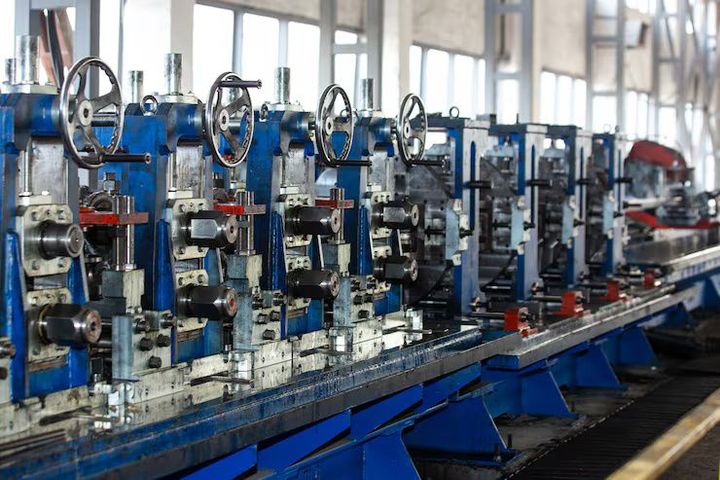
Roll Forming Machines are industrial machines used to continuously shape long strips of metal into specific profiles or cross-sectional shapes. The process usually works with a metal coil that passes through a sequence of rotating rollers. Each roller station gradually changes the shape until the required profile is produced.
Unlike a press that forms a component in one major operation, roll forming uses several stages of controlled bending. This gradual approach makes the process suitable for producing long metal sections with consistent dimensions.
Common materials include carbon steel, galvanized steel, stainless steel, aluminum, and other metals with suitable forming characteristics.
How Roll Forming Works
A typical roll forming line begins with a decoiler, which holds and feeds a metal coil into the machine.
The strip then passes through a series of roll stations. Each station contains shaped rollers that make a small change to the metal profile.
A simplified process includes:
Coil loading: A metal coil is placed onto the decoiler.
Uncoiling: The decoiler releases the strip at a controlled rate.
Straightening: Entry equipment can help align the strip before forming.
Roll forming: Multiple roller stations progressively bend the strip.
Punching: Holes or other features can be created at selected stages.
Cutting: A cutting unit separates finished sections to the required length.
Collection: Finished profiles are guided to an exit table or collection system.
The exact sequence depends on the profile, material thickness, dimensions, and production requirements.
Main Machine Components
Decoiler: Holds the metal coil and feeds material into the production line.
Entry guide: Positions the strip correctly before it reaches the forming rollers.
Roll stations: Contain paired rollers that gradually bend the material into the required shape.
Drive system: Rotates the forming rollers and moves the metal strip through the machine.
Punching unit: Creates holes, slots, or other openings when required.
Cut-off unit: Cuts the formed profile to a predetermined length.
Control system: Coordinates machine movement, speed, cutting, punching, and other functions.
Run-out table: Supports the finished profile after it leaves the forming section.
Importance
Continuous Metal Forming
Roll Forming Machines can continuously transform a metal strip into a finished profile. This makes the process suitable for long products such as channels, framing sections, roofing profiles, and structural components.
The continuous approach can reduce the need for repeated handling between individual forming stages.
Consistent Profiles
Because the strip passes through fixed roller stations, the resulting cross-section can remain consistent when the machine is correctly configured and maintained.
Dimensional control is particularly important for construction profiles, structural components, tracks, frames, and other products that must fit with additional components.
EN 10162 covers dimensional and cross-sectional tolerances for cold-rolled steel sections produced on roll-forming machines, including standard shapes such as L, U, C, Z, and Omega sections.
Material Efficiency
Roll forming changes the shape of a continuous strip through controlled bending rather than removing large quantities of material.
This characteristic can make the process suitable for applications where long, shaped sections are required from sheet or strip material.
Flexible Profile Production
A roll forming line can be designed around a particular profile or, in some configurations, accommodate multiple related profiles.
Changing roller arrangements, guides, tooling, and machine settings can allow production of different shapes, although the level of change depends on the machine design.
Common Profile Shapes
| Profile | Typical Form | Example Application |
|---|---|---|
| C section | C-shaped channel | Framing and structural systems |
| U section | U-shaped channel | Channels and supports |
| Z section | Z-shaped profile | Structural framing |
| Hat section | Raised central profile | Construction components |
| Roofing profile | Ribbed sheet | Roof and wall systems |
| Door track | Guided channel | Door systems |
| Stud profile | Thin formed section | Building frames |
| Custom profile | Application-specific shape | Specialized components |
Recent Updates
Automation and Digital Controls
Modern roll forming lines increasingly use programmable control systems to coordinate feeding, roller movement, punching, cutting, and production monitoring.
Digital controls can allow operators to enter production parameters and monitor machine conditions through an integrated interface.
Automation can also connect roll forming equipment with upstream coil handling and downstream cutting or packaging equipment.
Servo-Driven Systems
Servo motors can provide precise control over selected machine movements. In roll forming lines, servo technology may be used for feeding, cutting, punching, or other synchronized operations.
The exact configuration varies between machine designs and production requirements.
Inline Punching and Cutting
Modern production lines can combine forming with punching and cutting operations. Holes, slots, notches, and other features can be created while the material moves through the line.
This reduces the need to transfer formed profiles to separate machines for every secondary operation.
Advanced Material Grades
Roll forming technology is also used with higher-strength and coated steel grades. Material selection must account for thickness, yield strength, ductility, bend radius, coating characteristics, and the required final geometry.
European steel standards recognize specific requirements for products intended for cold forming and roll forming.
Digital Quality Monitoring
Sensors and measurement systems can monitor selected production conditions such as strip position, line speed, dimensions, motor conditions, and machine operation.
In more advanced production environments, measurement information can be combined with digital records to identify changes in profile dimensions or machine behavior.
Energy and Production Efficiency
Modern machine designs increasingly consider motor efficiency, controlled acceleration, reduced idle operation, and automated production sequences.
The practical energy performance of a roll forming line depends on machine size, material thickness, production speed, motor system, auxiliary equipment, and operating pattern.
Laws or Policies
Indian Standards
The Bureau of Indian Standards maintains standards covering many areas of engineering, steel products, machinery, and manufacturing. Its Know Your Standard platform allows users to search standards using an Indian Standard number or keyword and view related documents and information.
For roll-formed products, the applicable standard depends on the material and final product rather than simply the fact that a roll forming machine was used.
Steel Material Standards
The steel entering a roll forming machine may need to meet a particular material specification depending on its application.
For example, BIS laboratory information currently includes IS 2062 (Part 1):2025 for structural steel and IS 2507:2026 for cold-reduced carbon and alloy steel sheets and strips. These illustrate how material specifications continue to be updated within India's standards framework.
The appropriate material standard should be identified according to the finished product and its intended application.
Machinery Safety
Machine safety is important because roll forming equipment contains rotating rollers, moving strips, cutting mechanisms, electrical systems, and powered components.
India's BIS framework includes standards for machinery safety and metal-forming equipment. For example, BIS lists IS 17277 (Part 3):2021, based on ISO 16092-3, for safety requirements concerning hydraulic presses.
Specific safety requirements for a particular roll forming machine should be determined from the machine design, applicable regulations, and relevant standards.
Product Certification
BIS explains that certification requirements depend on the specific product and applicable Indian Standard. Where a product falls under a mandatory certification framework, manufacturers need to follow the relevant conformity procedures.
Therefore, a roll-formed product should be evaluated according to its material, application, and applicable Indian requirements rather than assuming that every formed metal product follows the same certification route.
Workplace Safety
Operators should be protected from moving rollers, sharp metal edges, cutting equipment, unexpected machine movement, and other hazards.
Appropriate guarding, emergency-stop arrangements, lockout procedures, operator training, maintenance procedures, and personal protective equipment can form part of a broader machine-safety program.
Tools and Resources
Roll Forming Design Software
Engineering software can help designers develop roller profiles, calculate forming stages, and evaluate how a metal strip changes shape through the production line.
Such tools are useful when designing complex profiles where incorrect forming stages can create distortion or excessive material stress.
CAD Software
Computer-aided design systems can create detailed drawings of the finished profile, roller components, machine structures, holes, slots, and cutting arrangements.
CAD drawings can also help communicate dimensional requirements between engineering and production teams.
Measuring Instruments
Common measurement tools include:
Calipers: Measure selected dimensions and thicknesses.
Micrometers: Provide precise thickness or dimensional measurements.
Height gauges: Check selected profile dimensions.
Profile gauges: Compare a formed section with a specified shape.
Laser measurement systems: Can continuously monitor selected dimensions.
Coil Handling Equipment
Decoilers, straighteners, coil cars, and strip guides support the movement of metal from the incoming coil into the forming line.
Correct alignment is important because strip misalignment can influence the finished profile.
Quality Inspection Systems
Inspection systems can check profile dimensions, hole positions, cut lengths, surface conditions, and other characteristics.
For high-volume production, automated measurement can provide continuous information rather than relying entirely on periodic manual checks.
BIS Standards Resources
The BIS standards database can help users identify relevant Indian Standards by product name or keyword. BIS also maintains technical committees covering production engineering and metal-forming machinery.
FAQs
What are Roll Forming Machines?
Roll Forming Machines are industrial machines that continuously bend metal strip through a sequence of rollers to create a specific cross-sectional profile.
How do Roll Forming Machines work?
A metal coil is fed through a series of rotating roll stations. Each station makes a gradual bend until the strip reaches the required shape. Additional equipment can punch holes and cut the finished profile.
What materials can Roll Forming Machines process?
Common materials include carbon steel, galvanized steel, stainless steel, aluminum, and other metals with suitable forming characteristics. The appropriate material depends on the profile and application.
What products are made with Roll Forming Machines?
Products can include C and Z channels, roofing profiles, wall panels, framing sections, door tracks, structural components, cable-support profiles, automotive sections, and specialized metal shapes.
What is the difference between roll forming and press forming?
Roll forming continuously bends a long strip through multiple roller stations, while press forming generally uses a die and press to shape a particular piece or section. Roll forming is particularly suited to long, continuous profiles.
Conclusion
Roll Forming Machines use a sequence of controlled rollers to transform continuous metal strip into consistent profiles. Their major components include decoilers, guides, forming stations, drive systems, punching units, cutting equipment, controls, and collection tables. Modern systems increasingly combine automation, servo controls, digital monitoring, and integrated punching and cutting. Material specifications, product requirements, machine safety, and applicable standards all influence how a roll forming line is designed and operated.