Plywood Press Machines: Discover Pressing Technology and Engineered Wood Production
Plywood press machines play an important role in engineered wood production by applying controlled pressure and heat to bonded veneer layers. This article examines pressing technology, major machine components, production stages, process controls, recent developments, relevant standards, and common applications. It also explains how pressing conditions influence plywood quality, consistency, productivity, and overall manufacturing performance.
Plywood Press Machines: Discover Pressing Technology and Engineered Wood Production
Context
Plywood press machines are industrial systems used to consolidate layers of wood veneer into a stable engineered wood panel. During plywood production, thin veneer sheets are arranged with their wood grain directions positioned in alternating orientations. Adhesive is applied between selected layers, and the assembled stack is placed into a press where controlled pressure, and often heat, helps create a strong and uniform panel.
Plywood press machines form an important stage between veneer preparation and finished-panel processing. The pressing operation influences thickness, bonding quality, surface condition, dimensional stability, and production consistency.
Basic Pressing Principle
The basic pressing process involves placing prepared veneer assemblies between press plates or platens. The machine then applies pressure to the stack for a controlled period. In hot pressing, heated platens also transfer thermal energy through the panel assembly.
Pressure helps bring the veneer layers into close contact while the adhesive develops the required bond. Temperature and pressing time depend on the adhesive system, veneer characteristics, panel thickness, moisture conditions, and production requirements.
Main Machine Components
A typical plywood press system may include several important components:
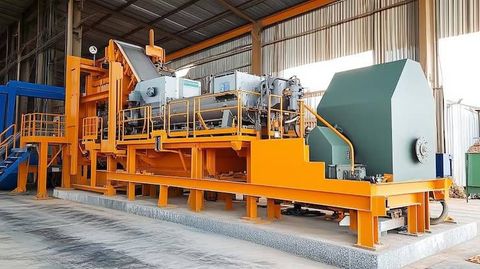
Press frame for structural support
Heated or unheated platens
Hydraulic cylinders or another pressure mechanism
Hydraulic power unit
Temperature-control equipment
Pressure-control system
Loading and unloading arrangements
Electrical control system
Sensors and monitoring devices
Safety guards and interlocking systems
The configuration can vary according to the production scale and panel specifications.
Types of Plywood Press Machines
Plywood production can use different press configurations depending on production requirements.
| Press Type | General Characteristic | Typical Role |
|---|---|---|
| Cold press | Uses pressure without heated platens | Initial bonding and assembly |
| Hot press | Combines pressure with heat | Adhesive curing and panel consolidation |
| Hydraulic press | Uses hydraulic force | Controlled pressing of panel stacks |
| Multi-opening press | Contains multiple pressing openings | Higher-volume panel production |
| Continuous press | Designed for continuous material flow | Automated engineered wood production |
| Single-opening press | Processes one opening at a time | Flexible production arrangements |
The appropriate configuration depends on factors such as panel dimensions, adhesive technology, production volume, automation requirements, and factory layout.
Importance
Plywood press machines are important because the pressing stage directly affects the structure and consistency of engineered wood panels. Correct pressure distribution and controlled processing conditions help maintain uniform contact between veneer layers.
Panel Quality
Consistent pressing can contribute to uniform panel thickness and stable bonding across the production area. Uneven pressure or unsuitable processing conditions can create variations within a panel.
Pressing therefore works together with veneer quality, adhesive application, layup accuracy, and moisture control. A press cannot compensate for every upstream production problem, making process coordination important.
Production Efficiency
Modern pressing systems can integrate programmable controls, automated loading systems, temperature monitoring, and production data collection. These features can reduce unnecessary manual adjustments and help operators maintain repeatable process conditions.
Automation also allows production parameters to be monitored across multiple pressing cycles. This can make process records easier to maintain and support quality-control activities.
Applications
Plywood is used across several sectors because engineered wood panels can provide a combination of structural performance, dimensional consistency, and workable surfaces.
Common applications include:
Building and construction panels
Interior structures
Furniture components
Cabinets and storage systems
Flooring systems
Wall and ceiling applications
Transport-related wood structures
Packaging and industrial panels
The required plywood characteristics vary according to the intended application, so pressing conditions are normally selected alongside the panel design and adhesive system.
Recent Updates
Developments in plywood press machines from 2024–2026 have continued to emphasize automation, process monitoring, energy management, and improved production control.
Digital Process Monitoring
Digital control systems can monitor variables such as pressure, platen temperature, pressing time, and machine status. Data from sensors can be displayed through operator interfaces, allowing production personnel to identify changes during a pressing cycle.
More connected systems can also support production records and historical process analysis. This creates a clearer relationship between machine settings and finished-panel quality.
Automation
Automated veneer handling, panel loading, unloading, and stacking are increasingly integrated into engineered wood production lines. Automation can reduce repetitive manual activities and improve synchronization between production stages.
Programmable control systems can also manage pressing sequences according to predefined production recipes. Different panel specifications can therefore be associated with corresponding process settings.
Energy Efficiency
Heat generation is an important part of hot pressing, so manufacturers continue to focus on energy management. Improved thermal insulation, temperature regulation, heat-transfer arrangements, and control systems can help reduce unnecessary energy use.
Energy monitoring can also help production facilities identify periods of inefficient operation and evaluate equipment performance.
Process Control and Data
Modern industrial equipment increasingly combines sensors with digital monitoring. In plywood pressing, this can include continuous tracking of pressure and temperature as well as alarms for abnormal operating conditions.
Data-based process control can support consistency by helping operators identify trends rather than relying only on manual observation.
Improved Safety Systems
Safety remains an important consideration for large hydraulic and heated machines. Modern systems may incorporate guarding, emergency-stop arrangements, interlocks, controlled access, and monitoring of machine conditions.
Safety features need to be selected and maintained according to the machine design and applicable workplace requirements.
Laws or Policies
Plywood production is subject to different regulatory requirements depending on the country, manufacturing environment, and intended application of the panels. Requirements can cover machinery safety, workplace conditions, electrical systems, emissions, chemical handling, and finished-product performance.
International standards can provide frameworks for machinery safety, risk reduction, electrical equipment, and quality-control practices. Organizations operating plywood production equipment should identify the standards applicable to their location and product category.
Environmental requirements may also apply to adhesive-related emissions, wood processing, energy use, waste handling, and workplace exposure. Specific requirements vary by jurisdiction and production process.
Machinery Safety
Press equipment combines significant mechanical force with, in some systems, high temperatures. Risk assessment, guarding, emergency controls, maintenance procedures, and operator training are therefore important elements of safe operation.
Product Standards
Finished plywood may need to comply with standards or specifications covering dimensions, bonding performance, structural characteristics, moisture resistance, or intended application. The applicable framework depends on the market and product category.
Manufacturers should verify current requirements with the relevant national regulators, standards organizations, and certification authorities rather than relying on a general specification.
Tools and Resources
Plywood pressing is supported by equipment and systems beyond the main press.
Production Equipment
Relevant equipment can include veneer dryers, veneer graders, adhesive mixing systems, glue spreaders, layup tables, pre-presses, hot presses, panel saws, sanding systems, and stacking equipment.
Each stage affects the next. For example, uneven veneer moisture can influence adhesive behavior and pressing conditions, while inaccurate layup can affect panel structure.
Monitoring Instruments
Useful monitoring systems may include:
Pressure sensors
Temperature sensors
Moisture measurement equipment
Thickness measurement systems
Hydraulic pressure monitoring
Electrical monitoring systems
Control panels
Data logging systems
These tools help production teams maintain consistent operating conditions and identify process changes.
Software and Control Systems
Programmable logic controllers and industrial control software can coordinate pressing cycles and machine sequences. Human-machine interfaces allow operators to view operating parameters and machine status.
Production data systems can also support traceability by recording information associated with individual production runs.
Maintenance Resources
Regular inspection is important for hydraulic systems, heating components, seals, cylinders, electrical connections, sensors, and structural parts. Maintenance schedules should follow the equipment manufacturer's technical documentation and applicable workplace requirements.
FAQs
What are plywood press machines?
Plywood press machines are industrial machines that apply controlled pressure to layered wood veneer assemblies. Hot press systems also use heat to support adhesive curing and panel consolidation.
How do plywood press machines work?
Prepared veneer layers are arranged and bonded before being placed into the press. The machine applies controlled pressure, while heated systems regulate platen temperature and pressing time to support the bonding process.
What is the role of heat in plywood press machines?
Heat can accelerate adhesive curing and help establish the required bond between veneer layers. The appropriate temperature depends on the adhesive, veneer properties, panel construction, and production process.
Which factors affect plywood pressing quality?
Important factors include veneer moisture, adhesive distribution, layup accuracy, pressure, temperature, pressing time, panel thickness, and machine condition. Consistency across these factors supports repeatable panel production.
Are modern plywood press machines automated?
Many modern systems incorporate programmable controls, sensors, automated material handling, temperature monitoring, and production data systems. The degree of automation varies between production lines.
Conclusion
Plywood press machines are a central part of engineered wood production, bringing prepared veneer layers together under controlled processing conditions. Pressure, temperature, time, moisture, adhesive behavior, and layup accuracy all influence the final panel. Recent developments have emphasized automation, digital monitoring, energy management, and improved safety controls. Understanding these technologies helps explain how plywood production moves from individual veneer layers to consistent engineered wood panels.