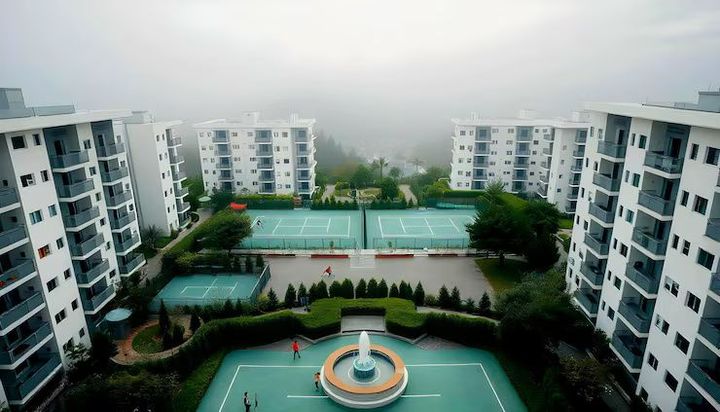
Long-Stay Corporate Residences: Explore Extended Business Travel Accommodation
Long-stay corporate residences provide furnished, residential-style accommodation for professionals spending several weeks or months away from their usual workplace. These residences combine living space, work areas, kitchen facilities, connectivity, and flexible arrangements to support extended business travel, relocation, and project assignments.
Context
Long-stay corporate residences are furnished accommodation options designed for professionals who need to stay in a destination for an extended period. They can include serviced apartments, corporate apartments, aparthotels, and furnished residential units located near business districts, transport networks, or project locations.
Extended business travel can arise from corporate projects, employee relocation, training programs, consulting assignments, regional office work, construction projects, international assignments, or temporary workplace transfers. A conventional hotel room may work well for a short trip, while a residential-style space can provide additional room for longer stays.
The global serviced apartment market continues to develop around corporate and business travelers, with long-term accommodation identified as an important market segment. Research published in 2026 also highlights corporate travel, employee relocation, project-based work, and longer assignments as major demand factors.
Main Features
Long-stay corporate residences commonly include:
Furnished living and sleeping areas
Kitchen or kitchenette facilities
Workspace or desk area
Internet connectivity
Laundry facilities
Housekeeping arrangements
Building access controls
Residential amenities
Flexible stay periods
Access to local transportation
The exact facilities differ by property and destination, so companies should assess requirements before selecting accommodation.
Typical Users
Long-stay residences can support several types of business travelers. These may include executives on extended assignments, consultants working on projects, employees relocating between cities, international staff, technical teams, and professionals attending long-duration training programs.
The appropriate accommodation depends on the length of the assignment, work schedule, location, number of occupants, and company travel policy.
Importance
Long-stay corporate residences can provide a practical structure for extended business travel by combining accommodation and everyday living facilities in one location.
Supporting Longer Assignments
Long assignments can involve several weeks or months away from the traveler's usual home. A residence with separate living, sleeping, and working areas can create a more practical environment than a compact room.
This can be particularly relevant when the traveler needs to prepare documents, attend virtual meetings, or maintain normal work routines outside office hours.
Workspace and Connectivity
Reliable connectivity is important for modern business travelers. Professionals may need to join video meetings, access company systems, communicate with colleagues, and prepare presentations from their accommodation.
A suitable residence should therefore be assessed for internet availability, workspace, electrical access, and the ability to maintain a quiet working environment.
Kitchen and Living Facilities
Kitchen facilities can provide greater flexibility during longer stays. Travelers may prefer to prepare some meals themselves rather than relying entirely on restaurants.
Separate living areas can also make an extended stay feel more structured, particularly when accommodation is occupied for several weeks.
Location Planning
Location has a significant influence on extended business travel. A residence near the workplace may reduce daily commuting, while a location near public transportation can provide flexibility for meetings across the city.
Companies should consider the distance to offices, project sites, airports, conference venues, hospitals, supermarkets, and other frequently used locations.
Supporting Employee Relocation
Corporate residences can provide temporary accommodation when employees move between cities or countries. They can act as an interim living arrangement while a longer-term residential location is being arranged.
This can be useful for international assignments and employees transitioning into a new workplace.
Managing Group Assignments
Some projects involve several employees staying in the same destination for an extended period. Coordinating accommodation locations can simplify communication and transportation planning.
For larger teams, companies should also consider privacy requirements, shared facilities, individual work needs, and the duration of the assignment.
Recent Updates
The extended-stay accommodation market is evolving in 2026 as business travel patterns, hybrid work, corporate relocation, and procurement practices change.
Growth of Extended-Stay Accommodation
Research published in 2026 estimates the global serviced apartment market at approximately $145.9 billion for 2026 and identifies corporate and business travelers as a major end-use segment. The research also highlights long-term stays, corporate travel, relocations, and project assignments as important demand drivers.
The broader corporate travel market is also expanding. Morgan Stanley's 2026 corporate travel research projected a 5% increase in global corporate travel budgets and a 6.3% increase in hotel bookings for the year.
Longer and More Flexible Stays
Hybrid work and project-based assignments are influencing the shape of corporate accommodation demand. Recent 2026 research describes a continued shift toward extended-stay and apartment-style accommodation for project workers, consultants, relocations, and longer-duration business travel.
This creates demand for residences that can support both professional activities and everyday living.
Greater Procurement Involvement
Corporate accommodation decisions are increasingly involving procurement, finance, human resources, global mobility, and travel teams. The Corporate Housing Providers Association reported in 2026 that decision-making for extended-stay housing is increasingly influenced by procurement and finance rather than only travel and mobility teams.
This means companies may evaluate accommodation through several criteria, including policy compliance, data, employee experience, security, and financial controls.
Expansion Beyond Major Business Centers
The serviced-apartment sector is also expanding beyond traditional primary business destinations. A 2025–2026 market update from SilverDoor identified increasing demand for secondary and tertiary locations across regions including Asia-Pacific and India.
For companies, this can broaden accommodation planning beyond major metropolitan centers when projects are located in emerging business hubs.
Technology and Digital Management
Digital tools are increasingly involved in corporate accommodation planning. Companies may use centralized platforms to track residences, travelers, policies, dates, documentation, and reporting.
AI is also being incorporated into broader corporate travel technology, including planning, data analysis, and operational coordination. The value of these tools depends on appropriate company controls and accurate underlying information.
Sustainability Considerations
Longer stays can also influence sustainability planning because one extended trip may reduce the need for repeated short journeys between the same locations.
Companies can assess energy efficiency, transportation access, waste practices, building standards, and other environmental factors when developing corporate accommodation policies.
Laws or Policies
Long-stay corporate residences must comply with applicable accommodation, housing, immigration, tax, safety, and corporate travel requirements. Regulations vary by country, state, city, and property type.
Corporate Accommodation Policy
A company accommodation policy should define eligibility, approval procedures, permitted locations, stay durations, documentation, traveler responsibilities, and reporting requirements.
It can also specify how employees should handle changes to dates, additional occupants, extensions, or personal travel.
Lease and Occupancy Requirements
Longer stays may be governed by different rules from short hotel visits. Depending on the jurisdiction and type of residence, agreements may be subject to local tenancy, occupancy, registration, or housing regulations.
Companies should review the applicable local requirements before entering into longer arrangements.
International Assignments
International employees may require appropriate visas, permits, registrations, or other immigration documentation. Accommodation arrangements should be consistent with the traveler's legal status in the destination.
Official government and immigration sources should be consulted for current requirements.
Health and Safety
Corporate residences should meet relevant building, fire, electrical, sanitation, and occupancy requirements. Companies may also establish internal standards for emergency access, building security, and traveler safety.
Data Protection
Corporate accommodation planning may involve employee names, travel dates, identification information, contact details, and residence locations.
Companies should restrict access to sensitive information and follow applicable privacy and data-security policies.
Tools and Resources
Several tools can support long-stay corporate residence planning.
Accommodation Checklist
| Planning Area | Key Details |
|---|---|
| Stay duration | Arrival and departure dates |
| Location | Workplace and transport access |
| Residence | Apartment type and layout |
| Workspace | Desk and working environment |
| Connectivity | Internet and mobile access |
| Kitchen | Cooking and food-storage facilities |
| Laundry | In-unit or building facilities |
| Security | Building access and emergency procedures |
| Documentation | Agreements and traveler records |
| Policy | Corporate approval requirements |
Corporate Travel Platforms
Centralized travel platforms can help companies organize accommodation information alongside transportation and itinerary details. This can make it easier to track extended assignments across several employees or destinations.
Global Mobility Resources
Global mobility teams can help coordinate employee relocation, temporary accommodation, immigration requirements, and workplace transitions.
Digital Calendars
Shared calendars can combine accommodation dates, office schedules, meetings, travel segments, and important appointments.
Location Research
Before selecting a residence, planners can review commuting routes, public transportation, nearby business districts, airports, essential retail facilities, and local amenities.
Contingency Planning
Long-stay arrangements should account for possible changes in project schedules, assignment extensions, early departures, maintenance issues, or changes in workplace location.
A clear process for changing dates or accommodation can reduce disruption when business requirements change.
FAQs
What are long-stay corporate residences?
Long-stay corporate residences are furnished accommodation options designed for professionals staying in a destination for several weeks or months. They can include serviced apartments, corporate apartments, and aparthotels.
Who uses long-stay corporate residences?
They can be used by executives, consultants, relocated employees, project teams, international assignees, and professionals undertaking extended training or workplace assignments.
What facilities are common in long-stay corporate residences?
Common facilities can include furnished living areas, kitchens or kitchenettes, workspaces, internet connectivity, laundry facilities, and residential amenities. The exact features vary by property.
How should companies choose long-stay corporate residences?
Companies should consider location, stay duration, workplace proximity, transportation, workspace, connectivity, security, accommodation policy, documentation, and traveler requirements.
Are long-stay corporate residences suitable for international assignments?
They can be suitable for international assignments when the accommodation arrangement aligns with local housing rules, immigration requirements, corporate policy, and the employee's assignment duration.
Conclusion
Long-stay corporate residences provide a residential approach to extended business travel, combining living space with facilities that can support professional routines. They can be relevant for project assignments, employee relocation, executive travel, consulting work, and international mobility. In 2026, growing corporate travel activity, hybrid work patterns, procurement involvement, and demand for flexible accommodation are shaping the extended-stay sector. Careful attention to location, policy, documentation, security, and traveler requirements can help companies organize longer business stays effectively.