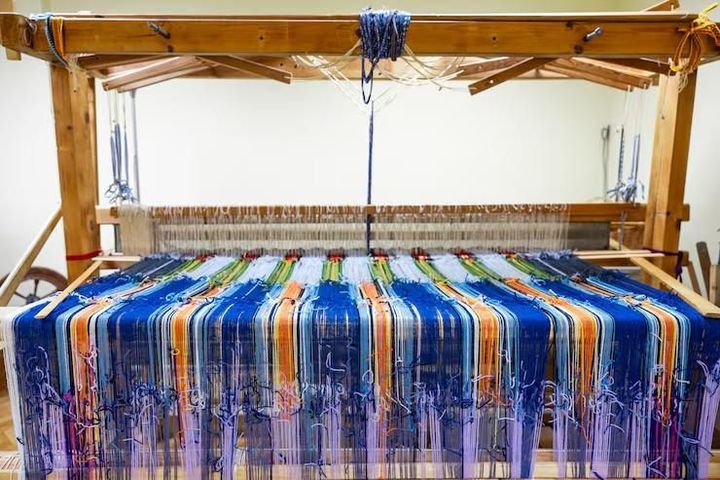
Jacquard Looms: Guide to Design, Functions, and Textile Applications
Jacquard Looms are weaving machines designed to control individual warp yarns or groups of selected warp yarns to create detailed woven patterns. Unlike simpler shedding systems that control larger groups of yarns through a limited number of harness frames, a Jacquard mechanism provides much greater control over the arrangement of warp threads.
The technology originated from the Jacquard mechanism developed in France in the early nineteenth century. Early systems used punched cards to communicate pattern instructions to the loom. This approach became historically important because it demonstrated how coded information could control a machine.
Modern Jacquard Looms generally use electronic control systems rather than physical punched-card chains. Digital designs can be converted into machine instructions that determine which warp elements are raised or lowered during successive weaving cycles.
How a Jacquard Loom Works
A woven fabric is created by crossing two main yarn systems: warp and weft. Warp yarns run lengthwise through the fabric, while the weft yarn moves across the width.
A simplified Jacquard weaving sequence includes:
Warp preparation: Warp yarns are arranged and prepared before entering the loom.
Pattern programming: A digital or mechanical pattern determines the required warp movements.
Shedding: Selected warp yarns are raised or lowered to create an opening called the shed.
Weft insertion: A weft yarn passes through the shed.
Beat-up: The reed moves the inserted weft into the fabric structure.
Take-up: Newly formed fabric is gradually wound onto the cloth beam.
Pattern repetition: The programmed sequence continues to create the intended design.
The precise mechanism varies according to the loom, Jacquard head, yarn characteristics, fabric structure, and intended application.
Main Components
Jacquard head: Controls the movement of selected warp elements according to the programmed pattern.
Hooks and harness system: Traditional and modern systems use hook-and-harness arrangements to control warp threads.
Warp beam: Holds the prepared warp yarns before they enter the weaving area.
Healds or heddles: Guide individual warp yarns and help create the required shed.
Reed: Maintains yarn spacing and pushes each inserted weft into position.
Weft insertion system: Transfers the weft yarn through the shed. The loom may use rapier, air-jet, projectile, or another insertion method.
Take-up mechanism: Controls the movement of completed fabric away from the weaving zone.
Electronic controller: In modern machines, software and electronic controls coordinate pattern instructions with the loom's mechanical movements.
Importance
Creating Complex Textile Patterns
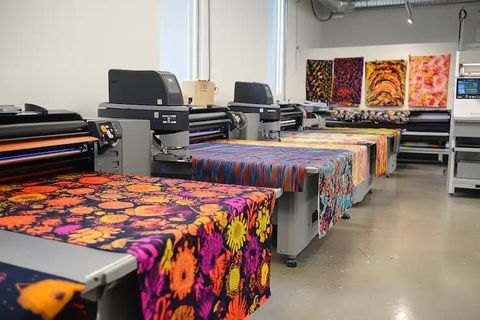
The primary strength of Jacquard Looms is their ability to produce intricate woven structures. Designs can include detailed geometric arrangements, portraits, logos, landscapes, decorative motifs, and multilevel textures.
Because individual warp elements can be controlled with considerable precision, designers can create patterns that would be difficult to produce using simpler shedding arrangements.
Supporting Different Fabric Structures
Jacquard technology is used for more than decorative surface patterns. It can create fabrics containing different weave structures, layers, textures, and selected areas with different construction characteristics.
This makes the technology relevant to fashion textiles as well as technical and industrial fabrics.
Improving Design Flexibility
Digital Jacquard systems allow textile designers to develop patterns on computers and convert them into machine-readable information. CAD/CAM software can assist with pattern development, weave construction, color planning, and fabric simulation before production.
Recent weaving software developments include realistic fabric simulation, multilayer design tools, technical weave development, and direct communication between design software and weaving equipment.
Supporting Technical Textiles
Jacquard systems are also used for specialized textiles. Applications include airbags, reinforcement fabrics, filtration materials, automotive textiles, carpets, industrial fabrics, and other engineered structures.
Modern Jacquard equipment can handle yarns such as carbon, aramid, and other specialized materials when the machine configuration is designed for the application.
Major Characteristics
| Feature | Function | Typical Result |
|---|---|---|
| Individual warp control | Selects warp movements | Detailed patterns |
| Electronic patterning | Stores digital instructions | Flexible design changes |
| Multiple weave structures | Controls different yarn arrangements | Textured fabrics |
| High hook capacity | Controls many warp elements | Complex designs |
| CAD integration | Connects design with production | Digital workflow |
| Fabric simulation | Previews structures digitally | Design evaluation |
| Automatic controls | Coordinates machine functions | Consistent operation |
Recent Updates
Electronic Jacquard Systems
Modern Jacquard Looms increasingly use electronic control architecture. Electronic systems can manage large numbers of hooks while coordinating pattern instructions with the main weaving cycle.
Contemporary Jacquard machines are available in different formats and configurations for applications ranging from apparel and home textiles to technical fabrics. For example, Stäubli has demonstrated electronic Jacquard equipment for one-piece-woven airbag production with configurations reaching thousands of hooks.
Digital CAD and 3D Fabric Simulation
Digital textile design is becoming increasingly connected with Jacquard production. CAD/CAM platforms can allow designers to create weave structures, adjust colors, simulate fabric appearance, and prepare production data.
Some modern systems can also represent multilayer structures in three dimensions. This allows designers to examine complex constructions digitally before the physical fabric is produced.
Connected Weaving Equipment
Digital connectivity is another major development in modern weaving. Machine-monitoring platforms can collect information about machine operation, production conditions, energy use, and selected technical parameters.
Picanol's recent weaving platforms, for example, include electronic controls, machine monitoring, climate monitoring, shed simulation, and digital connectivity features. Its 2025 exhibition material also showed rapier weaving machines configured with Jacquard systems.
Energy and Process Monitoring
Modern weaving machinery increasingly incorporates systems for monitoring energy consumption and operating conditions. These features can help textile producers understand machine performance and identify changes in operating behavior.
Stäubli has also presented electronic Jacquard systems with an emphasis on energy-efficient machine architecture and digitally controlled operation.
Flexible Textile Research
Jacquard technology is also being used in educational and research environments. In 2024, the Rhode Island School of Design installed a large industrial Jacquard loom capable of producing large textiles, complex images, and three-dimensional fabric structures for research and student projects.
This demonstrates how Jacquard equipment is used not only for conventional textile manufacturing but also for experimentation with new structures and materials.
Laws or Policies
International Machinery Safety
Jacquard Looms contain moving mechanical parts, electrical systems, rotating components, yarn-handling mechanisms, and automated controls. Their design and operation therefore fall within machinery safety frameworks that vary by country.
ISO 11111-1:2016 is an international standard covering common safety requirements for textile machinery. ISO reviewed and confirmed this standard in 2026, meaning the 2016 edition remains current.
European Union Machinery Regulation
The European Union's Regulation (EU) 2023/1230 establishes health and safety requirements for machinery and related products placed on the EU market. The regulation applies from 20 January 2027, with certain provisions applying earlier.
For textile machinery entering the European market, manufacturers and organizations involved in machinery integration need to consider the applicable conformity and safety requirements.
United States Workplace Rules
In the United States, OSHA has specific textile-industry requirements covering the design, installation, operation, and maintenance of textile machinery. Its textile regulation includes requirements relating specifically to looms, including shuttle protection and measures to prevent unintended machine starting during maintenance activities.
OSHA's general machine-guarding requirements also address hazards from moving parts, rotating components, nip points, and points of operation.
Safety During Maintenance
Maintenance activities require particular attention because workers may need to access areas containing moving or stored mechanical energy. Lockout procedures, machine isolation, guarding, emergency stopping arrangements, and appropriate training can form part of a textile machinery safety program.
Exact legal requirements differ between countries and workplaces, so manufacturers and textile facilities should refer to the regulations applicable in their operating jurisdiction.
Tools and Resources
Jacquard CAD Software
Jacquard CAD programs help designers create patterns, weave structures, color arrangements, and technical production files. Modern platforms can connect design development with manufacturing equipment and simulate finished fabric appearance.
Weave Simulation
Digital simulation tools can represent yarn density, weave structure, colors, texture, and fabric construction. Three-dimensional simulation can be particularly useful for multilayer or highly structured textiles.
Pattern Libraries
Digital libraries can contain basic weave structures, motifs, color arrangements, and technical references. Designers can modify these elements to develop new patterns instead of constructing every structure from the beginning.
Machine Monitoring Platforms
Connected weaving platforms can collect information about machine conditions and selected production parameters. Such systems can support production analysis, equipment monitoring, and digital recordkeeping.
Textile Standards Resources
ISO publications, national standards organizations, workplace safety regulators, and textile machinery associations provide technical information relating to machinery safety and textile production.
For international operations, it is important to distinguish between voluntary technical standards and legally binding requirements because their status varies between jurisdictions.
FAQs
What are Jacquard Looms?
Jacquard Looms are weaving machines that provide detailed control over warp yarn movements, allowing complex patterns, textures, and woven structures to be created.
How do Jacquard Looms work?
Jacquard Looms use a programmed pattern to control selected warp yarns. The loom repeatedly creates a shed, inserts weft yarn, beats the weft into position, and advances the completed fabric.
What fabrics can be made with Jacquard Looms?
Jacquard Looms can produce apparel fabrics, upholstery, curtains, carpets, decorative textiles, furnishing fabrics, technical textiles, automotive fabrics, and other specialized woven materials.
What is the difference between a Jacquard Loom and a regular loom?
A major difference is the level of warp control. A Jacquard system can control many individual warp elements according to a detailed pattern, while simpler shedding systems generally control groups of warp yarns through a smaller number of harness frames.
Are modern Jacquard Looms computerized?
Many modern Jacquard Looms use electronic controllers and digital pattern files. CAD/CAM software can also connect textile design with machine programming and fabric simulation.
Conclusion
Jacquard Looms provide detailed control over warp yarns and have transformed the way complex woven patterns and structures are produced. Modern electronic systems, CAD/CAM software, digital simulation, machine monitoring, and specialized weaving configurations have expanded their use across fashion, home furnishings, and technical textiles. International machinery safety frameworks, including ISO standards, European Union machinery rules, and United States workplace requirements, provide important references for safe operation. Understanding the machine's components, digital workflow, textile applications, and safety requirements helps explain the continuing role of Jacquard technology in worldwide textile production