Executive Suite Amenities: Explore Premium Hotel Features and Guest Experiences
Executive suites combine spacious accommodation with premium room features, privacy, technology, work areas, wellness elements, and personalized guest experiences for business and leisure travelers.
Context
Understanding Executive Suite Amenities
Executive suites are larger hotel accommodations designed to provide additional space, privacy, and functionality compared with standard guest rooms. They are commonly associated with business travelers, families, long-stay guests, and travelers seeking a more spacious hotel environment.
The exact features of an executive suite vary between hotels and properties. A suite may include separate sleeping and living areas, a work desk, dining space, upgraded bathroom facilities, additional storage, and enhanced in-room technology.
Modern executive suites increasingly combine traditional hospitality features with digital controls, wellness-oriented design, and flexible spaces. The focus is shifting from simply providing a larger room toward creating an environment that can support work, relaxation, entertainment, and personal routines.
Common Executive Suite Features
Executive suite amenities can include:
Separate bedroom and living areas
Larger seating arrangements
Dedicated work desk
High-speed internet connectivity
Smart television systems
Multiple charging points
Coffee and beverage facilities
Larger bathrooms
Walk-in showers or soaking tubs
Additional wardrobe space
Dining or meeting areas
Enhanced lighting controls
Climate controls
In-room privacy features
Expanded views or outdoor areas
Not every suite contains all of these features. Hotel category, location, room configuration, and property design influence the available amenities.
Executive Suite vs Standard Room
The main difference between an executive suite and a standard room is generally the amount of space and the separation of functions.
A standard room may combine sleeping, working, and sitting areas within one space. An executive suite may provide separate zones that allow a guest to work while another person uses the living area or to hold a small private discussion without using a public hotel area.
| Feature | Standard Room | Executive Suite |
|---|---|---|
| Sleeping area | Usually integrated | Often separate |
| Living area | Limited | More spacious |
| Work area | Basic desk | Dedicated workspace may be available |
| Seating | Basic | Expanded |
| Bathroom | Standard configuration | May be larger |
| Storage | Standard | Often expanded |
| Privacy | Standard | Greater separation |
| Technology | Standard room controls | May include additional controls |
| Dining area | Limited or absent | May be included |
| Guest capacity | Usually limited | May accommodate more flexible use |
Importance
Space and Privacy
Additional space is one of the main characteristics of an executive suite.
Separate living and sleeping areas can create greater privacy for guests. This can be useful for travelers who need to work, hold informal discussions, relax during a long stay, or accommodate family members.
Privacy can also extend beyond the room itself. Some executive suites may have private entrances, dedicated elevators, separate lounge access, or controlled access areas depending on the hotel.
Business Functionality
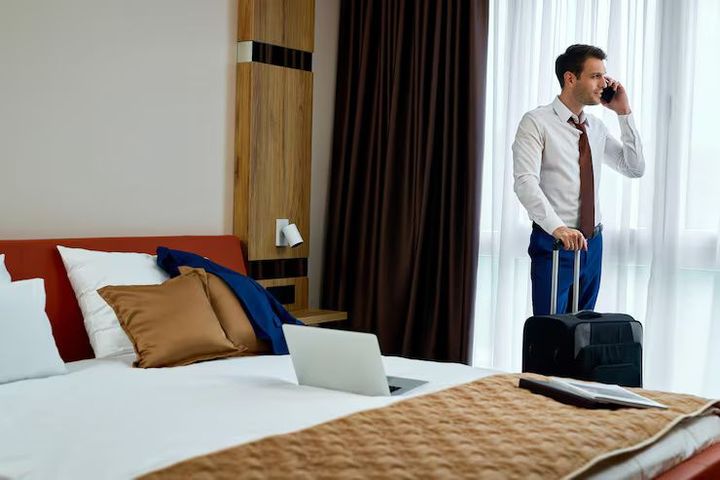
Executive suites can support travelers who need to combine accommodation with professional activities.
A dedicated desk, suitable lighting, reliable internet connectivity, charging points, and comfortable seating can make the room more practical for remote work or business communication.
Some suites also include meeting tables or larger living areas that can accommodate informal discussions. Formal meetings generally require appropriate hotel meeting facilities rather than relying on the guest room.
Comfort and Relaxation
Suite design increasingly considers relaxation as an important part of the guest experience.
Larger seating areas, quieter layouts, natural light, comfortable bedding, blackout systems, temperature controls, and bathroom features can contribute to a more flexible environment.
Wellness-related design is also becoming more visible in premium hospitality. Current 2026 hotel trends emphasize quieter spaces, personalized experiences, wellbeing, and environments designed around rest rather than simply visual luxury.
Technology Integration
Technology can make executive suites easier to control and use.
Modern rooms may include mobile access, digital check-in, smart televisions, app-based communication, lighting controls, climate controls, USB-C charging, wireless charging, and connected entertainment systems.
The 2026 State of Hotel Guest Tech Report found growing guest interest in digital check-in, mobile checkout, AI-supported experiences, and other technology features. It also identified privacy concerns around connected voice technologies, showing that convenience needs to be balanced with data protection.
Personalized Experiences
Personalization is becoming increasingly important in premium hospitality.
Hotels can use guest preferences to prepare room settings, recognize previous requests, adjust communication, and provide relevant recommendations. Personalization can involve temperature preferences, room location, entertainment settings, dietary requirements, or preferred communication channels.
Current hospitality research indicates that personalization is moving toward a more integrated approach in which guest information can be used across different stages of the stay.
Recent Updates
Smart Room Technology
Executive suites are increasingly incorporating connected-room technology.
Smart controls can allow guests to adjust lighting, temperature, curtains, entertainment systems, and other room functions. The goal is to make common room controls easier to access without requiring multiple separate devices.
Connected-room technology can also help hotel teams monitor equipment and identify maintenance requirements. Industry technology research for 2026 identifies IoT, connected rooms, real-time data, and cybersecurity as important components of modern hospitality infrastructure.
AI and Guest Personalization
Artificial intelligence is becoming more visible across hotel operations and guest interactions.
AI systems can assist with routine questions, recommendations, communication, and operational coordination. Hotel technology research in 2026 indicates that many guests are becoming comfortable with AI-assisted interactions, while hotels are also exploring AI for personalized experiences and operational efficiency.
However, technology does not replace every aspect of hospitality. Premium hotel experiences continue to combine digital convenience with human interaction, particularly where guests require complex assistance or personalized attention.
Wellness-Oriented Suites
Wellness is becoming a broader part of premium hotel design.
Executive suites may incorporate improved air quality systems, natural materials, adjustable lighting, comfortable sleep environments, larger bathrooms, fitness equipment, relaxation areas, or access to dedicated wellness facilities.
The wider luxury-hospitality market is also moving toward quieter environments, privacy, meaningful experiences, and wellbeing-oriented spaces.
Flexible Suite Spaces
Modern travelers may use a hotel room for several different activities during the same day.
An executive suite can therefore be designed with multiple functional zones. A guest may use one area for work in the morning, another for meals, and the bedroom or lounge area for relaxation later.
Flexible furniture, movable tables, separate lighting controls, and multiple seating arrangements can support this changing pattern of use.
Premium Bathroom Design
Bathrooms are an important part of the executive suite experience.
Features can include larger showers, soaking tubs, dual sinks, expanded mirrors, improved lighting, separate toilet areas, heated surfaces, and larger storage spaces. Some properties also incorporate wellness-related features such as rainfall showers or dedicated relaxation areas.
The exact configuration depends on the hotel's design and target accommodation category.
Quiet Luxury and Privacy
Luxury hospitality trends in 2026 increasingly emphasize discretion and reduced visual excess.
Rather than relying exclusively on large decorative elements, premium properties are focusing more on privacy, calm environments, natural materials, personalized experiences, and distinctive design. Accor's 2026 luxury research describes this movement as a shift toward quieter, more intimate experiences.
This trend can influence executive suite layouts through improved acoustic separation, private outdoor areas, discreet technology, and more understated interior design.
Laws or Policies
Hotel Accommodation Regulations
Executive suites are subject to the same general accommodation, building, fire-safety, accessibility, electrical, and public-health requirements applicable to the property in which they are located.
In India, requirements can involve national regulations as well as state and local rules. Hotels must follow applicable building, fire, electrical, sanitation, and safety provisions.
Fire and Emergency Safety
Hotel suites must be incorporated into the property's emergency-safety systems.
Depending on the building, this can include fire detection, alarm systems, emergency exits, evacuation information, emergency lighting, fire-resistant construction, and other safety measures.
Guests should follow the hotel's emergency instructions and avoid blocking designated evacuation routes.
Accessibility
Accessibility requirements can apply to hotel buildings and guest accommodation depending on the applicable jurisdiction.
Accessible room layouts may include wider doorways, appropriate bathroom configurations, accessible controls, and other design features intended to support guests with mobility or other access requirements.
The exact requirements vary according to local regulations and building classifications.
Data and Privacy
Connected hotel rooms can involve personal information and digital interactions.
Mobile keys, guest applications, smart-room controls, Wi-Fi networks, digital payment systems, and personalization platforms can all involve data processing. Hotels therefore need appropriate cybersecurity, access controls, privacy practices, and data-management procedures.
This has become increasingly important as hospitality technology becomes more connected. Current industry technology research identifies digital trust and cybersecurity as foundational requirements for connected guest environments.
Hotel Policies
Individual properties may establish rules covering occupancy, visitors, smoking, pets, events, noise, check-in, check-out, deposits, and access to certain hotel areas.
Guests should review the applicable property policies before using an executive suite for meetings, gatherings, or extended occupancy.
Tools and Resources
Hotel Room Comparison Tools
Hotel booking platforms can help travelers compare room categories, photographs, layouts, location information, and available facilities.
Room names can vary between properties, so travelers should examine the actual room description rather than assuming that every executive suite has the same configuration.
Hotel Floor Plans
Floor plans can be useful when space arrangement is important.
A floor plan can show the relationship between the bedroom, living area, bathroom, entrance, balcony, and work area. This can be particularly useful for travelers who require separate functional zones.
Guest Reviews
Guest reviews can provide additional information about room layouts, noise levels, workspace practicality, technology, views, and maintenance conditions.
Reviews should be considered alongside official room descriptions because individual experiences can differ.
Hotel Technology
Modern hotel systems may include:
Mobile check-in
Digital room keys
Smart-room controls
Connected televisions
Guest messaging
Mobile checkout
Wi-Fi management
In-room tablets
Digital concierge platforms
Integrated property-management systems
Executive Suite Evaluation Checklist
| Category | Points to Check |
|---|---|
| Space | Bedroom and living-area separation |
| Workspace | Desk, chair, lighting and power |
| Connectivity | Wi-Fi and mobile reception |
| Entertainment | TV and connected devices |
| Bathroom | Shower, tub, storage and lighting |
| Privacy | Door separation and acoustic conditions |
| Technology | Room controls and charging |
| Wellness | Sleep, lighting and relaxation features |
| Accessibility | Suitable access and bathroom layout |
| Location | Floor, view and proximity to facilities |
Selecting Suite Features for Different Travelers
A business traveler may prioritize a proper desk, reliable connectivity, charging points, and quiet surroundings.
A family may place greater importance on separate sleeping areas, storage, bathroom configuration, and living space.
A long-stay guest may focus on workspace, dining areas, storage, laundry access, kitchen facilities, and practical room controls.
The appropriate executive suite therefore depends on the purpose and duration of the stay.
FAQs
What are executive suite amenities?
Executive suite amenities are the room features and facilities provided within a larger premium hotel accommodation. They can include separate living areas, workspaces, enhanced bathrooms, technology, additional seating, and privacy features.
What is usually included in an executive suite?
Features vary by property but may include a separate bedroom and living area, work desk, larger bathroom, enhanced entertainment technology, additional storage, beverage facilities, and expanded seating.
Are executive suites suitable for business travelers?
Yes. Executive suites can provide additional space for working, video meetings, reviewing documents, and managing a business schedule. A dedicated workspace and reliable connectivity can be particularly useful.
How is an executive suite different from a standard hotel room?
An executive suite generally provides more space and may separate sleeping, living, and working areas. It can also include additional room features and privacy arrangements that are not present in a standard room.
Are smart technologies common in executive suites?
Smart-room technologies are increasingly used in premium hospitality. Depending on the property, guests may find digital keys, connected televisions, mobile controls, smart lighting, climate controls, and app-based communication.
Conclusion
Executive suite amenities extend beyond additional room size by combining space, privacy, technology, work functionality, comfort, and personalized guest experiences. Current hospitality trends show greater interest in connected rooms, AI-assisted personalization, wellness-oriented design, flexible spaces, and quieter forms of luxury. The exact features vary considerably between hotels, so travelers should examine room layouts, facilities, technology, accessibility, and property policies when comparing executive suites. A well-designed suite can provide a flexible environment that supports business activities, relaxation, and different travel needs within the same accommodation.