Distribution Transformers: Guide to Types, Components, and Practical Insights
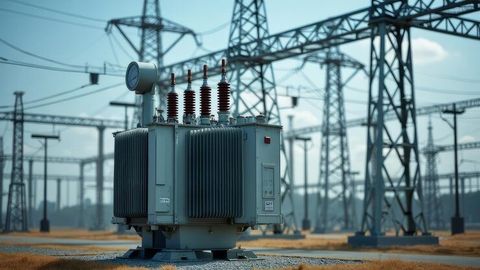
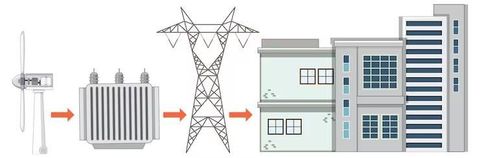
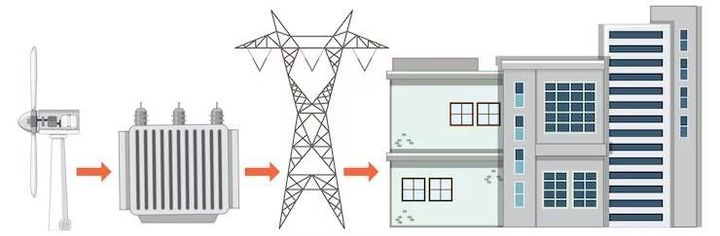
Distribution Transformers are electrical devices that reduce voltage from a distribution network to levels suitable for homes, commercial buildings, industrial facilities, and other electricity users. They form an important connection between medium-voltage networks and lower-voltage electrical systems.
A transformer works through electromagnetic induction. Alternating current flowing through the primary winding creates a changing magnetic field in the transformer core. This magnetic field induces voltage in the secondary winding, allowing electrical energy to move from one voltage level to another without a direct electrical connection between the two windings.
Distribution transformers are commonly installed on utility poles, concrete pads, substations, underground networks, and indoor electrical rooms. Their design depends on voltage levels, power rating, environmental conditions, network configuration, and local technical requirements.
How Distribution Transformers Work
The basic operating sequence is relatively simple:
Primary winding: Receives electricity from the higher-voltage distribution network.
Magnetic core: Provides a low-reluctance path for magnetic flux.
Secondary winding: Produces electricity at a lower voltage for local use.
Insulation system: Separates electrical conductors and supports safe operation.
Cooling system: Transfers heat away from the windings and core.
Enclosure or tank: Protects internal components from environmental conditions.
For example, electricity may arrive at a neighborhood distribution point at a medium voltage. The transformer reduces that voltage before it enters a local low-voltage network supplying buildings.
Main Types of Distribution Transformers
Pole-mounted transformers are commonly installed on utility poles and are frequently associated with overhead distribution networks. They can supply individual properties or groups of nearby consumers.
Pad-mounted transformers are enclosed units installed at ground level. They are commonly used in underground distribution networks, residential developments, commercial areas, and industrial sites.
Liquid-immersed transformers use insulating liquid for electrical insulation and heat transfer. Mineral oil is widely used, while other insulating liquids may be selected according to environmental, fire-safety, or technical requirements.
Dry-type transformers use air or solid insulation rather than a liquid-filled tank. They are commonly considered for indoor locations and areas where liquid containment or fire considerations influence equipment selection.
Single-phase transformers are frequently used for smaller loads and certain residential distribution arrangements.
Three-phase transformers are widely used for commercial, industrial, and larger distribution networks where three-phase electricity is required.
Importance
Supporting Electricity Distribution
Distribution Transformers help electricity networks deliver usable voltage to end users. Without appropriate voltage transformation, electricity generated and transmitted across a network would not be suitable for many local loads.
They operate at many points throughout electrical distribution networks, making their reliability important for continuity of power.
Reducing Energy Losses
Transformers themselves consume some energy through core losses and winding losses. Efficient transformer designs can reduce these losses over long operating periods.
No-load losses occur while a transformer is energized even when the load is relatively small. Load losses increase as current flows through the windings and produce resistive heating.
Because distribution transformers may remain energized for many years, even relatively small efficiency improvements can have an important cumulative effect.
Supporting Modern Electrical Loads
Electricity networks are changing as demand grows from electric vehicles, data centers, distributed generation, heat pumps, industrial electrification, and other technologies.
Distribution Transformers must increasingly accommodate changing load patterns, bidirectional power flows in some networks, and greater variation in electricity demand.
Improving Grid Flexibility
Some modern transformers can incorporate voltage-regulation capabilities. These systems can help maintain voltage within appropriate limits as loads and distributed energy resources change.
IEC 60076-24 covers voltage-regulating distribution transformers, including units equipped with components for controlling primary or secondary voltage.
Main Categories
| Transformer Type | Main Characteristic | Common Application |
|---|---|---|
| Pole-mounted | Installed on utility structures | Overhead networks |
| Pad-mounted | Ground-level enclosed design | Underground networks |
| Liquid-immersed | Liquid insulation and cooling | Outdoor distribution |
| Dry-type | Air or solid insulation | Indoor installations |
| Single-phase | One-phase configuration | Smaller local loads |
| Three-phase | Three-phase configuration | Commercial and industrial loads |
| Voltage-regulating | Adjustable voltage capability | Networks with voltage variation |
Recent Updates
Growing Grid Infrastructure Requirements
Global electricity demand continues to increase. The International Energy Agency reported that worldwide electricity demand grew by around 3% in 2025, while emerging market and developing economies accounted for about 80% of global demand growth. This broader expansion creates additional requirements for distribution infrastructure, including transformers.
Distribution Transformer Supply Constraints
Transformer availability has become an important grid-infrastructure issue in several markets. The U.S. Department of Energy reported ongoing supply-chain constraints, long production times, and component shortages affecting distribution transformers. In 2025, a DOE working group developed resources focused on component interchangeability and reducing unnecessary variation among transformer designs.
This issue matters because distribution networks require large numbers of transformers, while manufacturing capacity and specialized electrical materials can take significant time to expand.
Updated U.S. Efficiency Requirements
In 2024, the U.S. Department of Energy finalized amended energy-conservation standards covering distribution transformers. The revised requirements include liquid-immersed, low-voltage dry-type, and medium-voltage dry-type equipment. Compliance with the amended standards is scheduled to begin in 2029.
In 2026, DOE also opened a new information-gathering process examining how transformer efficiency requirements relate to manufacturing capacity, grid resilience, supply chains, and key materials.
Electrification and New Load Patterns
The expansion of electric vehicle charging, renewable generation, data centers, and industrial electrification is changing the requirements placed on distribution networks.
Transformers may need to handle higher local loads, changing demand patterns, and in some situations power flows associated with distributed generation. This is increasing interest in equipment monitoring, voltage regulation, improved efficiency, and network planning.
Digital Monitoring
Modern distribution networks increasingly use sensors and digital monitoring systems to collect information about transformer temperature, loading, voltage, current, and other operating conditions.
Data from monitoring equipment can help network operators identify abnormal conditions and understand asset performance. More advanced systems can combine transformer information with broader grid-management platforms.
Efficiency-Focused Materials
Transformer cores traditionally use electrical steel designed to reduce magnetic losses. Amorphous metal core technology is another approach used in some distribution transformer designs because of its low no-load loss characteristics.
The appropriate material depends on technical specifications, loading patterns, manufacturing considerations, and applicable efficiency requirements.
Laws or Policies
IEC Standards
The IEC 60076 family provides widely used international standards for power transformers. IEC 60076-1 establishes general requirements for power transformers, while other parts address specific transformer types, testing, insulation, applications, and operating conditions.
IEC 60076-11 addresses dry-type transformers and includes considerations related to environmental classes, altitude, climatic conditions, fire behavior, and seismic conditions.
The exact standards applicable to a transformer depend on its design and intended application.
IEEE Standards
In North America and other markets that use IEEE-based specifications, the IEEE C57 family provides important transformer standards.
IEEE C57.12.00-2021 covers general electrical and mechanical requirements for liquid-immersed distribution, power, and regulating transformers. IEEE also maintains separate standards covering dry-type transformers, overhead transformers, pad-mounted equipment, submersible transformers, and transformer testing.
European Union Ecodesign Rules
The European Union has ecodesign requirements for small, medium, and large power transformers. Regulation (EU) 2019/1783 amended Regulation (EU) No 548/2014 and established requirements related to energy performance and transformer losses.
These requirements are relevant to transformers placed on the European market within the regulation's scope.
United States Energy Standards
In the United States, distribution transformers covered by federal requirements are regulated under the Department of Energy's energy-conservation framework. DOE states that manufacturers have been subject to distribution-transformer efficiency requirements since 2007, with amended requirements finalized in 2024 and scheduled for compliance from 2029.
National Grid Requirements
In addition to international standards, utilities and electricity regulators may establish their own technical specifications. These can address voltage ratings, impedance, insulation levels, connection arrangements, testing, enclosure design, environmental conditions, and communication requirements.
Consequently, a transformer that meets a general international standard may still need additional requirements for a particular electricity network.
Tools and Resources
Transformer Design Calculations
Electrical engineers use transformer calculations to evaluate voltage ratios, current, power ratings, impedance, losses, temperature rise, and other parameters.
Basic calculations can help explain how changes in voltage affect current and how transformer ratings relate to connected loads.
Transformer Testing Equipment
Testing can examine characteristics such as winding resistance, insulation condition, turns ratio, dielectric performance, losses, and temperature behavior.
Routine and type tests depend on the transformer design and the applicable technical standard.
Condition Monitoring
Monitoring equipment can measure temperature, loading, oil condition, dissolved gases in applicable liquid-filled transformers, moisture, and other parameters.
These measurements can help identify developing equipment conditions and support maintenance planning.
Load Monitoring
Load monitoring systems track current and power demand over time. This information can help utilities understand transformer loading and identify locations where demand patterns are changing.
Grid Planning Software
Power-system analysis software can model transformer loading, voltage levels, short-circuit conditions, power flows, and network configurations.
These tools are useful when planning new distribution infrastructure or evaluating changes to an existing network.
Standards and Regulatory Resources
The IEC, IEEE, national standards organizations, electricity regulators, and government energy agencies provide technical documents and regulatory information for transformer design and deployment.
For example, IEC standards provide international technical references, while IEEE C57 documents are widely used for transformer specifications in IEEE-based systems. U.S. DOE resources provide information about federal distribution-transformer efficiency requirements and current grid-infrastructure activities.
FAQs
What are Distribution Transformers?
Distribution Transformers are electrical devices that reduce medium-voltage electricity to lower voltage levels suitable for local electricity networks and end users.
How do Distribution Transformers work?
Distribution Transformers use electromagnetic induction between primary and secondary windings. The magnetic core transfers changing magnetic flux between the windings, allowing voltage to be changed without a direct electrical connection.
What are the main types of Distribution Transformers?
Common types include pole-mounted, pad-mounted, liquid-immersed, dry-type, single-phase, three-phase, and voltage-regulating transformers.
Why are Distribution Transformers important for the power grid?
Distribution Transformers connect higher-voltage distribution networks with lower-voltage systems used by homes, commercial buildings, and industrial facilities. Their efficiency and reliability influence local grid performance.
What standards apply to Distribution Transformers worldwide?
Important technical frameworks include the IEC 60076 family and IEEE C57 standards. Regional regulations may also establish efficiency, conformity, safety, environmental, and network-specific requirements.
Conclusion
Distribution Transformers are essential components of electrical networks because they adapt voltage levels for local electricity use. Their main designs include liquid-immersed, dry-type, pole-mounted, pad-mounted, single-phase, and three-phase configurations. Recent developments are focused on efficiency, digital monitoring, grid expansion, supply-chain resilience, and the changing electrical loads created by electrification and renewable generation. International standards from IEC and IEEE, together with regional regulatory requirements, provide important frameworks for transformer design, testing, efficiency, and deployment.