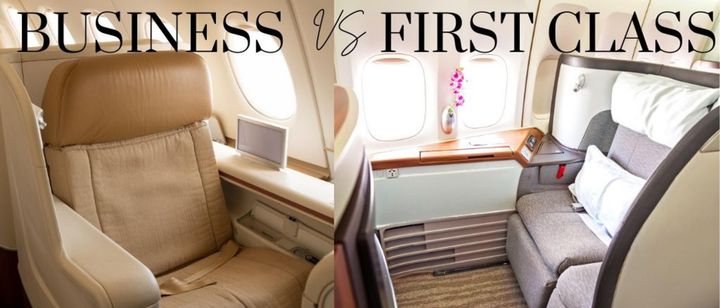
Business Class vs First Class: Explore Premium Air Travel Differences
Business Class and First Class provide enhanced air travel experiences, but they differ in seating, privacy, dining, airport access, personal space, and onboard features.
Context
Understanding Business Class and First Class
Business Class and First Class are premium cabin categories designed to provide greater comfort and additional travel features compared with standard economy cabins. The exact experience varies by airline, aircraft, route, and cabin design.
Business Class is now widely used on long-haul international routes and commonly includes spacious seating, direct aisle access, priority airport procedures, premium dining, and lie-flat beds on many aircraft. First Class, where available, generally adds greater privacy, more personal space, smaller cabin layouts, and additional ground and onboard features.
The distinction has become less straightforward in recent years. Modern Business Class suites can include closing doors, direct aisle access, lie-flat beds, and sophisticated dining, while some airlines have reduced or removed international First Class cabins.
Why the Difference Can Be Confusing
The meaning of First Class depends partly on the market. International First Class can be substantially different from domestic First Class in the United States, where the cabin may use wider reclining seats rather than enclosed suites or fully flat beds.
For international long-haul travel, the comparison is generally between a premium Business Class cabin and a dedicated First Class cabin. Travelers should therefore examine the actual aircraft and seat configuration instead of relying only on the cabin name.
Importance
Seating and Personal Space
Seat design is one of the most noticeable differences between Business Class and First Class.
Modern Business Class cabins frequently use lie-flat seats, with many layouts providing direct aisle access. Some newer Business Class products also include privacy doors and individual suites.
First Class generally provides more personal space. Depending on the aircraft, the seat can be part of a larger enclosed suite with additional storage, a wider sleeping area, or greater separation from neighboring passengers.
The actual difference varies considerably. A newer Business Class suite can provide a higher level of privacy than an older First Class seat.
Sleeping Comfort
For overnight long-haul flights, the ability to sleep comfortably can be a major consideration.
Business Class on many long-haul aircraft provides a fully flat sleeping surface. This can make the cabin suitable for travelers who want to arrive more rested.
First Class can add more space around the sleeping area, improved bedding, and additional privacy. Certain aircraft have particularly large suites, although these features are not available across every First Class cabin.
Dining
Both cabins generally include enhanced dining compared with economy, but First Class can provide a more elaborate dining environment.
Business Class may include multi-course meals, wider menu selections, specialty beverages, and flexible meal timing on some airlines.
First Class can include more extensive menus, individually prepared dishes, premium table settings, and greater flexibility in meal selection. The exact dining format depends on the airline and route.
Airport Experience
The premium experience begins before boarding.
Business Class passengers may receive priority check-in, security or immigration facilities where available, priority boarding, and access to designated airport lounges.
First Class can include dedicated check-in areas, separate lounges, private airport facilities, or additional ground transportation arrangements on selected airlines.
Not every airport provides separate First Class facilities, so travelers should check the specific airport and airline arrangement.
Lounge Access
Business Class commonly includes access to a Business Class or premium airline lounge on qualifying routes.
First Class passengers may receive access to a separate First Class lounge with a quieter environment and additional facilities. Some airlines operate dedicated First Class terminals or private airport areas.
Lounge access can also depend on the ticket, frequent-flyer status, airline alliance, airport, and operating carrier.
Privacy
Privacy is one of the clearest areas where First Class can differ from traditional Business Class.
Business Class seats can range from open layouts to enclosed suites. Newer designs increasingly include privacy doors, personal storage, and layouts that reduce interaction between neighboring passengers.
First Class generally places greater emphasis on individual space and separation. Some products provide enclosed suites that create a more private environment throughout the flight.
Onboard Amenities
Business Class commonly includes items such as bedding, amenity kits, larger entertainment screens, power connections, and enhanced storage.
First Class may add more elaborate bedding, larger personal spaces, specialized amenity kits, and additional cabin features. Some aircraft have unusual facilities such as onboard showers, although these are limited to particular airline and aircraft combinations.
Service Levels
The ratio of cabin crew to passengers can be different between the two cabins. First Class cabins are often smaller, allowing more individualized attention.
Business Class can also provide attentive cabin assistance, but the number of passengers in the cabin and the aircraft layout influence the overall experience.
These differences are not universal because airlines design their premium cabins differently.
Recent Updates
Business Class Has Become More Sophisticated
One of the major developments in premium air travel is the continued improvement of Business Class cabins.
Airlines have introduced enclosed suites, direct aisle access, larger entertainment displays, improved storage, wireless charging, and other features that were previously associated with higher cabin categories.
In September 2026, American Airlines introduced a redesigned Flagship Business Class suite on its Boeing 777-300ER, including sliding doors, additional storage, wireless charging, and 4K entertainment displays. The aircraft no longer includes the carrier's previous Flagship First cabin.
First Class Is Becoming More Selective
International First Class remains available on selected airlines and routes, but it is no longer present across the long-haul networks of many carriers.
The shift reflects the growing ability of Business Class to provide lie-flat seating, privacy, premium dining, and other features that narrow the gap between the two cabins.
Premium Leisure Travel Growth
Premium cabins are increasingly used by leisure travelers as well as corporate travelers.
McKinsey reported in August 2026 that affluent leisure travelers are becoming an important part of premium-cabin demand, encouraging airlines to rethink cabin design, pricing, and the overall passenger experience.
This trend has encouraged airlines to develop Business Class cabins that appeal to both work-related and leisure journeys.
Greater Focus on Premium Cabin Revenue
Premium cabins have become increasingly important to airline economics. McKinsey's 2026 analysis found that Business Class can generate substantial revenue relative to the physical space it occupies on certain long-haul routes.
This helps explain why airlines continue to invest in premium seating while some reduce the number of traditional First Class seats.
New Aircraft and Cabin Designs
Aircraft deliveries and cabin renovations are also influencing the comparison.
Airlines are introducing suites with sliding doors, larger screens, better connectivity, improved storage, and more flexible seating arrangements. Emirates also announced an upgraded premium-economy design in September 2026 that includes additional privacy features, showing how cabin categories are becoming more differentiated while also sharing certain design concepts.
Laws or Policies
Passenger Rights in India
Premium cabin passengers remain subject to the same aviation safety framework as other passengers. Cabin category does not remove standard passenger rights or airline obligations.
India's Directorate General of Civil Aviation continues to publish Civil Aviation Requirements covering passenger-related matters. A revised 2026 requirement addresses areas such as refunds and certain booking-related procedures.
Delays and Cancellations
Passenger protections can apply when flights are cancelled, delayed, or affected by denied boarding, subject to the applicable rules and circumstances.
Travelers flying from India should review the current DGCA requirements and the airline's conditions of carriage before traveling. DGCA materials also provide mechanisms for passenger grievances.
International Air Travel
International journeys can also fall under international air-law frameworks.
The Montreal Convention provides rules concerning international carriage by air, including matters involving passengers, baggage, delays, and certain forms of carrier liability. ICAO states that revised liability limits under the Convention took effect on December 28, 2024.
Airline Conditions
Business Class and First Class tickets can have different conditions concerning changes, cancellations, upgrades, baggage, lounge access, and reward redemptions.
The exact conditions are determined by the airline, fare type, route, ticket rules, and applicable regulations. Travelers should review the conditions attached to the specific ticket rather than assuming that all premium fares have identical rules.
Tools and Resources
Airline Seat Maps
Airline seat maps are useful when comparing Business Class and First Class. They can show whether a seat is lie-flat, whether it has a privacy door, and how the cabin is arranged.
Seat maps can also reveal differences between aircraft operating the same route.
Aircraft Configuration Information
The aircraft type can significantly affect the experience. A Business Class seat on a newer wide-body aircraft may be substantially different from a Business Class seat on an older aircraft.
Travelers should check the aircraft model and cabin configuration before selecting a premium cabin.
Loyalty Program Tools
Airline loyalty programs can provide another way to access premium cabins through points or miles. Redemption rates, availability, upgrade conditions, and taxes or additional charges vary by program.
Because award conditions can change, travelers should check current program information before transferring or redeeming points.
Fare Comparison Tools
Comparing Business Class and First Class fares across multiple dates can show how the difference changes according to route and travel period.
A fare that appears significantly different on one date may have a smaller gap on another date, particularly when award availability or promotional fare structures change.
Cabin Comparison Table
| Feature | Business Class | First Class |
|---|---|---|
| Seat space | Spacious | Usually more spacious |
| Lie-flat bed | Common on long-haul | Common on international long-haul |
| Privacy | Varies by aircraft | Usually higher |
| Enclosed suite | Available on some aircraft | Common on newer premium products |
| Lounge access | Common on qualifying journeys | Often includes First Class facilities |
| Dining | Premium multi-course options | More elaborate options on some airlines |
| Storage | Enhanced | Generally greater |
| Cabin size | Larger than First | Usually smaller |
| Availability | Widely available | Limited to selected airlines and routes |
| Ground experience | Priority airport facilities | May include dedicated premium facilities |
FAQs
What is the difference between Business Class and First Class?
Business Class generally provides spacious seating, premium dining, priority airport procedures, and lie-flat beds on many long-haul routes. First Class typically adds greater privacy, more personal space, enhanced dining, and additional ground or onboard features.
Is Business Class better than First Class?
The answer depends on the aircraft, airline, route, and features that matter to the traveler. A modern Business Class suite can provide extensive privacy and comfort, while First Class may add more space and exclusive features.
Does First Class always have a private suite?
No. First Class configurations vary by airline and aircraft. Some provide enclosed suites, while others use open or partially enclosed seating arrangements.
Does Business Class have lie-flat seats?
Many long-haul Business Class cabins have lie-flat seats, but this is not universal. Travelers should check the aircraft configuration and seat map for the specific flight.
Why are some airlines removing First Class?
Some airlines are reducing or eliminating First Class because modern Business Class cabins can provide many premium features while using cabin space in ways that may align more closely with current passenger demand and airline economics.
Conclusion
Business Class and First Class both provide premium air travel, but the distinction is increasingly influenced by individual airline and aircraft design. Business Class has adopted many features once associated with First Class, including lie-flat beds, enclosed suites, enhanced privacy, and sophisticated dining. First Class can still provide additional space, exclusivity, and specialized airport or onboard experiences on selected routes. Comparing the actual aircraft, seat design, airport facilities, and ticket conditions is therefore more useful than relying only on the cabin name.