Vehicle-to-Grid Charging Technology: Learn the Basics, Uses, and Resources
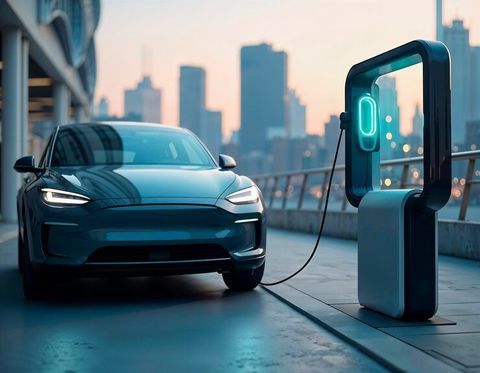
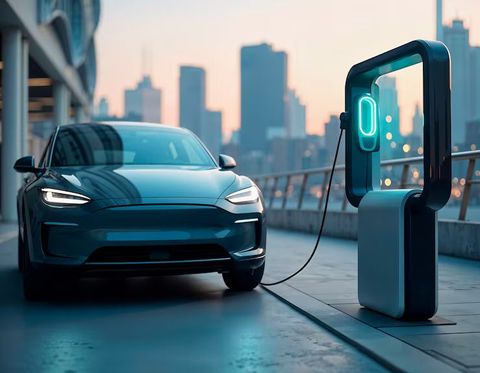
Vehicle-to-Grid Charging Technology, commonly called V2G, allows a compatible electric vehicle (EV) to receive electricity from the grid and send stored electricity back to the grid. Conventional EV charging mainly moves electricity in one direction, while V2G enables controlled two-way energy flow.
A V2G system treats an EV battery as a flexible energy resource when the vehicle is parked and connected. Electricity can be stored during suitable periods and later returned to the grid when grid conditions require additional flexibility. The U.S. Department of Energy describes bidirectional EVs as vehicles that can charge from EV supply equipment and discharge electricity to an external load or the grid.
How V2G Charging Works
A typical V2G arrangement includes several connected components:
Electric vehicle battery: Stores electrical energy and provides the energy that can later be discharged.
Bidirectional charger: Converts electrical energy in both directions and controls charging and discharging.
EV charging connector: Provides the physical connection between the vehicle and charging equipment.
Communication system: Allows the vehicle, charger, energy-management platform, and grid-related systems to exchange information.
Energy management software: Determines when the battery should charge, remain idle, or discharge according to predefined conditions.
Electricity grid connection: Receives energy exported by the vehicle when grid-connected discharge is authorized.
Communication standards are important because different components must understand charging commands, energy limits, identification information, and other data. ISO 15118-20 defines communication requirements for EV-to-EV supply equipment interactions and supports bidirectional power transfer.
A Simple V2G Example
Imagine an electric car connected to a compatible charger at home during the evening. The vehicle can charge when electricity demand is relatively low. Later, if the relevant grid program permits discharge, the system can send a controlled amount of stored energy back toward the grid.
The vehicle owner can still need the battery for transportation, so the control system can maintain a specified minimum charge level. This illustrates an important feature of V2G: charging and discharging decisions must account for both transportation needs and electricity-system requirements.
V2G, V2H, and V2B
V2G is one part of a wider group known as vehicle-to-everything, or V2X. V2H means vehicle-to-home, where an EV supplies electricity to a residence. V2B means vehicle-to-building, where an EV can support a commercial or institutional building.
The main difference is where the electricity is directed. V2G sends electricity toward the wider grid, while V2H and V2B primarily support local electrical loads.
Importance
Why Vehicle-to-Grid Charging Technology Matters
Electric vehicles contain batteries that may remain connected to charging equipment for several hours while the vehicle is parked. V2G creates a way to use some of that stored energy as a flexible grid resource while maintaining transportation requirements.
The technology can support demand management, renewable-energy integration, grid flexibility, and backup arrangements in certain applications. The U.S. Department of Energy notes that bidirectional EVs can support building resilience, demand response, microgrids, and grid-related applications.
Main Applications
Vehicle-to-Grid Charging Technology can be used in several settings:
Residential EV charging: Compatible vehicles can potentially exchange electricity with the grid through approved residential equipment.
Commercial buildings: Fleets can interact with building energy systems and manage electrical demand.
Electric bus fleets: Buses often remain parked for scheduled periods, creating opportunities for controlled charging and discharge.
Fleet depots: Delivery, municipal, and corporate fleets can coordinate vehicle batteries through centralized software.
Renewable-energy integration: EV batteries can provide additional flexibility when solar or wind generation varies.
Microgrids: Bidirectional EVs can participate in local energy systems that coordinate several electrical resources.
Main Functional Benefits
V2G can provide several technical functions. Charging can be shifted to periods when grid demand is lower, while controlled discharge can support the electrical system during selected periods.
The technology can also help connect EVs with distributed energy resources such as solar photovoltaic systems and stationary batteries. DOE describes bidirectional EVs as mobile storage resources that can complement renewable generation and local resilience systems.
Challenges and Limitations
V2G deployment has several limitations. Not every EV supports bidirectional operation, and compatible charging equipment is also required.
Grid connection rules, vehicle manufacturer requirements, battery-management limits, communication standards, utility programs, and local electricity-market structures can affect whether V2G can be used.
Battery cycling is another consideration. Repeated charging and discharging can affect battery operation, although the actual impact depends on battery chemistry, temperature, operating conditions, power levels, and control strategies.
Comparing Related Charging Technologies
| Technology | Electricity Flow | Main Application | Typical Control Requirement |
|---|---|---|---|
| Conventional EV charging | Grid to vehicle | Battery charging | Charger control |
| Smart charging | Controlled grid to vehicle | Demand management | Communication and scheduling |
| V2H | Vehicle to home | Household energy support | Bidirectional equipment |
| V2B | Vehicle to building | Building energy management | Energy-management system |
| V2G | Vehicle to grid | Grid flexibility | Grid coordination and authorization |
| V2X | Vehicle to multiple systems | Integrated energy management | Multi-system communication |
Recent Updates
Advances in V2G Communication Standards
International standardization has continued to develop during 2024–2026. ISO 15118-20 provides second-generation communication requirements and includes bidirectional power-transfer functionality. In July 2026, ISO published Amendment 1 to ISO 15118-20, covering areas including AC distributed-energy-resource functionality and an improved security concept.
ISO also published ISO 15118-10:2025, covering physical and data-link-layer requirements for single-pair Ethernet communication in EV charging.
In 2025, ISO published ISO/PAS 15118-202 for additional communication protocols related to discovery and event notification. A committee draft intended to replace that document is under development in 2026.
These developments are relevant because reliable communication is necessary when EVs, chargers, software platforms, and electrical systems coordinate bidirectional energy transfer.
U.S. Vehicle-Grid Integration Planning
In July 2024, the U.S. Department of Energy published its “Future of Vehicle Grid Integration” vision through the EVGrid Assist initiative. The document describes a framework for safely and securely connecting EVs with the electricity grid and identifies standardization, policy, market design, and technical development as important areas.
This reflects a broader shift from viewing EVs only as electricity consumers toward considering them as flexible energy resources.
European Developments
The European Union has also incorporated smart and bidirectional charging into its electric-mobility framework. The Alternative Fuels Infrastructure Regulation states that recharging points built or renovated after 13 April 2024 should support smart charging, while communication standards supporting smart and bidirectional charging are part of the broader framework.
EU electricity-market legislation also calls for regulatory frameworks that facilitate connections of charging points with smart and bidirectional charging capabilities.
UK Smart Charging Development
The UK has developed policies and demonstration programs around smart charging and V2X technologies. Government material describes V2G as a form of V2X in which EV batteries can discharge electricity toward the electricity network. Earlier UK innovation programs included hundreds of bidirectional charge points in demonstration projects.
The scale and availability of V2G programs can vary by vehicle model, charger, electricity provider, network operator, and local regulatory framework.
Laws or Policies
International Standards
V2G does not operate under one worldwide regulatory system. Instead, technical standards and electricity regulations work together.
ISO 15118 is particularly important for EV-to-charger communication. ISO 15118-20 specifies communication requirements that support bidirectional power transfer, while related standards address communication layers and conformance testing.
Standards should not be confused with national laws. A technical standard can describe how equipment communicates, while a national or regional authority can determine whether equipment may connect to a public electricity network.
United States
In the United States, V2G projects can be affected by utility interconnection requirements, state rules, electricity-market structures, electrical codes, and equipment certification requirements.
DOE guidance notes that organizations considering bidirectional EV applications should check with their electricity provider to determine whether applicable interconnection agreements permit reverse power flow from EVs to the grid.
European Union
EU legislation provides a framework supporting smart and bidirectional charging infrastructure. The Alternative Fuels Infrastructure Regulation addresses smart charging and bidirectional charging within the deployment of recharging infrastructure.
Implementation can still vary between Member States because national authorities and electricity-system structures determine many practical requirements.
United Kingdom
The UK has specific smart-charge-point regulations and broader policies supporting managed charging. Government guidance identifies V2G as part of V2X and describes smart charging as charging controlled in response to communication signals and electricity-system conditions.
Requirements can change as regulations and electricity-market arrangements develop, so project operators need to verify current national and local requirements.
Tools and Resources
Energy-Management Software
Energy-management platforms coordinate charging schedules, battery limits, grid signals, and vehicle availability. In fleet applications, software can monitor many vehicles simultaneously and establish charging priorities based on departure schedules.
Charging Management Systems
Charging-management systems connect EV chargers with software platforms and can monitor power flow, charging status, schedules, and equipment conditions. For V2G, the system must also coordinate controlled discharge.
Grid Monitoring Tools
Grid monitoring systems can track electrical demand, voltage, frequency, renewable generation, and other operating conditions. These data can help determine when bidirectional charging should be activated within an approved program.
Standards Databases
The ISO Online Browsing Platform and related standards databases can be used to research current EV charging communication standards. ISO's current catalog identifies standards including ISO 15118-20:2022, its 2026 amendment, and newer related documents.
Government Energy Resources
Government energy departments and electricity regulators can provide information about interconnection requirements, smart charging programs, electricity-market rules, and technical guidance. DOE resources explain bidirectional EV charging and its potential applications in buildings and grid systems.
Simulation and Planning Tools
Energy-system simulation software can model EV charging demand, battery availability, renewable generation, building loads, and grid interactions. These tools can help researchers and planners study different operating scenarios before physical deployment.
FAQs
What is Vehicle-to-Grid Charging Technology?
Vehicle-to-Grid Charging Technology allows a compatible electric vehicle to receive electricity from the grid and return controlled electrical energy from its battery toward the grid through suitable bidirectional equipment.
How does Vehicle-to-Grid Charging Technology work?
Vehicle-to-Grid Charging Technology uses a compatible EV, bidirectional charger, communication protocols, energy-management software, and an authorized grid connection. The system controls when electricity enters or leaves the vehicle battery.
What is the difference between V2G and V2H?
V2G sends electricity from an EV toward the wider electricity grid, while V2H sends electricity from the vehicle battery to a home. Both require compatible vehicles and bidirectional charging equipment.
Can every electric vehicle use V2G charging?
No. V2G requires compatibility among the vehicle, battery-management system, charging equipment, communication standards, and applicable grid connection rules. Vehicle manufacturers and charging-equipment specifications determine whether a particular combination supports bidirectional operation.
What standards support V2G charging?
The ISO 15118 family is a major international standards group for EV-to-charger communication. ISO 15118-20 includes requirements supporting bidirectional power transfer, while newer related documents continue developing communication and conformance requirements.
Conclusion
Vehicle-to-Grid Charging Technology enables compatible electric vehicles to function as flexible electrical resources by allowing controlled two-way energy flow. Its applications include grid flexibility, fleet management, renewable-energy integration, building support, and selected resilience scenarios. Developments in ISO 15118 communication standards, digital energy management, and regional smart-charging policies are supporting continued technical development. Practical deployment still depends on compatible vehicles and chargers, grid connection rules, communication systems, battery-management requirements, and local regulations.