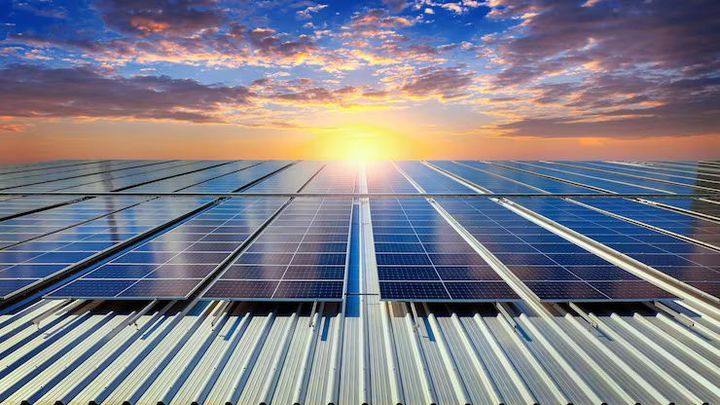
Solar Panels: Discover How They Work and Important Facts
What Are Solar Panels? Solar panels are devices that convert sunlight into usable energy. Most modern solar panels use photovoltaic (PV) cells, which convert sunlight directly into electricity through the photovoltaic effect.
A solar panel is made up of multiple photovoltaic cells connected together. These cells commonly use semiconductor materials such as silicon. When sunlight reaches the cells, it creates an electrical current that can be collected and used by electrical equipment.
Solar energy is part of the broader renewable-energy sector because sunlight is naturally replenished. Solar panels can be installed on residential buildings, commercial properties, industrial facilities, public infrastructure, and large ground-mounted projects.
How Do Solar Panels Work?
The operation of a photovoltaic system involves several stages. Sunlight reaches the photovoltaic cells, causing the semiconductor material to generate direct-current (DC) electricity.
An inverter then converts DC electricity into alternating-current (AC) electricity, which is compatible with most household and building electrical systems. Depending on the system design, electricity can be consumed directly, stored in batteries, or supplied to the electricity grid.
A basic solar installation may include:
- Photovoltaic panels: Capture sunlight and generate DC electricity.
- Inverter: Converts DC electricity into AC electricity.
- Mounting structure: Holds panels at an appropriate position and angle.
- Electrical protection equipment: Helps manage and protect electrical circuits.
- Monitoring system: Tracks selected information about energy generation.
- Battery storage: Stores electricity for later use in systems equipped with batteries.
Types of Solar Panels
Different photovoltaic technologies are used for different applications. Monocrystalline panels are made from a single-crystal silicon structure and are widely used in residential and commercial installations.
Polycrystalline panels use multiple silicon crystal structures. Thin-film photovoltaic technologies use thin semiconductor layers and can be manufactured in different forms.
Panel performance depends on factors such as technology, temperature, sunlight intensity, orientation, shading, installation conditions, and system design.
Importance
Renewable Electricity Generation
Solar panels generate electricity without directly burning fuel during operation. This makes photovoltaic technology an important component of renewable-energy development.
Solar generation can be deployed at different scales, from small rooftop installations to large utility-scale projects. The appropriate configuration depends on available space, electricity demand, local sunlight conditions, and grid requirements.
Reducing Dependence on Conventional Generation
Solar electricity can contribute to a diversified energy system. When electricity is generated locally, some energy demand can be supplied without requiring all electricity to come from centralized generation sources.
The overall impact depends on factors such as the electricity mix, system size, generation pattern, and how electricity is consumed or stored.
Supporting Distributed Generation
Rooftop solar allows electricity to be generated close to where it is consumed. Distributed generation can be particularly relevant in areas where suitable roofs or other spaces are available.
Solar generation is naturally variable because sunlight changes throughout the day and across seasons. Grid-connected systems therefore operate alongside other generation, storage, and grid-management resources.
Energy Monitoring
Modern photovoltaic systems can provide information about electricity generation. Monitoring applications may show daily, monthly, or annual production, depending on the equipment.
This information can help users understand how weather, shading, panel orientation, and seasonal changes influence electricity generation.
Environmental Considerations
Solar panels do not produce direct combustion emissions while generating electricity. However, their environmental impact also includes manufacturing, transportation, installation, maintenance, and eventual disposal or recycling.
Solar panel technology continues to develop, with research focused on efficiency, material use, manufacturing processes, durability, and recycling.
| Solar Component | Main Function | Typical Role |
|---|---|---|
| PV panel | Converts sunlight into DC electricity | Energy generation |
| Inverter | Converts DC to AC | Electrical conversion |
| Mounting system | Supports panels | Structural installation |
| Battery | Stores electrical energy | Energy storage |
| Monitoring system | Tracks generation | Performance observation |
| Grid connection | Transfers electricity | Network integration |
Recent Updates
Continued Expansion of Solar Power
Solar photovoltaic technology has continued to expand globally. The International Energy Agency has identified solar PV as a major source of growth in renewable electricity capacity, supported by declining technology costs, policy measures, and increasing deployment across many regions. (iea.org)
India has also expanded its renewable-energy capacity, with solar power representing a significant part of new renewable generation infrastructure.
Growth of Rooftop Solar in India
India's rooftop solar sector has received additional policy attention through the PM Surya Ghar: Muft Bijli Yojana. The scheme was approved by the Union Cabinet in 2024 and aims to support rooftop solar installations for households across the country. (pib.gov.in)
The programme includes financial assistance for eligible residential consumers and is intended to increase household participation in distributed solar generation.
Improvements in Solar Cell Technology
Research and commercial development continue across several photovoltaic technologies. Silicon remains the dominant material in commercial solar panels, while technologies such as perovskite solar cells and tandem cells are being studied for potential performance improvements.
Tandem solar cells combine different photovoltaic materials so that different parts of the solar spectrum can be utilized. Laboratory research has produced high efficiencies, although laboratory results do not necessarily represent the performance, durability, or commercial readiness of large-scale installations.
Better Energy Storage Integration
Battery storage is increasingly being considered alongside solar generation. Storage can capture electricity when solar production is high and make it available later.
The combination of solar generation and batteries can help manage differences between electricity production and consumption. Storage systems also involve considerations such as battery chemistry, operating temperature, lifespan, safety, and recycling.
Digital Monitoring and Smart Systems
Solar installations increasingly use digital monitoring systems. Sensors and software can provide information about generation, inverter operation, equipment status, and selected performance indicators.
Advanced systems can also integrate solar generation with batteries, electric vehicles, smart meters, and other energy technologies. This creates more coordinated approaches to household and building energy management.
Laws or Policies
Renewable Energy Policy in India
India has established national policies and programmes to increase renewable-energy generation. The Ministry of New and Renewable Energy (MNRE) is the central government ministry responsible for matters relating to new and renewable energy.
India's renewable-energy policies include support for solar power, rooftop installations, grid-connected systems, and other forms of renewable generation. (mnre.gov.in)
PM Surya Ghar Scheme
The PM Surya Ghar: Muft Bijli Yojana is a major residential rooftop solar programme. The Union Cabinet approved the scheme in 2024 with an overall outlay of ₹75,021 crore and a target of installing rooftop solar systems in one crore households. (pib.gov.in)
The programme includes central financial assistance for eligible residential rooftop solar systems. Implementation involves the national portal and participating distribution companies.
Electricity Regulations
Solar installations connected to India's electricity grid must follow applicable electricity regulations, technical requirements, and procedures established by the relevant authorities and distribution companies.
Grid-connected systems may require processes involving metering, interconnection, inspections, or other technical requirements. These procedures can vary by state and distribution company.
Electrical and Technical Standards
Solar photovoltaic systems involve electrical equipment operating at potentially hazardous voltages. Installation and maintenance therefore need to follow applicable electrical and technical requirements.
The Bureau of Indian Standards develops standards covering electrical equipment and related technologies. Relevant standards may apply to particular components depending on their design and intended use.
Environmental and Waste Considerations
Solar panels eventually reach the end of their operating life and may become electronic or electrical waste. India has established regulations concerning electronic waste management, including the E-Waste (Management) Rules, 2022.
The applicable requirements can depend on the equipment, manufacturer, importer, producer, recycler, and other participants in the product lifecycle. Proper collection and processing are important for responsible end-of-life management.
Tools and Resources
Solar Irradiance Information
Solar irradiance data can help estimate how much sunlight is available in a particular location. Geographic conditions, seasonal changes, weather, shading, and panel orientation all influence actual generation.
Solar-resource information can therefore be useful when studying the potential of a photovoltaic installation.
Solar Calculators
Online solar calculators can estimate potential electricity generation based on inputs such as location, system capacity, orientation, and sunlight conditions.
These calculations are estimates rather than guarantees of actual output. Real-world generation can differ because of weather, shading, equipment characteristics, maintenance, and other factors.
Energy Monitoring Applications
Monitoring applications can display information from compatible inverters and solar systems. Users may be able to view generation by day, month, or year and identify periods of lower output.
Monitoring can also help identify unusual changes that may require technical inspection.
Government Solar Portals
Official government portals can provide information about renewable-energy schemes, eligibility requirements, application procedures, technical guidelines, and programme updates.
For Indian residential rooftop solar information, the National Portal for Rooftop Solar provides programme-related information associated with rooftop photovoltaic installations. (pmsuryaghar.gov.in)
Solar Resource Assessment Tools
The National Institute of Solar Energy provides information and resources related to solar energy assessment and renewable-energy technologies. Such resources can help users understand solar radiation, photovoltaic systems, and broader solar-energy concepts. (nise.res.in)
FAQs
What are Solar Panels?
Solar Panels are devices containing photovoltaic cells that convert sunlight into electrical energy. They are commonly used in residential, commercial, industrial, and utility-scale electricity systems.
How do Solar Panels work?
Solar Panels use photovoltaic cells to convert sunlight into direct-current electricity. An inverter can then convert this electricity into alternating current for use by compatible electrical systems.
Do Solar Panels work on cloudy days?
Yes, photovoltaic panels can generate electricity under cloudy conditions because some sunlight still reaches the cells. However, electricity generation is generally lower than under stronger sunlight.
How long do Solar Panels last?
Solar panels are designed for long-term operation, but their electrical output generally declines gradually over time. Actual operating life depends on panel quality, environmental conditions, installation, maintenance, and other factors.
What is the PM Surya Ghar scheme?
PM Surya Ghar: Muft Bijli Yojana is an Indian government programme supporting residential rooftop solar adoption. It was approved in 2024 with a target of supporting rooftop solar systems for one crore households. (pib.gov.in)
Conclusion
Solar panels use photovoltaic cells to convert sunlight into electricity and have become an important part of renewable-energy systems. Their applications range from household rooftops to large-scale electricity generation, while batteries and digital monitoring can extend the capabilities of solar installations. Recent developments include expanded rooftop programmes, improvements in photovoltaic technology, energy storage integration, and smarter monitoring systems. In India, national renewable-energy programmes, electricity regulations, technical standards, and electronic-waste requirements form important parts of the broader solar-energy framework.