Immersive Learning Environments: Guide to Technology and Practical Insights
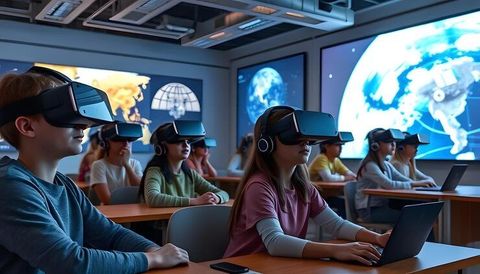
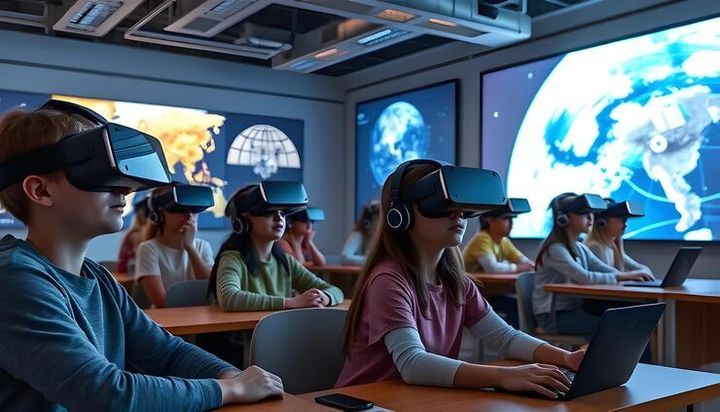
Immersive learning environments are educational settings that use digital technologies to place learners inside interactive experiences rather than relying only on books, slides, or conventional lectures. These environments can use virtual reality (VR), augmented reality (AR), mixed reality (MR), simulations, 3D models, interactive displays, and increasingly artificial intelligence (AI).
The central idea is to let learners explore concepts through direct interaction. Instead of reading only about a historical location, for example, a student might explore a three-dimensional reconstruction. In technical education, a learner might interact with a simulated machine before working with physical equipment.
Immersive learning does not always require a headset. A classroom with an interactive 3D display, tablet-based AR activity, simulation software, or digital laboratory can also create an immersive learning environment.
How the Technology Works
An immersive learning environment generally combines several components. Hardware captures user actions or displays digital information, while software creates the learning experience and connects activities with educational content.
A typical system may include:
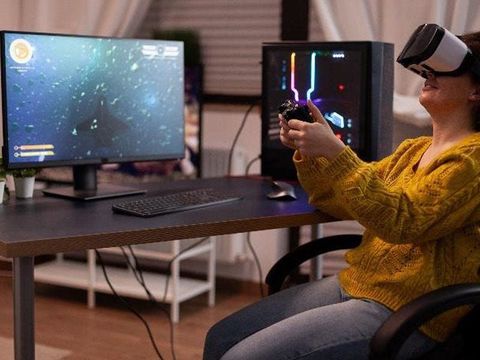
Display hardware: VR headsets, AR glasses, tablets, computers, interactive screens, or projection systems.
Motion and input systems: Controllers, cameras, hand tracking, eye tracking, microphones, or other sensors can allow learners to interact with digital objects.
Learning software: Applications create simulations, virtual spaces, interactive exercises, assessments, and learning activities.
Content: 3D models, videos, virtual laboratories, historical environments, scientific visualizations, and simulated scenarios provide the subject material.
Data systems: Learning platforms can record progress, activity completion, and assessment results where appropriate.
Network infrastructure: Internet connections and local networks can deliver content, synchronize activities, and manage multiple devices.
The OECD describes VR as a technology that can create simulated environments containing interactive three-dimensional objects, while AR places digital objects or information over the physical world. Mixed reality combines physical and digital elements so that learners can interact with both.
Main Types of Immersive Learning
Virtual reality creates a fully digital environment that can surround the learner. It can be used for simulated laboratories, workplace scenarios, geography, medical education, engineering, and historical exploration.
Augmented reality adds digital information to the physical environment. A learner using a tablet or AR glasses could examine a physical model while seeing labels, animations, or additional information.
Mixed reality allows digital objects and physical surroundings to interact. This can be useful when students need to study a physical object while manipulating a digital model alongside it.
Simulation-based learning recreates situations that may be expensive, dangerous, difficult, or impractical to reproduce physically. Examples include flight training, industrial procedures, emergency response exercises, and laboratory experiments.
A simple example is a virtual chemistry laboratory. Students can examine equipment, combine simulated substances, observe reactions, repeat an experiment, and review results without physically handling laboratory materials.
Importance
Why Immersive Learning Environments Matter
Immersive learning environments can make abstract subjects easier to visualize. Three-dimensional models can show structures, movement, scale, and relationships that may be difficult to understand from a flat image.
They can also create controlled practice situations. Learners can repeat certain activities, examine different outcomes, and receive digital feedback without immediately working in a physical environment.
The OECD's 2025 work on education and digital technologies examines developments involving AI, virtual reality, and other technologies that are changing learning environments. It also identifies XR technologies as an area relevant to the development of digital learning.
Where Immersive Learning Is Used
Immersive learning can be applied across many educational settings:
Schools: Science simulations, geography exploration, language activities, history environments, and interactive mathematics can be presented through digital experiences.
Universities: Higher education institutions can use virtual laboratories, engineering simulations, architecture models, medical scenarios, and research visualization.
Vocational education: Learners can practice equipment operation, maintenance procedures, construction tasks, and workplace scenarios in simulated environments.
Corporate training: Organizations can use immersive simulations for workplace procedures, safety exercises, communication activities, and technical instruction.
Museums and cultural education: Virtual environments can reconstruct historical locations or provide interactive access to cultural collections.
Remote learning: Learners in different locations can access shared digital environments when suitable hardware and network infrastructure are available.
Main Functional Advantages
Immersive learning can provide several practical functions, although results depend on instructional design and the technology used.
Interaction allows learners to manipulate objects and explore environments instead of only observing information. Repetition allows learners to practice certain activities multiple times. Simulation can recreate situations that are difficult to reproduce in a classroom.
Visualization is another important function. Complex structures such as human anatomy, mechanical systems, molecules, buildings, and geographic environments can be represented as interactive three-dimensional models.
However, immersive technology also has limitations. Hardware can require significant planning, technical maintenance, and classroom management. Some learners may experience motion discomfort when using certain VR applications. Digital access can also vary between schools, regions, and socioeconomic groups.
Comparing Major Technologies
| Technology | Learning Environment | Typical Uses | Main Requirement |
|---|---|---|---|
| Virtual Reality | Fully digital environment | Simulations, laboratories, training | VR headset and compatible software |
| Augmented Reality | Physical environment with digital overlays | Science, engineering, anatomy | Smartphone, tablet, or AR device |
| Mixed Reality | Physical and digital interaction | Technical training, 3D models | MR headset or compatible hardware |
| 3D Simulation | Computer-based virtual model | Engineering, science, workplace training | Computer and simulation software |
| Interactive Displays | Shared digital classroom | Group learning and visualization | Large interactive display |
| AI-Assisted Learning | Adaptive digital environment | Tutoring, feedback, content creation | AI-enabled software and suitable data controls |
Recent Updates
Expansion of XR Learning
From 2024 through 2026, extended reality (XR) has remained part of wider discussions about digital education. XR is an umbrella term covering technologies such as VR, AR, and MR.
Education researchers and institutions are examining how these technologies can complement classroom instruction rather than simply replace existing teaching methods. The OECD's recent analysis specifically examines the relationship between digital technologies, student learning, simulations, and XR.
AI-Enhanced Learning Environments
AI is increasingly being incorporated into educational technology. Possible applications include adaptive exercises, automated feedback, conversational learning tools, content generation, language assistance, and personalized practice.
UNESCO published its AI Competency Framework for Students in 2024, identifying 12 competencies across human-centred thinking, AI ethics, AI techniques and applications, and AI system design. The framework also describes progression through understanding, applying, and creating.
AI can therefore become part of an immersive environment, such as a virtual tutor that responds to learner questions inside a simulation. However, AI-generated information still requires appropriate validation, particularly in subjects where factual accuracy is important.
Digital Learning and Teacher Preparation
UNESCO's work on AI and the future of learning continues to emphasize both technological and human dimensions of digital education. Its resources include guidance for generative AI as well as competency frameworks for students and teachers.
This reflects a broader development in which educators need digital literacy alongside subject knowledge. Technology can change how activities are delivered, but learning objectives, assessment design, teacher involvement, and learner needs remain important.
Accessibility and Responsible Design
Recent digital education discussions also place greater attention on inclusion, privacy, age-appropriate technology, accessibility, and responsible AI use. These considerations are particularly relevant when immersive platforms collect information about learner behavior, voice, movement, or interaction.
UNESCO's guidance on generative AI emphasizes human-centred use, data privacy, inclusion, and ethical validation in educational settings.
Laws or Policies
International Guidance
There is no single worldwide law governing every immersive learning environment. Educational institutions generally need to follow the laws of the country or region where the technology is used.
UNESCO provides international guidance on AI and education, including principles related to human agency, inclusion, privacy, ethical use, and responsible implementation. These documents are guidance frameworks rather than one universal education law.
European Union
The European Union's Artificial Intelligence Act, Regulation (EU) 2024/1689, includes specific provisions concerning AI used in education and vocational training. Certain AI systems used for admission, educational assessment, assigning learners to institutions or programs, and other specified purposes can fall into the high-risk category.
Educational technology can also involve personal data, so the General Data Protection Regulation (GDPR) may apply when personal data is processed within the EU regulatory framework. The European Commission's guidance for educators discusses the relationship between AI, education, data protection, and the AI Act.
United States and Other Jurisdictions
In the United States, educational institutions may need to consider federal and state privacy requirements depending on the learners, institution, and data involved. Laws such as FERPA and COPPA can be relevant in particular educational and child-focused contexts.
Other countries have their own education, privacy, cybersecurity, accessibility, and AI regulations. Requirements can differ according to learner age, institution type, data collected, and how an AI system is used.
For this reason, institutions should examine local legal requirements before deploying systems that collect biometric, behavioral, voice, location, or other personal information.
Tools and Resources
XR Hardware and Simulation Platforms
VR headsets, AR-capable mobile devices, MR equipment, motion controllers, cameras, and interactive displays can form the hardware layer of an immersive learning environment.
Simulation platforms can then provide virtual laboratories, engineering environments, technical scenarios, historical reconstructions, and other interactive activities.
Learning Management Systems
Learning management systems (LMS) organize courses, assignments, assessments, learner records, and instructional material. An LMS can sometimes connect with immersive applications so that activity completion or assessment information becomes part of a broader learning program.
3D Modeling and Digital Creation Tools
3D modeling software can be used to create digital objects, environments, machinery, buildings, scientific structures, and other educational content. These models can then be integrated into simulations or XR applications.
AI and Learning Analytics
AI tools can assist with conversational interaction, adaptive practice, language support, and content analysis. Learning analytics systems can examine activity patterns and progress data to help educators understand how learners interact with digital material.
These systems should use appropriate data controls and clear governance. UNESCO's guidance emphasizes privacy protection and human-centred approaches when AI is used in education.
Accessibility and Standards Resources
Accessibility guidelines such as the Web Content Accessibility Guidelines (WCAG) can help digital learning platforms address needs involving vision, hearing, mobility, and cognition. Educational institutions can also consult national accessibility requirements and institutional policies.
FAQs
What are immersive learning environments?
Immersive learning environments are educational settings that use technologies such as VR, AR, MR, simulations, interactive displays, and AI to create interactive learning experiences.
How do immersive learning environments improve education?
Immersive learning environments can help learners visualize complex concepts, practice simulated activities, interact with three-dimensional models, and repeat certain learning exercises in controlled digital settings.
What technology is used in immersive learning environments?
Common technologies include VR headsets, AR devices, MR systems, 3D simulations, motion tracking, interactive displays, learning platforms, cloud systems, and AI-enabled educational applications.
Are immersive learning environments suitable for schools?
They can be used in schools when the technology aligns with curriculum goals, learner age, accessibility requirements, teacher preparation, privacy rules, and available infrastructure.
How is AI changing immersive learning environments?
AI can create conversational interactions, adaptive exercises, automated feedback, language assistance, and personalized learning activities. Its use requires appropriate data protection, human oversight, and educational validation.
Conclusion
Immersive learning environments combine educational methods with technologies such as VR, AR, MR, simulations, interactive displays, and AI. They can help learners visualize difficult concepts, practice simulated activities, and interact with digital models in structured settings. Developments from 2024–2026 show continued attention to XR, AI competency, privacy, accessibility, and responsible digital education. Effective implementation depends on suitable learning objectives, educator involvement, appropriate technology, and compliance with relevant regional requirements.