Hair Jewelry Trends: Explore Designs, Materials, and Styling Ideas
Hair jewelry refers to decorative accessories designed to be worn in or around the hair. These pieces can add visual detail to hairstyles and may include hair pins, combs, clips, chains, tiaras, cuffs, jeweled barrettes, decorative forks, and other ornamental forms.
Hair jewelry trends change with fashion, cultural influences, materials, and styling techniques. Designs can range from simple metallic pieces to elaborate accessories decorated with pearls, crystals, beads, gemstones, enamel, or fabric elements.
How Hair Jewelry Developed
Decorative hair accessories have appeared across many cultures for centuries. Historical examples include carved hairpins, ornamental combs, jeweled headpieces, floral decorations, and metal ornaments. Their functions have included personal decoration, ceremonial use, cultural expression, and practical hair arrangement.
Modern hair jewelry combines these traditional influences with contemporary fashion. Digital design, improved manufacturing methods, lightweight materials, and changing hairstyles have expanded the range of available forms.
Main Types of Hair Jewelry
Hair jewelry can be categorized according to its construction and placement.
Hair pins: Decorative pins secure sections of hair while adding an ornamental detail.
Hair combs: Combs can be inserted into buns, updos, or other structured hairstyles.
Jeweled clips: Clips combine a fastening mechanism with decorative stones, crystals, pearls, or metal elements.
Hair chains: Chains can connect different sections of a hairstyle or extend across the head.
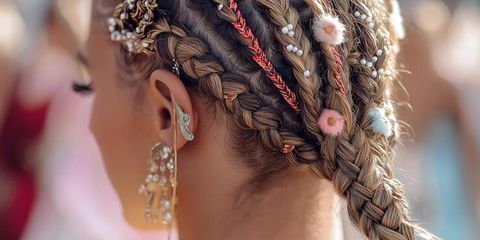
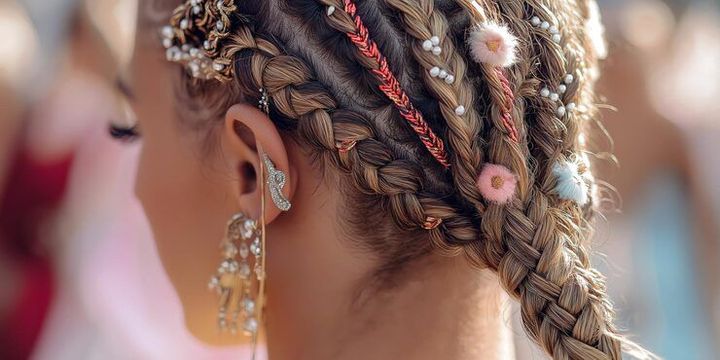
Hair cuffs: Small decorative rings or tubes can be attached around braids, twists, or selected hair sections.
Tiaras and crowns: These create a prominent decorative element around the upper portion of the head.
Decorative barrettes: Barrettes use a clasp mechanism to hold hair while providing a visible design element.
Headpieces: Larger pieces may combine chains, stones, beads, fabric, and metal components.
A simple example is a pearl-decorated hair comb placed into a low bun. The accessory provides decoration while the comb helps hold the hairstyle in position.
Materials Used in Hair Jewelry
Hair jewelry can use many materials depending on its intended appearance, weight, structure, and manufacturing method. Common materials include stainless steel, brass, silver, gold, plated metals, acrylic, resin, glass, pearls, crystals, gemstones, beads, leather, fabric, and wood.
Material selection can influence comfort and maintenance. Lightweight materials may be useful for larger pieces, while metals can provide structural strength for pins, combs, and clips.
Importance
Why Hair Jewelry Trends Matter
Hair jewelry trends reflect broader changes in fashion, event styling, cultural aesthetics, and accessory design. They also show how traditional decorative forms can be adapted to contemporary hairstyles.
Hair accessories can change the visual character of an outfit without requiring major changes to clothing. A small jeweled clip may provide a subtle detail, while a large headpiece can become a central element of an overall appearance.
Where Hair Jewelry Is Used
Hair jewelry appears in many settings and styling contexts. Common applications include:
Formal events: Hair combs, jeweled pins, and tiaras can be incorporated into structured hairstyles.
Weddings: Decorative accessories can complement buns, braids, veils, or other ceremonial hairstyles.
Evening fashion: Metallic clips, crystals, and sculptural pieces can be coordinated with formal clothing.
Everyday styling: Smaller barrettes, pins, and cuffs can add decoration to simple hairstyles.
Cultural occasions: Traditional hair ornaments may form part of regional or ceremonial dress.
Editorial fashion: Designers and stylists may use large or unusual pieces to create distinctive visual compositions.
Current Design Directions
Several design directions are visible across contemporary hair jewelry. Minimal geometric forms use circles, lines, arches, and smooth surfaces. Pearl designs continue to appear in both classic and contemporary forms, while crystals and colored stones can introduce additional texture and contrast.
Nature-inspired designs use leaves, flowers, branches, butterflies, shells, and other organic shapes. Another direction combines multiple materials, such as metal with pearls, resin with dried botanical elements, or chains with decorative stones.
Comparing Hair Jewelry Types
| Hair Jewelry Type | Common Materials | Typical Hairstyle | Main Design Character |
|---|---|---|---|
| Hair Pin | Metal, pearls, crystals | Buns, twists, updos | Small decorative detail |
| Hair Comb | Metal, resin, stones | Buns, formal updos | Structured and ornamental |
| Hair Chain | Metal, beads, crystals | Braids, loose styles | Flowing decorative effect |
| Hair Cuff | Metal, beads, enamel | Braids, twists | Compact and modern |
| Jeweled Clip | Metal, glass, crystals | Loose or gathered hair | Visible accent |
| Tiara | Metal, crystals, pearls | Updos, formal styles | Crown-like appearance |
| Decorative Barrette | Metal, acrylic, resin | Straight or gathered hair | Practical and decorative |
| Headpiece | Mixed materials | Formal or editorial styles | Large visual element |
Common Design Considerations
Weight is important when selecting or developing hair jewelry. A large accessory can become uncomfortable if its structure is too heavy or if its fastening system does not distribute weight properly.
Attachment method also matters. Pins, clips, combs, elastic components, and adjustable chains provide different levels of stability. Hair texture and hairstyle structure can affect how securely a particular accessory remains in place.
Surface finishing is another consideration. Smooth edges can help reduce snagging, while poorly finished components may catch individual strands of hair. Materials should also be selected according to their expected exposure to moisture, cosmetics, heat, and repeated handling.
Recent Updates
Digital Design and Customization
From 2024 through 2026, digital design tools have continued to influence accessory development. Computer-aided design can help create precise shapes, experiment with proportions, and prepare digital models before physical production.
Three-dimensional modeling can also help designers examine how a hair accessory may fit around a bun, braid, ponytail, or other hairstyle. Digital rendering allows different materials and surface finishes to be visualized before manufacturing.
3D Printing and Rapid Prototyping
3D printing can be used to create prototypes of decorative hair accessories. Designers can test dimensions, attachment points, patterns, and structural forms before selecting a final manufacturing process.
Printed prototypes can be particularly useful for unusual geometric shapes that may be difficult to evaluate through drawings alone. The final piece may use a different material or production method depending on its intended characteristics.
Lightweight Construction
Recent accessory development has also focused on balancing visual size with practical weight. Hollow structures, thin metal components, engineered plastics, resin forms, and lightweight decorative elements can help create larger visual designs without requiring the same mass as solid components.
This approach is particularly relevant to large hair combs, headpieces, chains, and sculptural accessories.
Mixed Materials and Personal Styling
Contemporary hair jewelry increasingly combines materials and forms. Metal may be paired with pearls, glass, fabric, resin, enamel, or natural decorative elements.
Personalized styling is also supported by modular designs. Some accessories can be rearranged, combined, or positioned in different ways, allowing one basic piece to work with several hairstyles.
Sustainability Considerations
Material sourcing, production waste, packaging, durability, and product lifespan are increasingly discussed within accessory design. Recycled metals and durable materials can be part of sustainability strategies, although the environmental effect depends on the complete production and supply chain.
Longer-lasting accessories can also reduce the frequency of replacement. Maintenance requirements, repair possibilities, and material composition can therefore be relevant when evaluating the overall lifecycle of hair jewelry.
Laws or Policies
Product and Material Requirements
Hair jewelry regulations vary between countries and may depend on the materials used, intended market, manufacturing location, and chemical composition. Metal accessories can be subject to requirements involving restricted substances, labeling, or consumer product safety.
In the European Union, REACH regulates chemical substances and can apply to materials used in consumer products. Certain requirements can be relevant to accessories that contain restricted substances or components that come into prolonged skin contact.
Nickel and Metal Components
Nickel release can be relevant to hair jewelry containing metal parts that contact the skin. European rules restrict nickel release from certain articles intended for direct and prolonged skin contact.
The precise requirements depend on the product category and jurisdiction. Manufacturers and importers should therefore check the rules applicable to the destination market rather than assuming one regulation applies worldwide.
Product Safety
General consumer-product safety requirements can also apply to hair accessories. These may address physical hazards, small detachable components, sharp edges, chemical substances, labeling, and other product characteristics.
Requirements vary across regions. The European Union, United States, United Kingdom, and other jurisdictions maintain different regulatory systems, so compliance depends on where an item is manufactured, distributed, or marketed.
Tools and Resources
Jewelry and 3D Design Software
Computer-aided design platforms can help create detailed models of hair pins, combs, clips, cuffs, and headpieces. Designers can adjust dimensions, test shapes, and prepare files for prototyping or manufacturing.
Digital Trend Research
Fashion databases, runway archives, museum collections, digital magazines, and social media platforms can help identify recurring design themes. Historical archives can also provide context for traditional hair ornaments and their cultural development.
Measurement and Fitting Tools
Simple measurement tools can help evaluate hair accessory dimensions. For custom designs, measurements may include the width of a comb, length of a pin, circumference of a headpiece, or dimensions of a decorative element.
Materials and Testing Resources
Material specifications, chemical safety information, and recognized testing resources can help manufacturers assess metal components, coatings, plastics, adhesives, and decorative materials.
International and national standards organizations can also provide information about relevant product safety and material requirements.
FAQs
What are the latest hair jewelry trends?
Current hair jewelry trends include pearls, sculptural metal forms, nature-inspired designs, mixed materials, minimalist geometric shapes, decorative chains, and personalized accessories. Digital design and lightweight construction are also influencing contemporary development.
What materials are commonly used in hair jewelry?
Common materials include metals such as brass, stainless steel, silver, and gold, along with pearls, crystals, glass, resin, acrylic, beads, fabric, wood, and gemstones.
How can hair jewelry be styled?
Hair jewelry can be incorporated into buns, braids, ponytails, twists, loose hairstyles, and formal updos. The appropriate design depends on hairstyle structure, accessory weight, clothing, occasion, and the desired visual balance.
Is hair jewelry suitable for everyday hairstyles?
Small pins, clips, barrettes, and cuffs can work with everyday hairstyles when their weight and fastening method are comfortable. Larger headpieces are generally more suited to hairstyles that can support their structure.
How is hair jewelry manufactured?
Manufacturing methods can include metal forming, casting, stamping, machining, engraving, stone setting, assembly, resin molding, and 3D printing for selected components or prototypes.
Conclusion
Hair jewelry combines decorative design with practical methods of securing or arranging hair. Current hair jewelry trends include metallic forms, pearls, mixed materials, nature-inspired details, digital design, lightweight construction, and personalized styling. Modern technologies such as CAD modeling and 3D printing are expanding the ways accessories can be developed and prototyped. Material selection, comfort, attachment methods, maintenance, and regional product requirements remain important considerations.