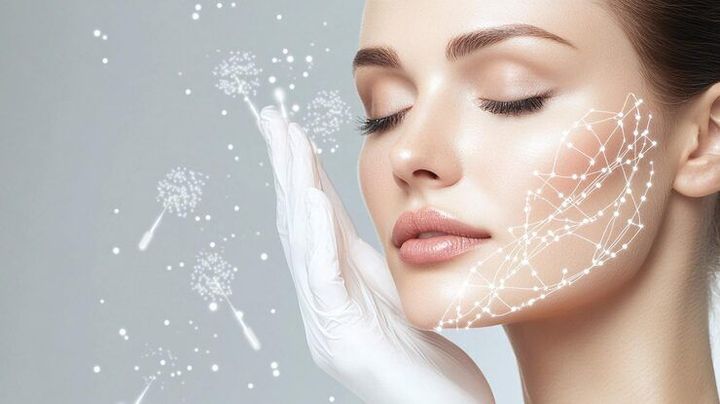
AI in Beauty Technology: Guide to Personalization, Analysis, and Digital Tools
AI in Beauty Technology refers to the use of artificial intelligence, machine learning, computer vision, generative AI, and data analysis across beauty and personal-care experiences. These technologies can analyze images, recognize patterns, personalize digital experiences, simulate cosmetic appearances, and help users explore products or routines.
The technology has developed from relatively simple digital recommendation systems into more advanced platforms involving facial analysis, virtual try-on, conversational AI, image generation, and personalized beauty profiles. Major beauty technology programs now combine AI with augmented reality, cameras, databases, and specialized scientific information.
How AI Beauty Technology Works
A typical AI-powered beauty application can involve several stages.
Image capture: A smartphone or camera captures a face, hair, or another visual feature.
Image processing: Software adjusts the image for lighting, positioning, and other factors.
Feature detection: Computer vision identifies selected visual characteristics.
AI analysis: A trained model evaluates patterns within the available data.
Personalization: The system generates suggestions, simulations, or digital results based on the analysis.
User interaction: The person can modify preferences and explore different possibilities.
The exact process depends on the application. A virtual makeup tool may focus on facial landmarks and color rendering, while a skin-analysis platform may use image patterns and additional questionnaires.
Main Applications
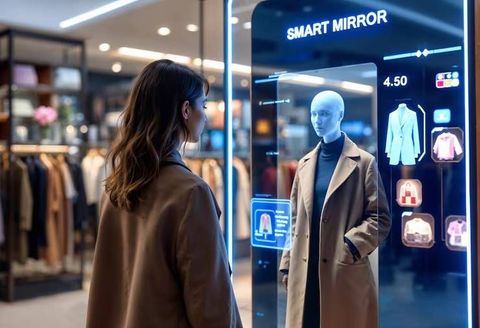
Virtual try-on allows people to preview makeup, hair colors, or other appearance changes through a camera or uploaded image. Augmented reality can place digital effects over the user's live image.
Skin analysis uses computer vision and AI models to examine selected visible characteristics. Some platforms can assess features such as texture, visible spots, or other cosmetic attributes.
Personalized recommendations combine user information with product databases, ingredient information, preferences, or previous interactions.
Hair analysis can use photographs and questionnaires to classify visible hair characteristics and create personalized digital recommendations.
Conversational beauty assistants use natural-language AI to answer questions, explain ingredients, compare options, or create personalized routines.
Importance
Personalization
Beauty preferences differ substantially between individuals. People can have different skin characteristics, hair textures, color preferences, cosmetic goals, cultural practices, and environmental conditions.
AI can process multiple data points at once and use them to create a more individualized digital experience. L'Oréal, for example, describes its Beauty Tech ecosystem as combining technology, data, and AI for personalized beauty experiences.
Personalization does not mean that an AI system understands every aspect of an individual. Results depend on the quality of the input, training data, algorithms, and assumptions used by the application.
Digital Appearance Simulation
Virtual try-on tools allow users to experiment with appearance digitally before making a physical change. This can include lipstick shades, foundation tones, eye makeup, hair colors, and other cosmetic effects.
Modern systems can use facial landmark detection and image rendering to keep digital effects aligned with facial movement. Advances in generative AI are also creating new approaches to digital beauty visualization.
Supporting Product Discovery
AI systems can organize large amounts of product and ingredient information. A digital assistant may consider preferences such as texture, color, formulation characteristics, or previously selected products.
This can make large catalogs easier to navigate. However, automated recommendations should not automatically be treated as professional medical or dermatological assessments.
Accessibility and Inclusion
Digital tools can make beauty experimentation available through smartphones and web platforms rather than requiring physical testing environments.
Inclusive AI development also involves training models on sufficiently diverse datasets. Differences in skin tones, facial characteristics, hair types, ages, lighting conditions, and other factors can affect computer-vision performance.
Main Technology Areas
| Technology | Main Function | Example Application |
|---|---|---|
| Computer vision | Interprets images | Facial analysis |
| Machine learning | Detects patterns | Personalization |
| Augmented reality | Places digital effects on images | Virtual try-on |
| Generative AI | Creates or modifies digital content | Makeup visualization |
| Natural-language AI | Understands written questions | Beauty assistants |
| Recommendation models | Matches data and preferences | Product discovery |
| Image processing | Improves visual interpretation | Skin or hair analysis |
Recent Updates
AI Beauty Assistants
Generative and agentic AI are becoming part of digital beauty experiences. In 2025, L'Oréal announced Beauty Genius, an AI-powered personal beauty assistant, along with other AI applications involving personalization and beauty discovery.
In 2026, L'Oréal and OpenAI announced a collaboration involving AI-powered consumer journeys and beauty applications. The announcement included plans to integrate Maybelline virtual makeup try-on into ChatGPT using ModiFace technology.
These developments show a movement from simple search interfaces toward conversational systems that can interpret natural-language requests and visual information.
Advanced Skin Analysis
AI-based facial analysis is becoming more sophisticated as cameras, machine learning models, and beauty databases improve.
Another development involves combining AI with biological measurement technologies. L'Oréal's Cell BioPrint, introduced in 2025 and piloted with Lancôme in 2026, uses microfluidic technology and protein biomarker analysis as part of a personalized skin assessment approach.
Such systems demonstrate that beauty technology can extend beyond visual analysis into scientific measurement. They also show why users should distinguish cosmetic assessment tools from regulated medical diagnostic technologies.
Generative AI for Beauty Content
Generative AI is being used to create digital images, campaign concepts, virtual looks, product visualizations, and other forms of beauty-related content.
In 2025, L'Oréal described its CreAItech initiative as combining generative AI, digital rendering, and other technologies to create beauty content for different digital platforms.
This can change how beauty concepts are visualized before physical products, photographs, or campaigns are produced.
Virtual Try-On Development
Virtual try-on technology continues to evolve through improvements in facial tracking, lighting interpretation, 3D rendering, and AI image processing.
Earlier systems generally concentrated on placing a digital color or product effect over an image. Newer systems can create more realistic visual simulations and combine virtual try-on with conversational interfaces.
More Attention to Responsible AI
As beauty applications collect images and potentially sensitive personal information, privacy, transparency, accuracy, and responsible AI development have become increasingly important.
India's AI Governance Guidelines, introduced under the IndiaAI Mission in 2025, emphasize principles including transparency, accountability, safety, inclusion, and responsible adoption.
Laws or Policies
Data Protection
AI beauty applications may process photographs, facial characteristics, preferences, account information, and other personal data. The legal requirements depend on where users and organizations are located and how the information is processed.
Under the European Union's GDPR, biometric data used for uniquely identifying a person is treated as a special category of personal data, subject to specific protections and conditions.
A beauty application that analyzes a face for cosmetic purposes does not automatically fall into every biometric-data category. The exact classification depends on what information is collected and how it is processed.
European Union AI Rules
The European Union AI Act establishes a risk-based framework for artificial intelligence. Its transparency requirements include certain obligations concerning interactions with AI systems, AI-generated content, emotion recognition, and biometric categorization. Article 50 transparency requirements apply from August 2026.
Beauty platforms operating in the EU may therefore need to evaluate whether particular AI functions fall within applicable transparency or other requirements.
Cosmetic Claims in the United States
In the United States, the FDA distinguishes cosmetics from products that make certain drug-related claims. Cosmetic claims must be truthful and not misleading, while claims involving treatment or prevention of disease or effects on the body's structure or function can place a product under drug requirements.
This distinction matters when AI-generated recommendations or beauty platforms make statements about skin or other biological characteristics.
AI and Medical Devices
Some beauty technologies can move into the medical-device area depending on their intended purpose. The FDA regulates AI-enabled medical devices according to applicable medical-device requirements and considers intended use and technological characteristics.
Therefore, an AI tool intended only for cosmetic visualization is different from software intended to diagnose, prevent, or manage a medical condition.
Tools and Resources
Virtual Try-On Platforms
Virtual try-on systems allow users to digitally test selected makeup or hair appearances. They commonly combine computer vision, facial landmark detection, augmented reality, and image rendering.
These platforms can help users visualize changes without physically applying multiple cosmetic products.
AI Skin Analysis
AI skin-analysis tools typically use a photograph, questionnaire, or both. The system may identify visible characteristics and generate a digital assessment.
Lighting, camera quality, image angle, skin tone, and model training can influence results. Such tools should therefore be understood as digital assessment systems rather than automatically equivalent to professional clinical evaluation.
Beauty Recommendation Engines
Recommendation engines can compare user preferences with structured information about ingredients, shades, textures, product categories, or previous interactions.
The quality of the result depends heavily on the underlying database and the assumptions used by the recommendation model.
Generative AI Tools
Generative AI can create simulated makeup looks, hairstyle concepts, campaign imagery, product visualizations, and written beauty content.
Users should distinguish generated images from photographs of actual results because AI-generated visuals can contain unrealistic textures, lighting, proportions, or product appearances.
Digital Beauty Databases
Ingredient databases, shade libraries, product catalogs, formulation databases, and scientific references can provide structured information for AI systems.
Combining multiple data sources can improve personalization, but it also increases the importance of data quality, accuracy, privacy, and appropriate interpretation.
Privacy and AI Resources
Organizations developing beauty AI can refer to data-protection laws, AI governance frameworks, technical standards, regulatory guidance, and model-evaluation resources.
For users, practical questions include what information an application collects, whether photographs are retained, whether data is used for model improvement, and how account information can be managed.
FAQs
What is AI in Beauty Technology?
AI in Beauty Technology uses artificial intelligence, computer vision, machine learning, generative AI, and related digital technologies for applications such as personalization, facial analysis, virtual try-on, hair analysis, and digital beauty assistance.
How does AI personalize beauty experiences?
AI can combine information such as images, preferences, selected characteristics, product data, and previous interactions to generate personalized digital recommendations or simulations.
Can AI analyze skin from a photograph?
Yes. Some AI systems analyze photographs to identify selected visible skin characteristics. Results can vary according to lighting, camera quality, image conditions, training data, and the capabilities of the particular system.
What are virtual beauty try-on tools?
Virtual beauty try-on tools use technologies such as computer vision and augmented reality to simulate selected makeup, hair-color, or appearance changes on a person's image.
Is AI beauty analysis the same as medical diagnosis?
No. A cosmetic AI analysis tool and a regulated medical diagnostic system can have very different purposes, evidence requirements, and regulatory classifications. The intended use of the technology is an important factor.
Conclusion
AI in Beauty Technology is changing how people explore cosmetics, analyze visible characteristics, personalize digital experiences, and visualize appearance changes. Current developments include conversational AI, advanced facial analysis, virtual try-on, generative content, and technologies that combine AI with scientific measurements. Privacy, transparency, dataset diversity, accuracy, and regulatory requirements are becoming increasingly important as these systems become more sophisticated. Understanding the technology and its limitations helps explain how digital tools are reshaping beauty experiences worldwide.