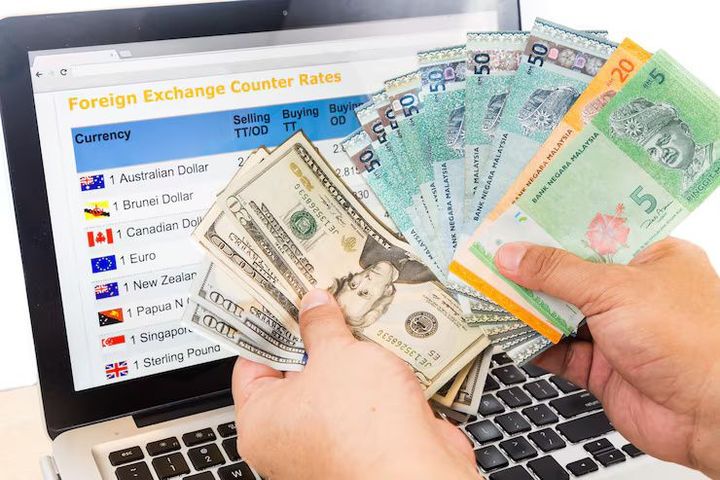
Foreign Transaction Fees: Discover Currency Conversion and Important Facts
Foreign Transaction Fees are charges that may apply when a payment card, bank account, or payment method is used for a transaction involving another country, foreign merchant, or foreign currency. The exact charge depends on the financial institution, card agreement, payment network, transaction type, and country involved.
A foreign transaction does not always mean that the customer is physically traveling abroad. An online purchase from a merchant located in another country can also be treated as a foreign transaction by some card issuers. In the United States, the Consumer Financial Protection Bureau explains that foreign transaction fees can apply to purchases made outside the country, with a foreign merchant, or in a foreign currency.
How Currency Conversion Works
Suppose a person has a card account denominated in U.S. dollars and makes a purchase priced in euros. The payment begins in euros, but the card account needs an amount in U.S. dollars.
A simplified process looks like this:
The merchant submits the transaction in euros.
The payment network or another party determines an applicable exchange rate.
The transaction is converted into the cardholder's account currency.
A foreign transaction fee or other currency-related charge may be added, depending on the account terms.
The converted amount appears on the account statement.
The exchange rate and the additional charge are separate concepts. A transaction can have an exchange-rate markup even when a separate foreign transaction fee is not shown as a distinct percentage.
Foreign Transaction Fee vs. Currency Conversion Fee
These terms are sometimes used interchangeably, but they can describe different parts of an international payment.
A foreign transaction fee is generally a charge associated with using a card for an international transaction.
A currency conversion charge relates to changing one currency into another. It can be incorporated into an exchange-rate markup rather than appearing as a separate line item.
The European Union requires certain currency-conversion information for card transactions to be shown as a percentage markup over the latest available European Central Bank reference rates.
Common Situations
Foreign Transaction Fees can arise in several situations:
Paying at a store while traveling internationally.
Purchasing airline tickets from an overseas merchant.
Booking accommodation through an international website.
Making an online payment in another currency.
Withdrawing foreign currency from an ATM.
Sending money across borders.
Paying a merchant that is registered in another country even when the displayed price is in the cardholder's home currency.
The treatment varies between financial institutions and jurisdictions, so the card or account agreement remains important.
Importance
Understanding the Total Transaction Amount
An international payment can involve more than the displayed purchase amount. The final amount may reflect the exchange rate, a card issuer fee, an ATM charge, or another conversion-related markup.
Understanding these elements helps explain why the amount appearing on an account statement may differ from a simple conversion using a publicly displayed exchange rate.
Exchange Rates Can Change
Foreign exchange markets continuously change. The rate used when a transaction is authorized may differ from the rate ultimately used when the transaction is processed.
For example, imagine a traveler sees a restaurant bill of EUR 100. The amount converted into their home currency depends on the applicable exchange rate at the relevant processing stage and any additional charges associated with the card.
This means that checking a public exchange-rate website provides a reference rather than necessarily predicting the exact statement amount.
Online International Transactions
International charges can occur even without leaving one's home country.
A website may display prices in the user's local currency while the underlying merchant or payment processor is located elsewhere. Depending on the card issuer's rules, the transaction could still be treated as foreign.
The CFPB's U.S. guidance specifically notes that a card issuer may treat a transaction with a foreign merchant as a foreign transaction even when the transaction itself is denominated in U.S. dollars.
ATM Withdrawals
International ATM withdrawals can involve multiple layers of charges.
Possible components include:
Card issuer charge.
ATM operator charge.
Currency conversion markup.
Network-related conversion or processing components.
Local taxes or regulatory charges where applicable.
The exact combination differs by country, bank, card, and ATM.
Key Differences
| Payment Situation | Possible Currency Conversion | Possible Foreign Transaction Fee | Other Possible Charge |
|---|---|---|---|
| Card purchase abroad | Yes | Yes | Merchant or ATM-related charge |
| Online foreign merchant | Sometimes | Sometimes | Payment processing charge |
| Foreign ATM withdrawal | Usually | Sometimes | ATM operator charge |
| Local-currency purchase abroad | Usually | Sometimes | Network-related conversion |
| Home-currency DCC transaction | May be handled by merchant/ATM | Depends on card | Exchange-rate markup |
| International transfer | Usually | Depends on provider | Transfer-related charge |
Recent Updates
Greater Transparency Around Currency Conversion
A major international development has been increased attention to transparency around currency conversion. In the European Union, rules require relevant payment providers and currency-conversion providers at ATMs or points of sale to disclose currency-conversion charges as a percentage markup over the latest applicable ECB reference rates before certain card transactions.
This gives consumers a clearer reference for understanding the difference between a reference exchange rate and the rate being applied.
Dynamic Currency Conversion
Dynamic Currency Conversion, commonly abbreviated as DCC, allows a merchant or ATM to present an international transaction in the customer's home currency rather than the local currency.
For example, a traveler from Canada visiting France might see a choice between paying EUR 200 or seeing the transaction converted immediately into Canadian dollars.
The home-currency option may provide immediate visibility of the amount, but it can include an exchange-rate markup. European consumer guidance notes that paying in the local currency is often less expensive than accepting a merchant's home-currency conversion, although the exact result depends on the rates and charges involved.
Digital Banking Tools
Many banks and financial applications now display foreign-currency transactions with additional information about exchange rates and transaction details.
Digital account notifications can also help users identify international payments soon after they occur. The availability and level of detail depend on the institution and jurisdiction.
More Detailed Remittance Disclosures
International money transfers have also received increased attention regarding fee and exchange-rate transparency. In the United States, CFPB guidance explains that remittance transfer amounts can be affected by provider fees, third-party charges, taxes, and exchange-rate spreads.
This is particularly relevant when comparing international transfers because the visible transfer fee alone may not represent the entire currency-conversion impact.
Cross-Border Payment Regulation
International payment rules continue to differ substantially by region. Within the European Union, euro-denominated cross-border payments covered by applicable rules generally receive equal-charge treatment compared with corresponding domestic payments. Currency conversion itself remains subject to separate rules and disclosures.
There is no single worldwide rule that determines how every bank or card provider must calculate foreign transaction fees.
Laws or Policies
Rules Differ by Country
Foreign Transaction Fees are regulated differently around the world. A card that has one fee structure in one country may have a completely different structure in another.
Consumers should therefore check the rules applying to the country where the card was issued, the merchant's location, and the transaction type.
United States
In the United States, Regulation Z provides disclosure requirements for certain credit-card charges. CFPB interpretations explain that foreign transaction fees can include charges imposed for purchases outside the United States, with foreign merchants, or in foreign currencies.
The specific fee charged by an individual card issuer depends on the applicable account agreement.
European Union
EU rules provide particular protections and disclosure requirements for cross-border payments and currency conversion.
For qualifying card-based transactions, currency-conversion charges must be presented as a percentage markup over the latest available ECB reference rate. Relevant information must be provided before the transaction is initiated.
EU consumer guidance also explains that currency conversion charges are not standardized across all providers.
United Kingdom and Other Markets
Countries outside the EU have their own banking, card-payment, consumer-protection, and foreign-exchange rules. The United Kingdom, Canada, Australia, Singapore, Japan, India, and other markets use different regulatory frameworks.
Therefore, international travelers should consult the card issuer's current terms and the relevant national regulator rather than assuming that a rule from another country applies to their transaction.
Payment Network Rules
Global card networks also maintain technical and operating rules concerning international payments and currency processing. However, the amount ultimately charged to a customer can depend on additional arrangements between the card network, issuing institution, acquiring institution, merchant, and other participants.
This is why two cards issued in the same country can have different foreign transaction policies.
Tools and Resources
Currency Conversion Calculators
Currency calculators can provide a reference conversion between two currencies. They are useful for understanding the approximate value of an international purchase before completing a transaction.
The actual card statement can differ because of the exchange rate used for the transaction and any applicable charges.
Central Bank Exchange Rates
Central banks and official monetary authorities publish reference exchange-rate information in many markets.
For example, the European Central Bank publishes euro reference rates that are used as a reference point in certain EU currency-conversion disclosure requirements.
Cardholder Agreements
The cardholder agreement is one of the most useful resources for identifying:
Foreign transaction fees.
Currency conversion rules.
International ATM provisions.
Cash-advance charges.
Applicable exchange-rate methodology.
Transaction processing information.
The exact wording varies between financial institutions.
Bank and Card Applications
Many banking applications provide transaction notifications, foreign-currency balances, account statements, and transaction details.
These features can help users identify international payments and compare the amount charged with the original transaction amount.
ATM Screens
When withdrawing money abroad, read the ATM screen carefully before confirming the transaction. Some machines provide a choice between local-currency processing and immediate home-currency conversion.
The information displayed may include the exchange rate and additional markup. In regions with specific disclosure rules, the provider may be required to present this information before authorization.
International Transfer Comparison Tools
When comparing international transfers, examine both the visible transaction fee and the exchange rate being applied.
A provider showing a small transfer fee can still produce a different final amount because the exchange rate may include a spread.
FAQs
What are Foreign Transaction Fees?
Foreign Transaction Fees are charges that may apply when a card or account is used for an international transaction, foreign merchant, or foreign-currency payment. The exact rules depend on the financial institution and jurisdiction.
How does currency conversion affect Foreign Transaction Fees?
Currency conversion determines how an amount in one currency is represented in another currency. The exchange rate may include a markup, while a separate foreign transaction fee may also apply.
Can an online purchase have a Foreign Transaction Fee?
Yes. A transaction can be treated as foreign even when the customer makes the payment from home. Some card issuers consider the merchant's location or payment-processing arrangement when determining whether an international fee applies.
What is Dynamic Currency Conversion?
Dynamic Currency Conversion is a process in which a merchant or ATM converts an international transaction into the customer's home currency at the point of payment. The displayed conversion may include an exchange-rate markup.
Are Foreign Transaction Fees the same worldwide?
No. Banks, card issuers, payment providers, and regulators use different rules in different countries. The applicable card agreement and local regulations determine the relevant charges and disclosures.
Conclusion
Foreign Transaction Fees are one part of the wider international payment process involving exchange rates, currency conversion, card networks, merchants, banks, and payment providers. The final amount of an international transaction can depend on both the exchange rate and additional charges, so these elements should be considered separately. Regulations in regions such as the United States and European Union provide specific disclosure requirements, but there is no single worldwide fee structure. Understanding the transaction currency, conversion method, card terms, and applicable local rules provides a clearer picture of international payments.