Edge AI Processing Units: Guide to Architecture, Components, and Key Applications
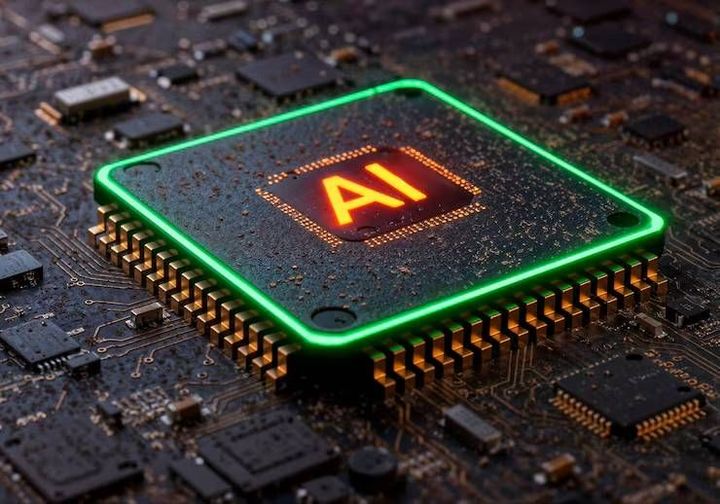
Edge AI Processing Units are specialized computing components designed to run artificial intelligence workloads close to where data is generated.
Instead of sending every image, sensor reading, audio signal, or other data point to a remote data center, an edge device can process much of that information locally.
These units can include Neural Processing Units (NPUs), Graphics Processing Units (GPUs), AI accelerators, Digital Signal Processors (DSPs), and AI-capable system-on-chips (SoCs). Many modern processors combine several of these components with a conventional CPU.
The basic purpose is straightforward: perform AI inference near the device that needs the result. A camera, industrial machine, vehicle, smartphone, robot, or medical device can therefore analyze information locally and respond without depending entirely on a cloud connection.
Edge AI Processing Units are particularly relevant to computer vision, speech recognition, predictive maintenance, robotics, industrial automation, intelligent transportation, and other applications where rapid processing is important.
How Edge AI Processing Works
A typical Edge AI system includes several stages:
- Data capture: Cameras, microphones, sensors, and other devices collect information.
- Preprocessing: The system filters, converts, or organizes incoming data.
- AI inference: An AI accelerator, NPU, GPU, or other processing unit runs a trained model.
- Decision-making: The application interprets the model's output.
- Local response: The device performs an action or sends selected information to another system.
- Cloud connection: Where required, summarized results, updates, or selected data can be transmitted to a central platform.
This arrangement differs from cloud-only AI, where most computationally intensive inference takes place on remote infrastructure.
Why Edge AI Processing Units Matter
The growth of connected devices has created enormous quantities of data. Continuously sending all of that information to centralized servers can create challenges involving latency, bandwidth, reliability, privacy, and infrastructure requirements.
Edge AI Processing Units address some of these challenges by moving computational workloads closer to the source.
Faster response: Local inference can reduce the communication delay associated with sending data to a remote server and waiting for a response. This can be important for robotics, machine vision, industrial controls, and driver-assistance systems.
Reduced data movement: Instead of transferring every raw image or sensor reading, an edge system can transmit selected events, measurements, or summaries.
Improved operational resilience: Devices can continue performing certain AI functions when network connectivity is weak or temporarily unavailable.
Data protection: Processing information locally can reduce unnecessary transmission of sensitive data. However, local processing does not automatically make a system secure; device security, encryption, access controls, software updates, and appropriate data governance remain important.
Energy efficiency: Purpose-built AI accelerators can perform particular inference workloads more efficiently than a general-purpose processor alone.
Where Edge AI Processing Units Are Used
Edge AI hardware is increasingly relevant across several industries.
| Industry | Typical Application | AI Workload |
|---|---|---|
| Manufacturing | Machine vision and predictive maintenance | Image and sensor analysis |
| Automotive | Driver assistance and vehicle perception | Computer vision |
| Robotics | Navigation and object recognition | Vision and multimodal inference |
| Healthcare | Device-based monitoring and analysis | Signal and image processing |
| Retail | Smart cameras and inventory analysis | Computer vision |
| Agriculture | Crop and equipment monitoring | Image and sensor analysis |
| Consumer Electronics | On-device assistants | Speech and language processing |
| Security | Local video analytics | Object and event detection |
In industrial environments, edge processors can analyze machine conditions or camera feeds locally. In robotics, they can support perception and navigation. In consumer devices, NPUs can accelerate functions such as image enhancement, speech processing, translation, and generative AI features.
Recent Developments in Edge AI Hardware
The past year has seen continued movement toward processors that combine CPUs, GPUs, and dedicated AI acceleration.
In August 2026, NVIDIA announced the Jetson Orin Nano 2, a robotics computer aimed at entry-level edge AI applications. NVIDIA reported that the platform provides twice the inference performance of its predecessor while using 40% less power at the same performance level.
Intel has also expanded its edge AI processor portfolio. In May 2026, the company highlighted Core Ultra Series 3 processors for robotics and edge applications, combining CPU, GPU, and NPU capabilities. The applications discussed included manufacturing, healthcare, education, and robotics.
Intel's Open Edge Platform also continued to develop during 2026. The April release added NPU driver support to its Edge Microvisor Toolkit, while the June release expanded hardware and AI application support across areas such as manufacturing, robotics, healthcare, and retail.
Qualcomm has likewise expanded its edge computing portfolio. In January 2026, it announced additional Dragonwing processors for applications including smart cameras, drones, industrial vision, and other connected devices.
A broader trend is the movement from simple AI inference toward multimodal and agentic AI at the edge. Local processors are increasingly being designed to handle combinations of text, images, audio, sensor information, and autonomous decision-making workloads.
Key Components to Consider
Choosing an Edge AI Processing Unit involves more than looking at a processor's headline performance.
NPU capability: NPUs are designed specifically for neural-network operations and can be useful for low-power inference.
GPU acceleration: GPUs are valuable for parallel workloads, particularly computer vision and more demanding AI models.
CPU performance: The CPU remains important for operating systems, application logic, data preparation, and workloads that are not efficiently handled by dedicated accelerators.
Memory: AI models require memory for parameters, intermediate data, and application workloads. Memory bandwidth can also influence practical performance.
AI inference performance: TOPS, or trillions of operations per second, is one commonly quoted measurement. However, TOPS alone does not determine real-world application performance because model architecture, precision, memory bandwidth, software optimization, and workload characteristics also matter.
Power requirements: Embedded and battery-powered systems generally place greater emphasis on performance per watt.
Software compatibility: Framework support, drivers, SDKs, model conversion tools, and runtime libraries can be just as important as the processor itself.
Laws, Policies, and Government Programs
In India, Edge AI Processing Units are affected indirectly by policies covering artificial intelligence, semiconductor manufacturing, cybersecurity, electronics, and personal data.
The Digital Personal Data Protection Act, 2023 establishes requirements for processing digital personal data. This is relevant to edge AI applications that process identifiable information through cameras, microphones, sensors, or other connected systems.
An important recent development was the notification of the Digital Personal Data Protection Rules, 2025 on November 14, 2025. MeitY states that these rules provide the implementation framework for the DPDP Act and establish requirements related to responsible handling of personal data.
India is also developing its domestic semiconductor ecosystem through the India Semiconductor Mission (ISM). The program aims to strengthen semiconductor and display manufacturing and design capabilities in India, which is relevant to the longer-term availability of processors and related electronics infrastructure.
Organizations deploying edge AI should therefore consider not only hardware performance but also applicable data protection, cybersecurity, sector-specific, and electronics regulations.
Tools and Resources for Edge AI Development
Several technical resources can help developers and organizations evaluate Edge AI Processing Units and deploy AI inference workloads.
- OpenVINO: An Intel toolkit for optimizing and deploying AI models across supported hardware.
- NVIDIA JetPack: A software development environment for NVIDIA Jetson platforms.
- Qualcomm AI Hub: Provides resources for optimizing AI models for Qualcomm platforms.
- TensorFlow Lite / LiteRT: Designed for deploying machine-learning models on resource-constrained and edge devices.
- ONNX Runtime: A cross-platform inference runtime supporting deployment across different hardware environments.
- Edge Impulse: Provides tools for developing and deploying machine-learning applications on edge devices.
- Benchmarking tools: Model profilers and hardware benchmarking utilities can measure latency, throughput, memory use, and power characteristics.
When evaluating AI inference hardware, it is useful to test the actual model and workload rather than relying only on published processor specifications.
Frequently Asked Questions
What is an Edge AI Processing Unit?
An Edge AI Processing Unit is a processor or accelerator designed to run AI workloads close to where data is generated. It may use an NPU, GPU, DSP, AI accelerator, or a combination of processing technologies.
What is the difference between edge AI and cloud AI?
Edge AI performs some or most AI processing locally on or near the device generating the data. Cloud AI generally sends data to centralized computing infrastructure for processing. Many modern systems use a combination of both approaches.
Are NPUs the same as GPUs?
No. Both can accelerate AI workloads, but they are designed differently. NPUs are specialized for neural-network operations, while GPUs are highly parallel processors capable of handling AI as well as graphics and other computational workloads.
What industries use Edge AI Processing Units?
Common areas include manufacturing, automotive technology, robotics, healthcare devices, agriculture, retail, security, telecommunications, and consumer electronics.
Does local AI processing eliminate the need for cloud computing?
No. Edge and cloud computing are often complementary. Local processing can handle latency-sensitive workloads, while cloud infrastructure can support centralized model training, fleet management, large-scale analytics, and other computational tasks.
Conclusion
Edge AI Processing Units are becoming an important part of modern computing architecture because they bring AI inference closer to the source of data. CPUs, GPUs, NPUs, and dedicated AI accelerators can work together to support applications that require responsive processing, efficient data handling, and localized intelligence.
Recent developments in 2026 show a continued emphasis on integrated CPU-GPU-NPU designs, robotics, industrial AI, multimodal workloads, and on-device generative AI.