AR for Industrial Maintenance: Explore Digital Assistance and Connected Workflows
AR for Industrial Maintenance: Explore Digital Assistance and Connected Workflows explains how augmented reality can support maintenance activities by placing digital information within a worker’s field of view. It covers visual instructions, equipment identification, remote collaboration, connected workflows, inspection tasks, training, and data access across industrial maintenance environments.
AR for Industrial Maintenance: Explore Digital Assistance and Connected Workflows
Context
Augmented reality (AR) is increasingly being used to connect digital information with physical industrial environments. AR for Industrial Maintenance refers to the use of AR technologies to support inspection, repair, equipment identification, training, troubleshooting, and other maintenance activities.
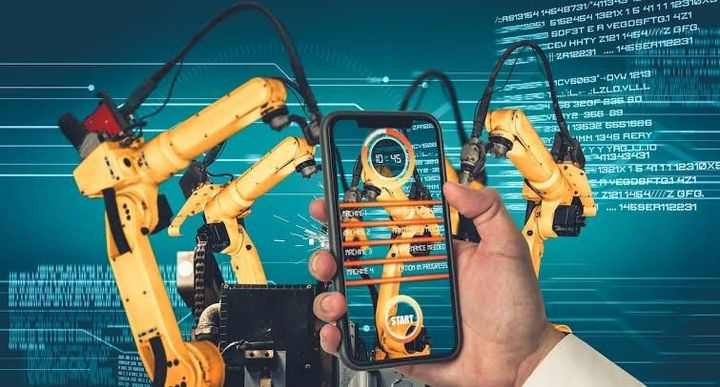
Unlike virtual reality, which creates a fully digital environment, augmented reality places digital content over or alongside a user's view of the physical world. In industrial maintenance, this can allow workers to see instructions, equipment information, diagrams, alerts, or other digital references while looking at physical machinery.
Industrial facilities often contain complex equipment with many components, operating procedures, safety requirements, and maintenance records. Workers may need to consult manuals, diagrams, checklists, work orders, and technical information while performing physical tasks.
AR can connect some of these resources to the equipment being inspected. Depending on the system, a worker may use a smartphone, tablet, smart glasses, or another compatible device.
Common AR Maintenance Functions
AR systems can support several maintenance activities:
Equipment identification: Linking physical equipment with digital records.
Visual instructions: Displaying step-by-step maintenance information.
Component identification: Highlighting selected parts or assemblies.
Inspection support: Providing checklists and reference information.
Remote assistance: Allowing specialists to view or discuss equipment remotely.
Digital documentation: Recording observations and maintenance information.
Training: Providing guided practice in controlled environments.
Workflow coordination: Connecting field activities with maintenance systems.
Technical visualization: Displaying diagrams, models, or other digital references.
The exact capabilities depend on the AR hardware, software, industrial systems, connectivity, and data sources involved.
How AR Maintenance Workflows Operate
A typical AR maintenance workflow can connect several stages.
| Stage | AR Application |
|---|---|
| Equipment identification | Recognize or select the relevant asset |
| Work assignment | Display the maintenance task |
| Preparation | Show required instructions and references |
| Inspection | Guide checks and record observations |
| Maintenance | Display procedures or component information |
| Verification | Confirm completed steps |
| Documentation | Record results and observations |
| Follow-up | Update the maintenance workflow |
AR does not necessarily replace existing maintenance-management systems. Instead, it can provide another interface for accessing information and completing selected tasks.
Importance
AR for Industrial Maintenance can be important because maintenance work often requires workers to combine physical activities with digital information. Searching through manuals or switching repeatedly between equipment and separate information sources can interrupt a workflow.
AR can bring selected information closer to the physical task. This may help workers understand equipment configuration, follow procedures, or communicate with specialists.
Visual Guidance
AR can display instructions alongside physical equipment. Depending on the application, digital markers may identify components while instructions guide the user through a sequence.
Visual guidance can be particularly useful when equipment contains many similar components or when procedures involve multiple steps.
Instructions should be accurate and maintained alongside equipment changes. Outdated digital information can create confusion or introduce operational risks.
Equipment Identification
Industrial facilities can contain large numbers of pumps, motors, valves, electrical panels, machines, and other assets.
An AR system can connect an identified asset to relevant information such as equipment records, maintenance history, technical documents, or current work instructions.
This can help establish a direct relationship between the physical asset and its digital record.
Remote Collaboration
AR-enabled devices can support remote collaboration by allowing a specialist to view information about an equipment problem while communicating with a worker at the site.
Depending on the technology, participants may share video, annotations, images, or digital references.
Remote collaboration can be useful when specialized knowledge is not immediately available at the physical location.
Maintenance Documentation
Maintenance activities generate records about inspections, repairs, component conditions, and completed work.
AR applications can provide digital forms or workflow interfaces that allow workers to record observations while completing a task. These records can potentially be connected to maintenance-management or enterprise systems.
Training and Workforce Development
AR can also support training by presenting digital guidance while users interact with physical or simulated equipment.
Trainees can learn equipment layouts, maintenance sequences, and inspection procedures in a controlled environment before performing more complex tasks.
Training applications should complement established technical instruction and safety procedures.
Connected Workflows
Industrial maintenance rarely operates as an isolated activity. Maintenance information can connect with asset-management systems, enterprise resource planning platforms, inventory systems, condition-monitoring tools, and production systems.
AR can act as an interface between the worker and these connected systems, presenting relevant information at the point of work.
Recent Updates
From 2024 through 2026, AR for Industrial Maintenance has continued to develop alongside industrial IoT, artificial intelligence, digital twins, wearable computing, edge technologies, and connected maintenance platforms.
Improved AR Hardware
AR hardware continues to evolve through improvements in display quality, field of view, cameras, sensors, processing capabilities, and wearable designs.
Industrial users may select between smartphones, tablets, head-mounted devices, and smart glasses depending on the task and working environment.
Hardware selection needs to consider visibility, comfort, protective equipment, environmental conditions, battery operation, connectivity, and workplace safety.
AI-Assisted Visual Recognition
Artificial intelligence can complement AR by helping identify equipment, components, objects, or visual conditions.
For example, computer vision can potentially recognize a machine or component and connect it with the relevant digital record.
AI-based recognition should be validated for the specific environment because lighting, equipment variation, wear, and physical obstructions can affect recognition accuracy.
Digital Twins
Digital twins provide digital representations of physical assets or systems. When combined with AR, these representations can be displayed in relation to the physical equipment.
A worker may be able to access a digital model, component information, or system relationships while viewing the physical asset.
Connected Maintenance Platforms
AR applications are increasingly connected with maintenance-management and enterprise platforms. This can allow work instructions, asset records, inspection forms, and maintenance history to move between systems.
Integration reduces the need to maintain completely separate records, but it also introduces requirements for data synchronization, identity management, and system reliability.
Remote Expert Assistance
Remote assistance continues to be an important AR application. A field worker can communicate with a specialist while sharing visual information about the equipment.
Digital annotations can help identify specific components or locations during a discussion.
Edge and On-Site Processing
Some industrial environments have limited connectivity or strict requirements for local data processing. Edge computing can allow selected processing activities to occur closer to the equipment.
This can reduce dependence on continuous connectivity for certain functions, although the appropriate architecture depends on the application.
AI-Generated Instructions
Generative AI can potentially assist with searching technical documentation, summarizing maintenance records, or presenting relevant information through conversational interfaces.
For industrial maintenance, generated instructions require careful validation. Maintenance procedures can affect equipment safety, worker safety, and production operations, so authoritative technical documentation should remain the source for critical procedures.
Laws or Policies
AR for Industrial Maintenance can be affected by workplace safety requirements, industrial regulations, data protection rules, cybersecurity policies, intellectual property considerations, and internal operational procedures.
The applicable requirements depend on the industry, location, equipment, data, and type of AR deployment.
Workplace Safety
AR devices should not interfere with safe operation of machinery or prevent workers from observing their physical surroundings. Organizations should evaluate visibility, distraction, device ergonomics, protective equipment compatibility, and environmental hazards.
Workers should continue to follow established safety procedures even when digital instructions are presented through an AR system.
Data Protection
AR applications may collect images, video, audio, location information, equipment information, or user activity data. If these datasets contain personal information, applicable privacy requirements need to be considered.
Organizations should define what information is collected, who can access it, how it is protected, and how long it is retained.
Cybersecurity
Connected AR systems can interact with industrial networks and enterprise applications. Appropriate authentication, authorization, network controls, software maintenance, monitoring, and secure integration practices are therefore important.
The AR device should receive only the access required for its intended function.
Technical Documentation
Maintenance instructions displayed through AR should be controlled and kept current. Organizations should establish procedures for approving, reviewing, and updating digital technical content.
An AR system should not be treated as an independent authority when an approved technical procedure is required.
Tools and Resources
AR-based maintenance environments generally involve several hardware and software components.
AR Devices
Smartphones, tablets, head-mounted displays, and smart glasses can provide different ways to access AR information.
Selection depends on the task, workplace conditions, required mobility, display requirements, protective equipment, and connectivity.
AR Software Platforms
AR software provides capabilities for displaying digital content, recognizing objects or locations, guiding users, and connecting physical assets with digital information.
Some platforms are designed for industrial applications, while others provide general augmented-reality development capabilities.
Asset Management Systems
Computerized maintenance management systems and enterprise asset-management platforms contain information about equipment, work orders, maintenance history, and inspections.
AR applications can connect workers to selected information from these systems.
Industrial IoT Sensors
Sensors can collect information about equipment conditions such as temperature, vibration, pressure, or operating status.
When integrated appropriately, sensor data can provide additional context for maintenance workflows.
Digital Twin Platforms
Digital twin technologies provide models and data representations of physical assets or processes. These can be connected with AR interfaces for visualization and maintenance activities.
Remote Collaboration Tools
Remote assistance platforms can support video communication, annotations, shared views, and specialist guidance.
Knowledge and Documentation Systems
Technical manuals, maintenance procedures, equipment drawings, inspection checklists, and training materials provide the underlying information used by many AR applications.
Content management is therefore an important part of AR maintenance implementation.
FAQs
What is AR for Industrial Maintenance?
AR for Industrial Maintenance uses augmented reality to connect digital information with physical industrial equipment. It can provide visual instructions, equipment information, inspection guidance, remote assistance, and connected maintenance workflows.
How does AR support industrial maintenance workers?
AR can display relevant instructions, diagrams, equipment information, checklists, and other digital references while workers interact with physical machinery. This can reduce the need to switch repeatedly between equipment and separate information sources.
Can AR connect with maintenance management systems?
Yes. AR applications can be integrated with asset-management, maintenance-management, ERP, inventory, and other enterprise systems. The level of integration depends on the available software interfaces and system architecture.
How is AI used with AR for Industrial Maintenance?
AI can support equipment recognition, visual analysis, document search, anomaly detection, and other functions. AI-generated information should be validated carefully when it relates to safety-critical maintenance procedures.
What are the challenges of AR for Industrial Maintenance?
Challenges can include hardware limitations, connectivity, environmental conditions, worker acceptance, data integration, cybersecurity, content maintenance, training, and ensuring that digital information remains accurate and appropriate.
Conclusion
AR for Industrial Maintenance provides a digital interface between workers, physical equipment, and enterprise information. Visual guidance, equipment identification, remote collaboration, documentation, training, and connected workflows are among its major applications.
Recent developments in AI, digital twins, industrial IoT, wearable devices, and connected maintenance platforms are expanding the potential uses of AR in industrial environments. At the same time, successful deployment requires attention to safety, cybersecurity, data governance, technical documentation, and system integration.
AR is most useful when its digital information is accurate, relevant, and connected to established maintenance processes. Combining augmented reality with reliable enterprise data and appropriate human oversight can create more connected maintenance workflows.